The Best Lightweight Kayaks of 2026: Easy to Lift & Launch
Looking for a kayak you can lift onto your roof rack solo? We review the top lightweight hard-shell and inflatable kayaks under 40 lbs for easy launching.

Dragging a 70-pound plastic hull across a gravel parking lot is the fastest way to ruin a peaceful morning on the water. If you want a boat you can shoulder solo and hoist onto an SUV roof without pulling a muscle, finding the best lightweight kayaks is essential. In this guide, we break down top-performing hard-shell and inflatable models weighing under 40 pounds that deliver real stability, comfort, and paddling efficiency.
Why Kayak Weight Matters Before You Ever Touch the Water
The actual challenge of kayaking rarely happens while paddling on calm water. The hardest part is getting the boat from your garage, onto your vehicle, down a steep embankment, and into the lake. Heavy kayaks often end up sitting in storage because the effort required to load them feels like a grueling workout.
When a boat weighs between 25 and 36 pounds, your entire routine changes:
- Solo Transport: You can carry the boat under one arm or across your shoulder using standard carry handles without needing a second person.
- Roof Rack Hoisting: Lifting a 35-pound hull above your head to secure it to a roof mount requires significantly less strength and balance than hoisting a standard 65-pound fishing kayak.
- Vehicle Options: Lightweight boats fit easily into compact SUV trunks, hatchback beds, or even back seats when dealing with inflatables.
- Spontaneous Trips: Lower physical friction means you spend less time rigging heavy gear and more time enjoying an hour of evening paddling after work.
If you plan to store your craft in an apartment or carry it up stairs, review our guide on how to transport and store a kayak to maximize your space.
Hard-Shell vs. Inflatable: The Weight Breakdown
When searching for lightweight boats, you must choose between high-density thermoformed plastic hard-shells and heavy-duty PVC inflatables. Both approaches slash overall weight, but they do so in different ways.
Thermoformed Polyethylene Hard-Shells
Brands like Pelican use proprietary material blends (such as RAM-X thermoformed high-density polyethylene) to craft hard-shell kayaks. Instead of thick, heavy rotomolded plastic, thermoforming fuses two resin sheets over a mold under pressure and heat. The result is a rigid, impact-resistant hull that weighs 30% to 40% less than standard rotomolded polyethylene boats.
Inflatable PVC and Drop-Stitch Models
Inflatable kayaks bypass rigid plastic hulls entirely, utilizing reinforced multi-layer PVC chambers or high-pressure drop-stitch floors. Deflated inflatables weigh between 18 and 32 pounds and pack into a duffel bag, making them the ultimate option for small vehicle trunks and closet storage. For a detailed breakdown of performance trade-offs, read our analysis on inflatable vs hard-shell kayaks.
Lightweight Kayak Comparison
| Kayak Model | Type | Hull Weight | Overall Length | Max Weight Capacity | Primary Material |
|---|---|---|---|---|---|
| Pelican Argo 100X | Sit-in Hard-Shell | 36 lbs | 10' 0" | 275 lbs | RAM-X Polyethylene |
| Tucktec 10' Folding Kayak | Sit-in Folding | 24 lbs | 10' 0" | 300 lbs | Folding HDPE sheet |
| Pelican Sentinel 100X | Sit-on-Top Hard-Shell | 40 lbs | 9' 6" | 275 lbs | RAM-X Polyethylene |
| Sea Eagle 370 | Tandem/Solo Inflatable | 32 lbs | 12' 6" | 650 lbs | 38-mil K80 PVC |
| Intex Explorer K2 | Tandem Inflatable | 30.6 lbs | 10' 3" | 400 lbs | Heavy-duty PVC |
| Perception Pescador Pro 10 | Angler Sit-on-Top | 57 lbs | 10' 6" | 325 lbs | Rotomolded Polyethylene |
Reviews of the Best Lightweight Kayaks
Pelican Argo 100X
The Pelican Argo 100X stands out as the ideal lightweight hard-shell kayak for recreational paddlers who want structural rigidity without excess weight. Tipping the scales at just 36 pounds, this 10-foot sit-in boat is effortless to load onto a roof rack solo. Check current pricing on Amazon for the Pelican Argo 100X.
- Weight & Specs: 36 lbs; Length: 10'0"; Width: 28"; Capacity: 275 lbs.
- Performance: The twin-arched multi-chine hull provides excellent initial stability when entering and exiting the boat. It tracks surprisingly straight on calm lakes and slow rivers.
- Cockpit & Comfort: Features an adjustable Ergoform padded backrest, molded footrests, a front storage hatch with a bungee cord, and a rear tank well with mesh netting.
- Pros: Extremely easy to shoulder carry; durable RAM-X construction absorbs shore scrapes; affordable price point.
- Cons: Open cockpit can collect water splash in choppy conditions; limited thigh pad cushioning for long tours.
If you are choosing between cockpit designs, review our guide on sit-in vs sit-on-top kayaks to see which fits your paddling environment.
Tucktec 10' Folding Kayak
When every ounce matters and storage space is at a premium, the Tucktec 10' Folding Kayak is the lightest real boat here. It folds from a flat sheet of thick HDPE into a rigid 10-foot hull in about two minutes, with no pump and nothing to inflate. You can check current pricing on Amazon for the Tucktec folding kayak.
- Weight & Specs: 24 lbs; Length: 10'0"; Width: 30"; Capacity: 300 lbs.
- Performance: The folded hull is genuinely rigid, so it tracks and turns much more like a hard-shell than an inflatable. A moulded keel line and hard chines keep it running straight on flat water.
- Cockpit & Comfort: Open sit-in cockpit with a padded backband seat and room for a dry bag behind you. Nothing to inflate, patch, or dry out before storage.
- Pros: Only 24 lbs; folds to a flat 42-inch panel that stows in a closet or a hatchback; assembles in about two minutes with no pump.
- Cons: Folding clips take a couple of practice runs to get quick; not intended for rough surf or whitewater.
For paddlers with no garage, no roof rack, and no patience for a pump, this boat is the most practical entry point on the list. Learn more in our roundup of the best kayaks for beginners.
Pelican Sentinel 100X Angler
Fishing kayaks are notorious for being heavy, often exceeding 75 to 100 pounds once gear tracks and seats are added. The Pelican Sentinel 100X bucks this trend, weighing a nimble 40 pounds while retaining key fishing amenities. Find the Pelican Sentinel 100X on Amazon.
- Weight & Specs: 40 lbs; Length: 9'6"; Width: 30"; Capacity: 275 lbs.
- Performance: Flat-bottom multi-chine hull offers high initial stability, allowing anglers to cast comfortably without feeling tippy in shallow bays.
- Features: Flush-mount rod holders, smartphone holder, front storage platform, and a removable ExoPak storage compartment with carry straps.
- Pros: One of the lightest dedicated fishing hulls on the market; easy to toss into a truck bed; open sit-on-top deck drains water quickly.
- Cons: Lacks high-rise lawn-chair seating found on heavier fishing kayaks; slower speed across open water.
Anglers seeking specialized setups can explore alternative options in our complete guide to the best fishing kayaks.
Sea Eagle 370
If you want the option to paddle solo or bring along a partner without hauling a heavy hard-shell tandem, the Sea Eagle 370 is an outstanding choice. Despite its massive 650-pound payload capacity and 12-foot-6-inch frame, the boat weighs only 32 pounds. View current availability for the Sea Eagle 370 on Amazon.
- Weight & Specs: 32 lbs; Length: 12'6"; Width: 34"; Capacity: 650 lbs (up to 3 people/dogs/gear).
- Performance: Constructed from extra-thick 38-mil K80 PVC with radio-frequency welded seams. Dual skegs on the bottom improve tracking over open water.
- Features: Inflatable movable seats, self-bailing drain valve, lashed spray skirts at bow and stern.
- Pros: Incredible capacity-to-weight ratio; durable enough to handle mild Class II white water and dog claws; packs down into a small duffel.
- Cons: Wide beam requires longer paddles; high side tubes catch side winds in open lakes.
To see how this inflatable compares to hard-shell two-person craft, read our review of the best tandem kayaks.
Intex Explorer K2
For recreational paddlers on a budget who want a lightweight tandem option for calm ponds and sheltered bays, the Intex Explorer K2 keeps things simple and portable. The entire package weighs just over 30 pounds. Check price on Amazon for the Intex Explorer K2.
- Weight & Specs: 30.6 lbs; Length: 10'3"; Width: 36"; Capacity: 400 lbs.
- Performance: Bright yellow styling enhances safety visibility. Deep inflatable floor beams add rigid hull structure underfoot.
- Features: Two adjustable inflatable seats with backrests, removable skeg, wrap-around grab lines at bow and stern.
- Pros: Extremely lightweight for a two-person boat; fast assembly; compact transport.
- Cons: Best restricted to calm, shallow waters; shorter cockpit length feels tight for two tall adults.
For more compact inflatable designs, consult our detailed buyer's guide featuring the best inflatable kayaks.
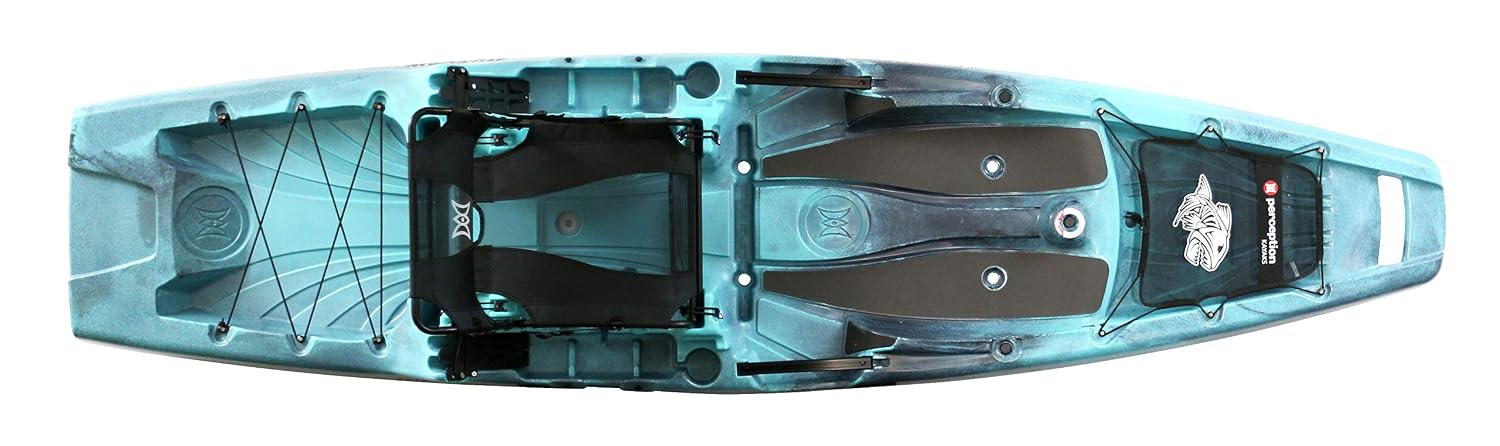
Perception Pescador Pro 10.0
While standard recreational boats aim for under 40 pounds, serious kayak anglers often need extra structural strength for mounting fish finders, gear tracks, and lawn-chair style seats. The Perception Pescador Pro 10 weighs 57 pounds—placing it at the absolute top end of the lightweight category for feature-packed fishing kayaks. Check out the Perception Pescador Pro 10.0 on Amazon.
- Weight & Specs: 57 lbs; Length: 10'6"; Width: 32"; Capacity: 325 lbs.
- Performance: Rotomolded high-density polyethylene construction yields excellent tracking and impact resistance against submerged rocks.
- Features: Stadium-style mesh seat with dual height positions, integrated gear accessory tracks, bow tank well with mesh cover, and recessed tackle box storage.
- Pros: Far easier to car-top than 80-pound pedal kayaks; outstanding ergonomics for all-day fishing trips; rock-solid hull durability.
- Cons: Noticeably heavier than thermoformed or inflatable options; higher price tag.
If you plan on rigging your boat for sport fishing, check out our tutorial on fishing from a kayak for safety and rigging tips.
Key Features to Look for in Lightweight Kayaks
When cutting weight from a hull, manufacturers must make intentional design choices. Understanding these trade-offs helps you select a boat that remains stable, comfortable, and durable.
Hull Material Technologies
- RAM-X Polyethylene: Pelican’s proprietary multi-layer thermoformed plastic. It provides high impact resistance while keeping material thickness minimal, keeping 10-foot boats well under 40 pounds.
- Thermoformed ABS Plastic: Premium lightweight kayaks often use co-extruded ABS acrylic sheets. These hulls look like glossy glass fiber, resist UV degradation, and weigh roughly 30% less than standard polyethylene.
- Reinforced PVC & Drop-Stitch: Quality inflatables use high-denier polyester fabrics encased in PVC coating. High-pressure drop-stitch floors inflate to 10+ PSI, providing a surface rigid enough to stand on while maintaining a total boat weight under 35 pounds.
For an in-depth breakdown of hull shapes and design trade-offs, read our comprehensive how to choose a kayak buyers guide and overview of kayak types explained.
Length vs. Beam Width
To keep structural weight down without sacrificing rider payload, lightweight kayaks are often kept slightly shorter (9 to 10.5 feet) and moderately wide (28 to 32 inches). Shorter hulls use less plastic resin, reducing deadweight. However, shorter boats trade away some straight-line tracking speed compared to 12-to-14-foot touring craft. For calm lakes, slow-moving rivers, and coastal inlets, a 10-foot lightweight hull strikes the optimal balance.
Carrying Handles and Ergonomics
Pay close attention to handle design. Rigid molded-in bow and stern handles, paired with center side carry handles, make a lightweight hull easy to pick up solo. Well-placed side handles allow you to hip-carry a 35-pound boat under one arm like a surfboard.
Essential Accessories for Lightweight Kayaking
Pairing a lightweight hull with heavy, inefficient accessories defeats the purpose of an easy-launch setup. Choosing lightweight gear keeps your total outfit easy to manage.
- Carbon or Fiberglass Paddles: A heavy aluminum paddle weighs over 35 ounces and tires your shoulders quickly. Upgrading to a lightweight carbon or fiberglass shaft reduces fatigue during long sessions. Find top recommendations in our review of the best kayak paddles.
- Low-Profile PFDs: High-mobility, lightweight life jackets ensure safety without adding bulk across your chest or back. Read our guide on the best kayak life jackets to find comfortable options.
- Transport Carts: If you still face a long walk from your car down to the boat ramp, a collapsible cart eliminates all lifting stress. Discover top options in our breakdown of the best kayak carts and dollies.
To find carbon fiber paddles on Amazon, search for lightweight carbon fiber kayak paddle.
Solo Loading Techniques for Roof Racks and Truck Beds
Even a light boat can feel awkward to hoist above your head if your technique is off. Using proper leverage lets you load a 35-to-40-pound kayak onto a high SUV roof effortlessly without risking paint scratches.
The Pivot Method for SUV Roof Racks
- Position the Boat: Place the kayak parallel to the rear bumper of your vehicle.
- Protect the Rear: Place a soft foam roller or rubber bath mat on the rear roof spoiler or glass window edge.
- Lift the Bow: Lift the bow (front) of the kayak up and set it onto the rear crossbar or roller mat while the stern (rear) rests on the ground.
- Slide Forward: Walk to the back of the boat, grab the stern handle, lift, and push the kayak forward along the rack rollers until it balances over the crossbars.
- Secure Straps: Tie down the hull using cam straps across the front and rear crossbars.
Ensure your vehicle setup is rock solid by reading our guide to picking the best kayak roof rack.
Truck Bed Loading
Loading a lightweight boat into a truck bed is even simpler. Lower your tailgate, lift the bow onto the bed floor, and slide the boat in. Secure the stern using ratchet or cam straps attached to your truck bed tie-down points. For safety regulations and flag requirements on extended overhangs, review how to transport a kayak in a truck bed.
Frequently asked questions
What is considered a lightweight kayak?
A recreational hard-shell kayak is generally considered lightweight if it weighs under 40 pounds for a 10-foot model, compared to standard kayaks that weigh 50 to 75 pounds. Inflatable kayaks are considered lightweight when the complete packed setup weighs between 18 and 32 pounds. Specialized lightweight fishing kayaks typically weigh between 40 and 55 pounds.
Can lightweight kayaks handle rough water or river currents?
Lightweight kayaks handle calm lakes, quiet bays, and slow-moving rivers exceptionally well, but their lighter mass makes them more susceptible to high wind shear and strong wave action. Because the boat displacing less water is pushed easily by crosswinds, long open-water crossings require extra steering effort compared to heavy touring kayaks.
Are lightweight inflatable kayaks durable enough against rocks and dog claws?
Modern inflatable kayaks built with thick multi-layer PVC or K80 materials resist punctures from submerged rocks, gravel beaches, and pet claws remarkably well. While sharp metal rebar or severe shell scrapes can damage PVC skin, standard recreational obstacles rarely puncture quality high-pressure inflatable chambers.
How do I load a lightweight kayak onto an SUV by myself?
The easiest solo technique is the rear pivot method, where you rest the bow on a soft pad or roller attached to your vehicle's rear crossbar while keeping the stern on the ground. Once the bow is resting on the rack, walk to the rear, lift the stern, and push the boat forward onto the cradles without bearing the boat's full weight at once.
The bottom line
Choosing a kayak under 40 pounds removes the physical barriers that keep many paddlers on shore. Hard-shell options like the Pelican Argo 100X offer instant, rig-free launching, while folding boats like the Tucktec 10' Folding Kayak fit easily into compact trunks. Pick the style that fits your storage setup, grab a lightweight paddle, and spend less time hauling heavy gear and more time on the water.
Related Kayaks
Kayaks that pair with this guide
Pescador Pro 10.0

Pungo 120

Catch Mode 110
Keep Reading
Related articles

The Best Inflatable Kayaks of 2026: Top Portable Picks

Best Kayaks for Big and Tall Paddlers (2026 Picks)

Best Tandem Kayaks of 2026: Top 2-Person Models
Next up: The Best Inflatable Kayaks of 2026: Top Portable Picks, Best Kayaks for Big and Tall Paddlers, and Top 2-Person Models.