Best Kayak Carts & Dollies (2026): From Sand to Boat Ramp
The right kayak cart turns a heavy fishing kayak into a one-handed stroll. We compare scupper carts, strap carts, beach wheels, and budget options to find the best dolly for every hull.
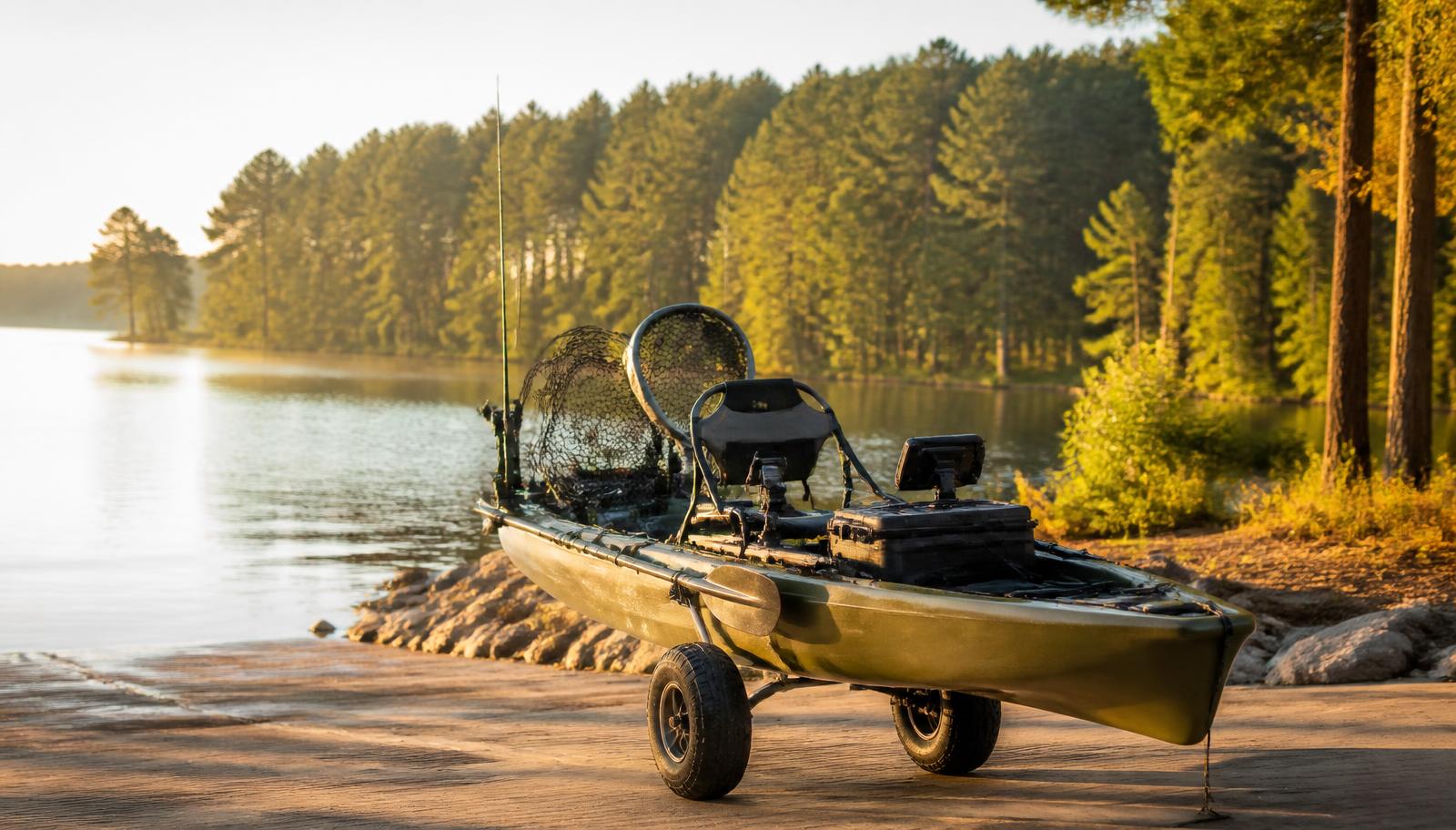
Best Kayak Carts & Dollies (2026): From Sand to Boat Ramp
A great kayak cart is the most underrated piece of paddling gear. It does not get the glory of a carbon paddle or a fish finder, but it solves the least enjoyable part of every trip: getting a 60–100 pound boat from your truck or garage to the water.
Without a cart, you are dragging, dead-lifting, or asking a friend to help. With the right cart, you can roll a loaded fishing kayak down a gravel path, across a sandy beach, and right to the boat ramp by yourself. This guide explains how to choose a kayak cart, which designs work best for different hulls, and the models we recommend in 2026.
Why a Kayak Cart Matters More Than You Think
The average sit-on-top fishing kayak weighs between 55 and 85 pounds. Add a crate, rods, a cooler, and a battery, and you are easily past 100 pounds. Even a light recreational kayak becomes awkward after a quarter mile of uneven ground.
A cart does three things:
- Protects your hull. Dragging a kayak across concrete, gravel, or shells scratches the plastic and wears down the keel.
- Protects your back. You roll the load instead of lifting it.
- Speeds up launch and landing. One person can load and unload without help, which matters if you fish alone.
If you own a heavier model like the Perception Pescador Pro 10.0 or the Pelican Catch Mode 110, a cart is not optional. It is part of the package.
How to Choose a Kayak Cart
1. Scupper vs. strap carts
Scupper carts insert posts into the kayak's scupper holes and support the hull from underneath. They are fast to load, very stable, and ideal for sit-on-top kayaks with open scuppers. The downside is that the posts can stress the scupper holes on some hulls, and they do not work on sit-in kayaks or inflatables.
Strap or platform carts cradle the hull on a frame and hold it with a strap or bungee. They work on almost any kayak type, including sit-in, inflatable, and tandem models. Loading takes a few extra seconds, but the versatility is worth it if you own multiple boats.
2. Wheel type
- Air-filled pneumatic tires roll over sand, gravel, and roots better than anything else. They absorb bumps but can go flat.
- Foam-filled or airless tires cannot go flat and still roll well on hard surfaces. They are a good middle ground.
- Solid plastic wheels are cheap and maintenance-free, but they struggle on soft sand and rough terrain.
If you launch from beaches, prioritize pneumatic or large foam tires. If you only use paved ramps, solid wheels are fine.
3. Weight capacity
Check the cart's rated capacity against your loaded kayak. A 150-pound cart is enough for most recreational kayaks. A 200-pound or higher capacity is safer for fishing kayaks with gear. When in doubt, round up.
4. Frame material
Aluminum frames resist corrosion and keep weight low. Steel frames are stronger and cheaper but can rust if the coating chips. Plastic frames are the lightest and cheapest, but they flex under heavy loads.
5. Foldability and storage
Some carts fold flat or remove their wheels for storage. If trunk space is tight, look for a collapsible frame. If you keep the cart inside the kayak while paddling, a compact scupper cart is usually easier to stow than a wide platform cart.
Top Picks by Use Case
Best all-around: Railblaza C-Tug Kayak Cart
The C-Tug is the closest thing to a universal favorite. It uses a strap-on platform with adjustable pads, so it fits sit-on-top, sit-in, and even some canoes. The airless wheels are puncture-proof and roll surprisingly well on firm sand. It breaks down without tools and stores inside most hatches.
Best for: Paddlers who want one cart for multiple kayaks.
Best for heavy fishing kayaks: Wilderness Systems Heavy Duty Kayak Cart
This cart is built for big boats. The wide aluminum frame and oversized air-filled tires distribute weight across the hull, and the 330-pound capacity handles loaded fishing kayaks without complaint. It is overkill for a 40-pound rec boat, but perfect for the Lifetime Tamarack Angler 100 or Pelican Sentinel 100X Angler when rigged for a full day.
Best for: Heavy fishing kayaks and long portages.
Best for inflatable kayaks: Bonnlo Kayak Cart
Inflatable kayaks do not have scupper holes, so a strap-style cart is required. The Bonnlo cart uses a simple U-frame with a tie-down strap and folds flat for travel. It is light enough to toss in the bag with an Intex Explorer K2 or Sea Eagle 370.
Best for: Inflatable, tandem, and travel kayaks.
Best beach wheels: Malone Xpress Scupper Kayak Cart
The Malone Xpress uses scupper posts and large balloon-style tires that float over soft sand. It is not the fastest cart to load, but it is the easiest to roll across a beach when the ramp is far from the water. The aluminum frame is corrosion-resistant, which matters in salt air.
Best for: Beach launches and saltwater anglers.
Best budget cart: Cypress Rowe All-Terrain Kayak Cart
The Cypress Rowe cart is the value benchmark. It has a simple strap frame, solid wheels, and a capacity around 150 pounds. It will not last decades, but it gets light recreational kayaks to the water for very little money. Pair it with the Pelican Argo 100X or Ocean Kayak Malibu 9.5 and you have an affordable entry-level setup.
Best for: First-time buyers and light recreational kayaks.
Best compact/stowable cart: Suspenz Smart DLX
The Suspenz DLX folds down small enough to fit inside a large hatch or behind a truck seat. The airless tires are maintenance-free, and the scupper-post design makes loading a sit-on-top kayak a one-handed job. It is a premium option for anglers who want to keep the cart on board during the trip.
Best for: Anglers who paddle between launches and need the cart inside the boat.
Kayak Cart Comparison Table
| Cart | Style | Tire Type | Capacity | Best For | Price Range |
|---|---|---|---|---|---|
| Railblaza C-Tug | Strap platform | Airless | ~300 lb | All-around / multiple kayaks | $$ |
| Wilderness Systems Heavy Duty | Strap platform | Pneumatic | 330 lb | Heavy fishing kayaks | $$$ |
| Bonnlo Kayak Cart | Strap U-frame | Solid | ~150 lb | Inflatable / travel kayaks | $ |
| Malone Xpress | Scupper | Pneumatic balloon | ~200 lb | Beach / saltwater | $$ |
| Cypress Rowe All-Terrain | Strap frame | Solid | ~150 lb | Budget recreational | $ |
| Suspenz Smart DLX | Scupper | Airless | ~200 lb | Compact stowage | $$$ |
How to Load and Secure a Kayak on a Cart
- Balance the weight. Place the cart under the cockpit or just behind the seat. This is usually the kayak's center of gravity and makes the bow light enough to steer.
- Use a strap, even with scupper carts. A sudden stop or root can lift a scupper cart out of the hull. A cam strap around the cart and kayak prevents surprises.
- Tie down loose gear. Secure rods, paddles, and crates so they do not swing or fall during the walk.
- Mind the terrain. On steep ramps, keep the kayak pointed uphill and control the cart with a leash or strap in your hand. Letting it roll free is how kayaks end up in parking lots.
- Rinse after saltwater. Salt accelerates corrosion on bolts and bearings. A quick freshwater rinse extends the life of any cart.
Which Cart Matches Your Kayak?
- Fishing kayaks over 75 lb: Wilderness Systems Heavy Duty or Railblaza C-Tug.
- Light recreational kayaks under 55 lb: Cypress Rowe All-Terrain or Bonnlo cart.
- Inflatable or tandem kayaks: Bonnlo cart or Railblaza C-Tug.
- Beach launches: Malone Xpress with balloon tires.
- Need to stow the cart inside the boat: Suspenz Smart DLX or Railblaza C-Tug.
Final Thoughts
A kayak cart is not the most exciting purchase, but it is one of the most useful. The right cart removes the barrier between your vehicle and the water, which means you fish more, paddle farther, and lift less. Match the cart to your hull, your launch surface, and your storage space, and the boat practically launches itself.
For more transport advice, read our guides on how to transport a kayak in a truck bed and how to transport and store a kayak. If you are still choosing a boat, start with our complete buyer's guide or the best fishing kayaks of 2026.
Frequently asked questions
Can I use a kayak cart on soft sand?
Only with balloon or wide airless wheels. Narrow hard plastic wheels dig in within a few feet on dry sand. Look for wheels at least 4 inches wide — beach carts like the Malone Xpress or the Suspenz Smart DLX roll over soft sand where a standard ramp cart stops dead.
Do scupper carts work on every kayak?
No. Scupper carts need two aligned scupper holes in the rear third of a sit-on-top hull, so they will not fit a sit-inside kayak or most inflatables. For those, use a strap-style cradle cart that supports the hull from underneath.
Where should the cart sit under the kayak?
Behind the midpoint, roughly two-thirds of the way toward the stern. That puts most of the weight on the wheels while leaving a light, liftable bow to steer with — around 15 to 25 pounds at the handle for a typical 60 to 80 pound fishing kayak.
Related Kayaks
Kayaks that pair with this guide
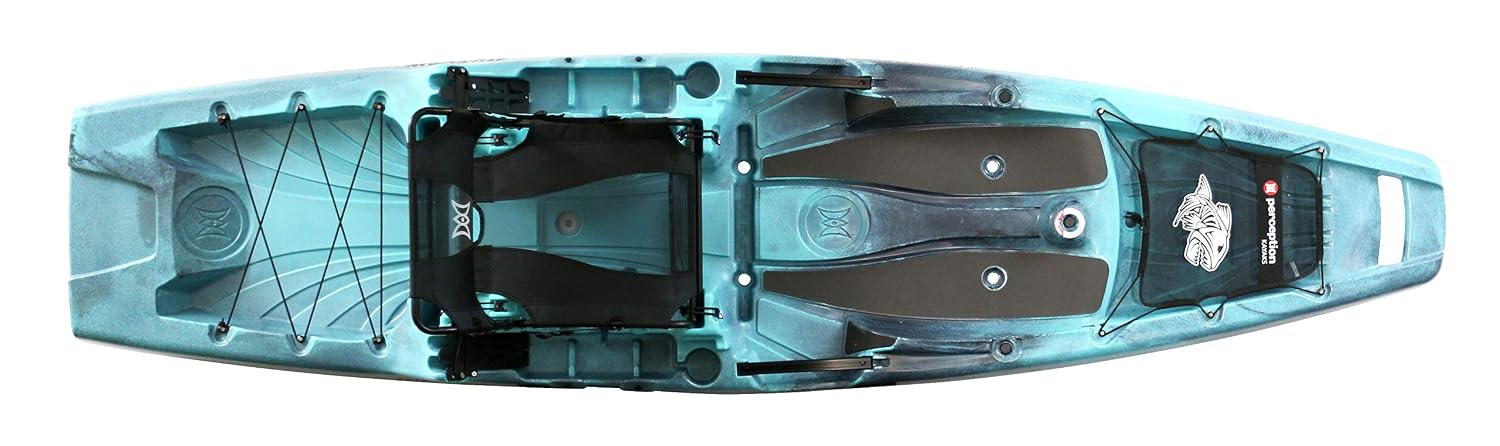
Pescador Pro 10.0

Catch Mode 110
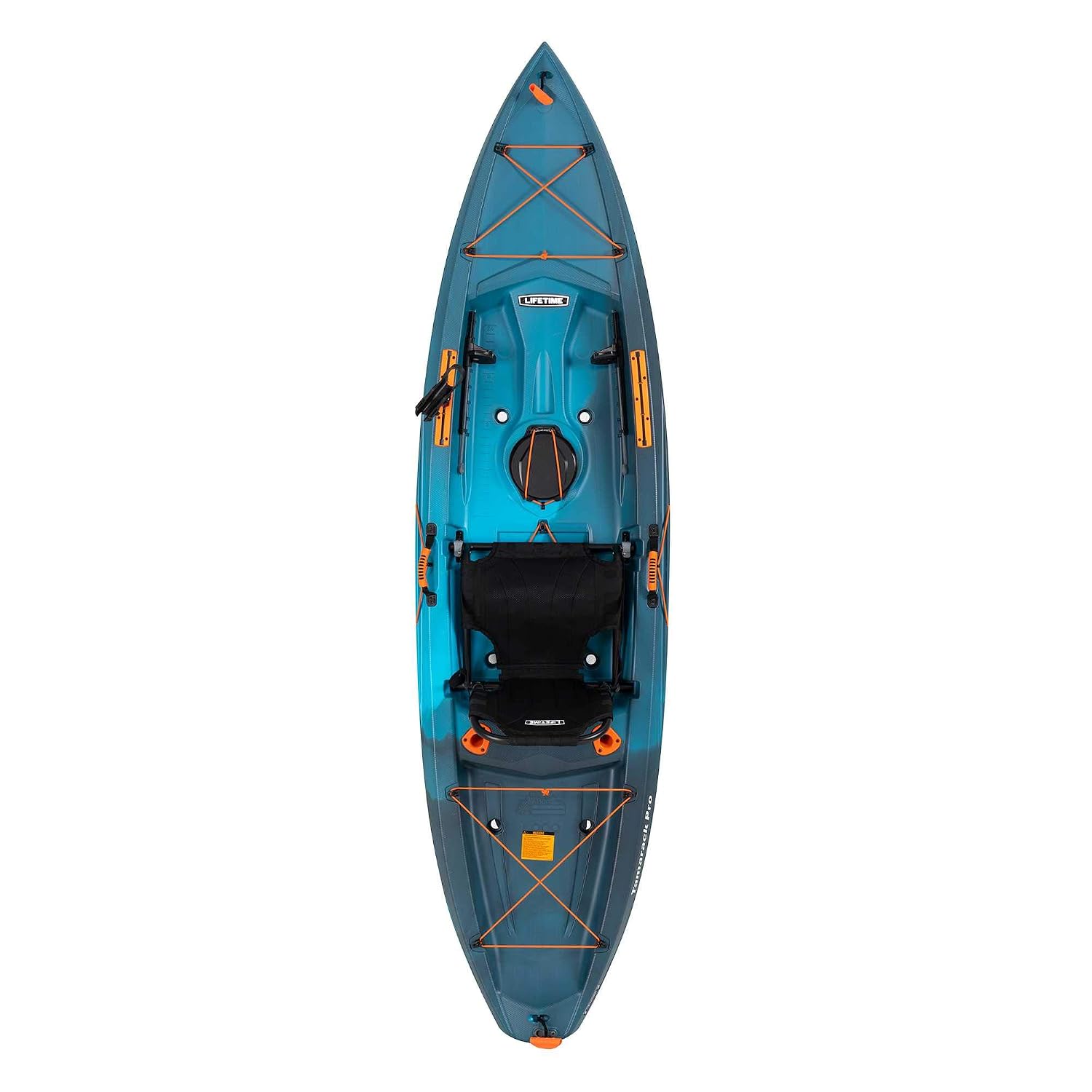
Tamarack Angler 100
Keep Reading
Related articles

The Best Fishing Kayaks (2026 Guide)

Best Kayak Anchor Options: Folding, Pin & Trolleys

Best Kayak Roof Racks: J-Cradles, Saddles & Assists
Next up: The Best Fishing Kayaks (2026 Guide), Best Kayak Anchor Options, and J-Cradles, Saddles & Assists.