The Best Inflatable Kayaks of 2026: Top Portable Picks
Cut through the noise and discover the best inflatable kayaks of 2026. From budget recreation to rigid drop-stitch performers, here is our hands-on review.

Modern inflatable kayaks have completely discarded the pool-toy stereotype, evolving into rigid, puncture-resistant crafts capable of tackling everything from flatwater lakes to Class III whitewater. Whether you live in a third-floor apartment or want to avoid buying a roof rack, these portable boats offer performance that rivals traditional rotomolded polyethylene without stealing your storage space. In this guide, we break down the best inflatable kayaks on the market based on real-world tracking, material durability, inflation pressure, and overall value.
Why Inflatable Kayaks Are Overtaking Hard Shells
For years, serious paddlers looked down on inflatables. Early models were soft, caught every gust of wind, and tracked poorly. That dynamic changed with advances in synthetic materials, high-pressure drop-stitch construction, and multi-chamber safety engineering.
When evaluating inflatable vs hard shell kayaks, the primary advantage comes down to access. A 12-foot rigid kayak requires a dedicated storage space, a roof rack system, and the physical capacity to lift 50 to 70 pounds overhead. An inflatable kayak folds into a duffel bag, fits in the trunk of a Honda Civic, and weighs as little as 22 pounds. If you want a complete breakdown on storage options, check out our guide on how to transport and store a kayak.
Modern synthetic fabrics have narrowed the durability gap as well. High-end inflatables use 1000-denier PVC or heavy-gauge K80 polyurethane coatings that resist abrasion from submerged rocks, gravel landings, and oyster beds. Unless you are dragging a fully loaded boat across jagged concrete every weekend, a quality inflatable will last for years.
Key Technical Specs: What to Look For
Before picking a boat, you need to understand how design variables translate to water performance. Never judge an inflatable by its color or seating arrangement alone; look at pressure ratings and hull design.
Inflation Pressure (PSI)
- Low-Pressure Inflatables (1.0 to 2.0 PSI): These rely on standard air bladders. They are inexpensive, light, and quick to inflate, but the hull flexes under load. This flexing creates hydro-drag, slowing your momentum in choppy water.
- High-Pressure Drop-Stitch Inflatables (10.0 to 15.0 PSI): Drop-stitch technology connects two layers of fabric with thousands of polyester threads. When inflated to double-digit PSI, the floor and side walls become as rigid as a wooden board. This rigidity maximizes power transfer per paddle stroke and cuts through chop.
Hull Material & Denier
- K80 Polyurethane / Standard PVC: Lightweight and flexible, typical on budget boats. Resistant to mild scrapes but susceptible to puncture under direct impact with sharp rebar or zebra mussels.
- Nylon-Reinforced Tarpaulin / 1000D Polyester: High-end construction layering heavy-duty PVC around a woven fabric core. Excellent puncture and tear resistance.
- Nitrylon: Synthetic rubber coating that remains pliable in cold water, cleans up easily, and offers higher eco-friendly recyclability than standard PVC.
Chamber Safety
Safety requires multiple independent air bladders. According to standard marine safety protocols, a quality boat must feature at least three separate air chambers (typically left wall, right wall, and floor). If one chamber suffers a puncture, the remaining bladders retain enough buoyancy to float you back to shore. Review our list of kayak safety essentials before hitting open water.
Where these sit in our overall ranking: our top ten kayaks for 2026 is now made up of hard-shell and folding boats, so the inflatables below are category picks rather than top-ten picks. If you want packability with hard-shell paddling manners, look at the Tucktec 10' Folding Kayak (Amazon) — 24 lb, folds flat in about two minutes, and no pump.
The Best Inflatable Kayaks Reviewed
1. Sea Eagle 370 Pro – Best Overall Value & Versatility
If you need a rugged, multi-use boat that handles tandem touring or solo expeditions without breaking the bank, the Sea Eagle 370 stands out. Constructed from 38-mil K80 PVC, this craft features high-frequency welded seams that resist sharp impacts.
- Length: 12 ft 6 in
- Width: 34 in
- Boat Weight: 32 lbs
- Weight Capacity: 650 lbs
- Max PSI: 1.1 PSI
- Price / Buy: Check Sea Eagle 370 on Amazon
The Sea Eagle 370 holds up to 650 pounds, making it suitable for two adults plus camping gear or a large dog. Dual skegs welded to the stern assist tracking in open water, while the open-cockpit design allows easy entry and exit. While it runs at a lower pressure (1.1 PSI) than rigid drop-stitch kayaks, its wide beam provides exceptional primary stability. Compared to rigid tandem options like the Ocean Kayak Malibu Two, the SE370 packs down into an included carry bag you can toss into any car trunk.
Pros:
- Massive 650-lb payload capacity
- Highly durable 38-mil PVC construction
- Includes paddles, pump, and footrests in the Pro package
Cons:
- Low pressure means minor hull flexing in heavy waves
- Inflatable seats lack tall back support for multi-day trips
2. Intex Explorer K2 – Best Ultra-Budget Tandem
For casual paddlers heading out onto calm lakes or slow rivers, the Intex Explorer K2 remains the most accessible entry point into the sport. It features an eye-catching yellow hull for high visibility and removable inflatable seats with adjustable backrests.
- Length: 10 ft 3 in
- Width: 36 in
- Boat Weight: 30.6 lbs
- Weight Capacity: 400 lbs
- Max PSI: 1.0 PSI
- Price / Buy: Check Intex Explorer K2 on Amazon
The Explorer K2 uses a 30-gauge vinyl shell and an inflatable I-beam floor for stability. A removable directional skeg provides surprisingly straight tracking for a budget boat under 11 feet. It is an excellent choice for casual summer outings, though paddlers seeking long-distance efficiency should look toward drop-stitch alternatives or browse our list of the best kayaks for beginners.
Pros:
- Unbeatable entry-level price point
- Bright yellow color enhances visibility near powerboats
- Removable deep skeg improves straight-line tracking
Cons:
- Thin vinyl requires caution around sharp rocks and hooks
- Low seating position puts your hips below the waterline
3. Intex Challenger K1 – Best Low-Cost Solo Kayak
If you want to get on the water solo for the lowest possible cost, the Intex Challenger K1 delivers functional performance on closed ponds and flat reservoirs.
- Length: 9 ft 0 in
- Width: 30 in
- Boat Weight: 23.9 lbs
- Weight Capacity: 220 lbs
- Max PSI: 1.0 PSI
- Price / Buy: Check Intex Challenger K1 on Amazon
Featuring cargo net storage on the bow and a cockpit designed for low wind resistance, the Challenger K1 weighs under 24 pounds fully inflated. While it cannot match the speed or durability of hard-shell solo sit-ins like the Pelican Argo 100X or sit-on-tops like the Sun Dolphin Bali SS 12, it gives apartment dwellers a light, functional option for casual recreation.
Pros:
- Extremely lightweight and simple to inflate solo
- Built-in front cargo net holds dry bags securely
- Low profile resists side-wind drift
Cons:
- 220-lb maximum weight limit restricts larger paddlers
- Material is prone to punctures if dragged across sharp shores
Performance Comparison Table
| Model | Length / Width | Weight | Capacity | Construction / Max PSI | Best For |
|---|---|---|---|---|---|
| Sea Eagle 370 | 12'6" / 34" | 32 lbs | 650 lbs | 38-mil K80 PVC (1.1 PSI) | Multi-person versatility & rivers |
| Intex Explorer K2 | 10'3" / 36" | 30.6 lbs | 400 lbs | 30-Gauge Vinyl (1.0 PSI) | Recreational flatwater tandem |
| Intex Challenger K1 | 9'0" / 30" | 23.9 lbs | 220 lbs | 30-Gauge Vinyl (1.0 PSI) | Ultra-budget solo recreational |
| Drop-Stitch Solo (Generic) | 11'0" / 32" | 28 lbs | 350 lbs | Full Drop-Stitch (10-12 PSI) | Fast distance touring & rough water |
Can You Fish From an Inflatable Kayak?
Anglers often worry that fishing hooks and sharp dorsal fins will puncture an inflatable hull. Modern drop-stitch inflatables and heavy PVC skins are tough enough to handle treble hooks dropped on the floor, though budget vinyl boats require more caution.
If stand-up casting stability is your priority, high-pressure drop-stitch floors inflate to 10+ PSI, providing a surface nearly as flat and firm as plywood. However, if you plan to mount fish finders, anchor trolleys, and multiple rod holders, a rotomolded fishing kayak remains superior.
For anglers considering dedicated setups, check out our reviews of the best fishing kayaks or look into popular hard-shell models like the Perception Pescador Pro 10, Lifetime Tamarack Angler, Pelican Sentinel 100X Angler, or Pelican Catch Mode 110.
If you want to adapt an inflatable for fishing, keep these points in mind:
- Read our fundamental tips on fishing from a kayak and our complete guide to kayak fishing 101.
- Understand the tactical trade-offs in our comparison of kayak fishing vs shore fishing.
- Use flush-mount accessory rails mounted to glued-on PVC pads rather than drilling into materials.
- Carry a lip-gripper to secure toothy fish over the side rather than hauling them into your lap.
Essential Accessories for Inflatable Kayaks
Buying an inflatable is only step one. To get out on the water efficiently, you need the right gear matched to portable setups.
1. Four-Piece Breakdown Paddles
Standard two-piece paddles are difficult to pack into an inflatable's travel bag. Invest in a high-quality 4-piece breakdown paddle that packs down to 25 inches or less. Pay attention to blade stiffness and feathering adjustments. Learn how to select the right length in our guide to the best kayak paddles, or search for 4-piece kayak paddles on Amazon.
2. High-Pressure 12V Electric Pumps
Manual double-action barrel pumps work fine, but inflating a two-person high-pressure boat by hand takes 10 to 15 minutes of heavy exertion. A 12V electric pump plugs directly into your car's power outlet or an external battery pack, allowing you to dial in your target PSI (e.g., 12.0 PSI) and auto-shutoff when full. Pick up a high-pressure pump by searching 12V electric kayak pumps on Amazon.
3. Transporting Your Inflated Craft
If you inflate your craft at home or at a campground and need to move it down to the boat ramp, carrying it by hand gets exhausting fast. Use a heavy-duty cart with wide airless tires. Read our buyer's roundup of the best kayak carts and dollies. If you own a pickup, check out our guide on how to transport a kayak in a truck bed.
Understanding Cockpit Design and Seating
Before making a final choice, consider how hull designs affect comfort. Inflatables fall into two primary seating arrangements:
- Open Deck (Sit-On-Top Style): Features high side tubes and an open floor. Water drains quickly through scupper valves, making these easy to re-enter from deep water. Read more on sit-in vs sit-on-top kayaks.
- Enclosed Cockpit (Sit-In Style): Uses integrated spray decks or raised bow/stern covers to keep water out of your lap in cold weather or choppy conditions. Learn more about hull categories in our overview of kayak types explained.
For a full step-by-step breakdown of hull geometry, tracking fins, and rocker profiles, check out our comprehensive guide on how to choose a kayak buyers guide.
Inflatable Care, Storage, and Puncture Repair
With simple preventative care, an inflatable kayak will last for years of regular paddling. Follow this three-step maintenance protocol:
1. Wash and Fully Dry Before Storage
Never fold up a wet inflatable kayak and leave it in a warm storage bag for weeks. Trapped moisture leads to mildew, unpleasant odors, and seam degradation. Flush out sand and salt water with fresh water, then wipe down the entire hull with a microfiber towel. Leave the boat loosely inflated in the shade until all moisture evaporates.
2. UV Protection
Sunlight degrades synthetic materials over time. Apply a UV protectant spray twice a season to shield PVC or Nitrylon fabrics from color fading and material breakdown. You can grab a bottle by searching 303 aerospace protectant on Amazon.
3. Field Patch Protocol
Always keep a repair kit inside a waterproof dry bag on the water. You can browse durable options by searching dry bags for kayaking on Amazon.
If you suffer a puncture on the water:
- Locate the leak using soapy water (look for bubbling air).
- Completely deflate and clean the area around the tear with an alcohol swab.
- Cut a circular fabric patch that extends at least one inch beyond the edge of the tear.
- Apply marine polyurethane adhesive evenly to both surfaces, wait two minutes for it to become tacky, and press the patch down firmly.
- Allow 24 hours for a complete cure before re-inflating to full working pressure.
The bottom line
Inflatable kayaks offer real paddling performance without requiring garage space or roof racks. If you want a proven, heavy-duty tender that carries massive weight and withstands rough river recreational trips, choose the Sea Eagle 370. For casual flatwater outings on a tight budget, the Intex Explorer K2 and Intex Challenger K1 get you out on the water for a fraction of the price of a rigid boat.
Focus on your target water conditions, inflation pressure preferences, and payload requirements. Modern materials have removed the old limitations—pick the boat that matches your lifestyle and get paddling.
Related Kayaks
Kayaks that pair with this guide
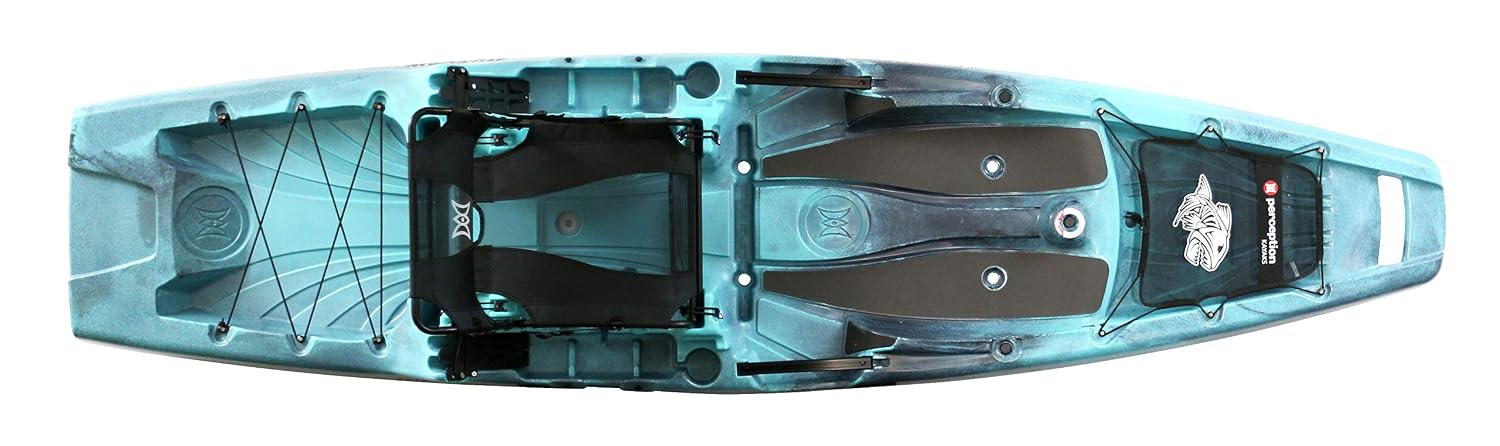
Pescador Pro 10.0

Pungo 120

Catch Mode 110
Keep Reading
Related articles

Best Tandem Kayaks of 2026: Top 2-Person Models

The Best Lightweight Kayaks of 2026: Easy to Lift & Launch

Best Kayaks for Big and Tall Paddlers (2026 Picks)
Next up: Best Tandem Kayaks of 2026: Top 2-Person Models, The Best Lightweight Kayaks of 2026, and Kayaks for Big and Tall Paddlers.