Best Kayaks for Beginners: 7 Stable, Easy Picks
Seven beginner kayak picks compared with catalog specifications, practical buying criteria, storage advice, and essential safety guidance for your first trips.
This post contains Amazon affiliate links. We may earn a commission if you buy, at no extra cost to you. Read our disclosure.
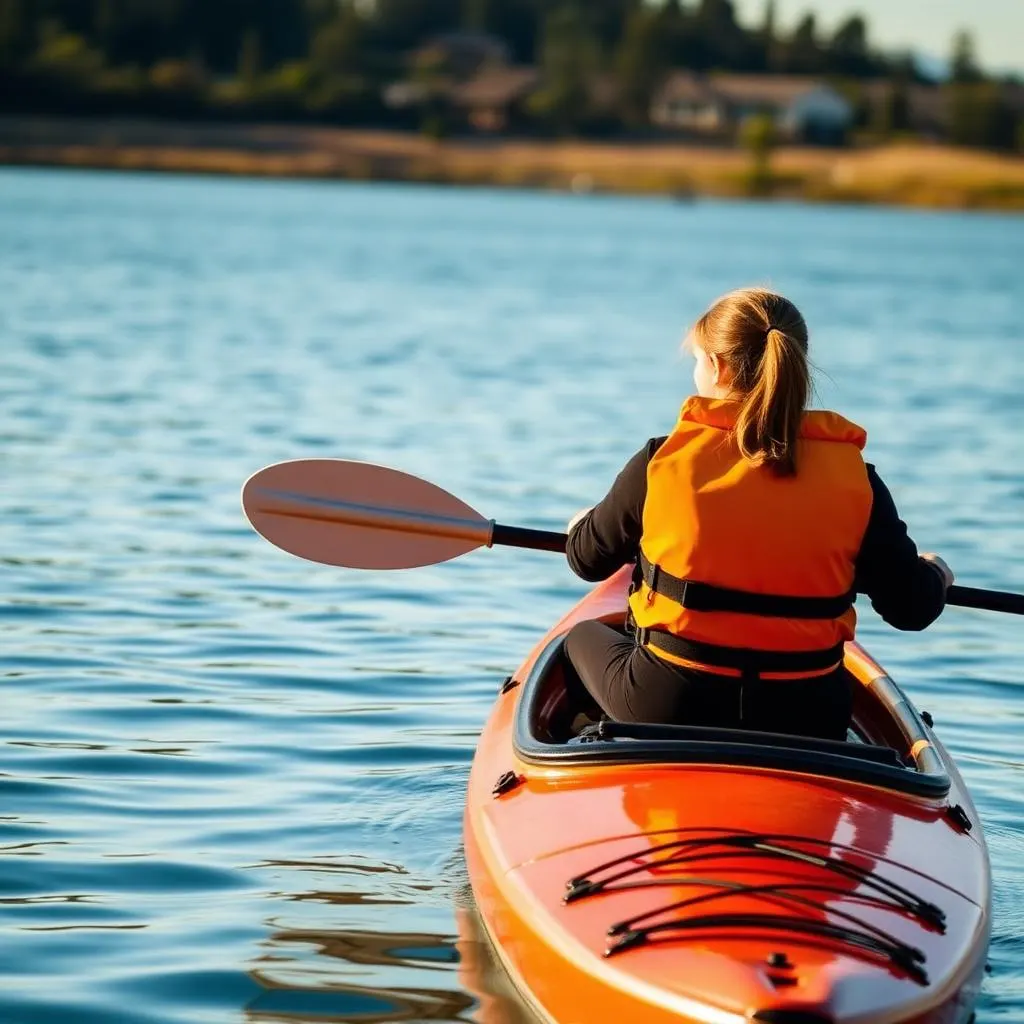
The best kayaks for beginners are boats that suit sheltered water, fit the paddler comfortably, and are manageable to carry and store: start with the Pelican Argo 100X for solo recreation or the Lifetime Tamarack Angler 100 for warm-water fishing. Choose a sit-on-top if an open deck and easier re-entry matter most, a recreational sit-in if you prefer a sheltered cockpit, or a portable boat when storage would otherwise stop you paddling. The seven picks below are researched and compared using catalog specifications, not personal product testing; none replaces a properly fitted life jacket or basic paddling instruction.
Quick picks: best beginner kayaks by use
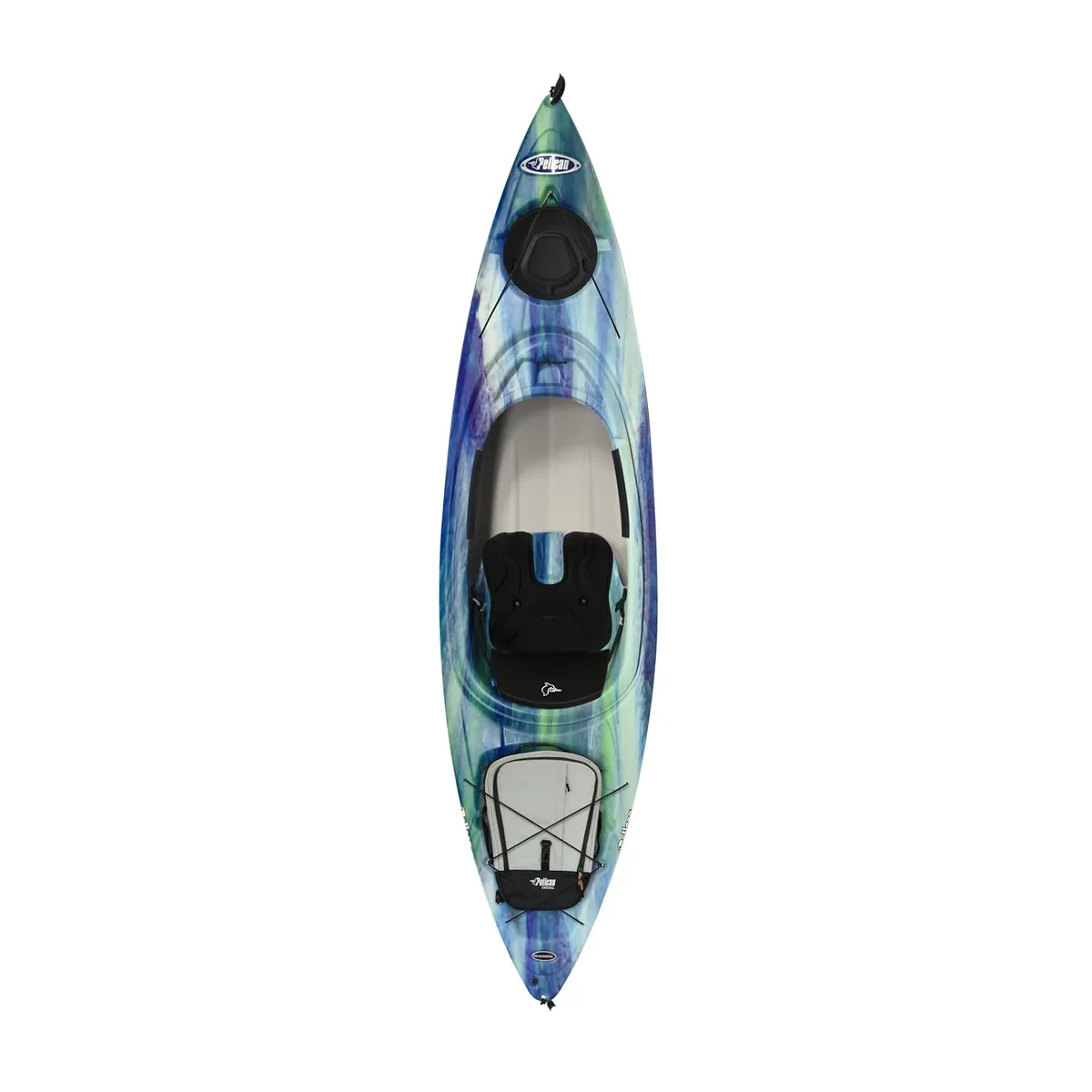
- Pelican Argo 100X — overall solo recreational pick: a relatively manageable rigid sit-in for sheltered lakes and ponds.
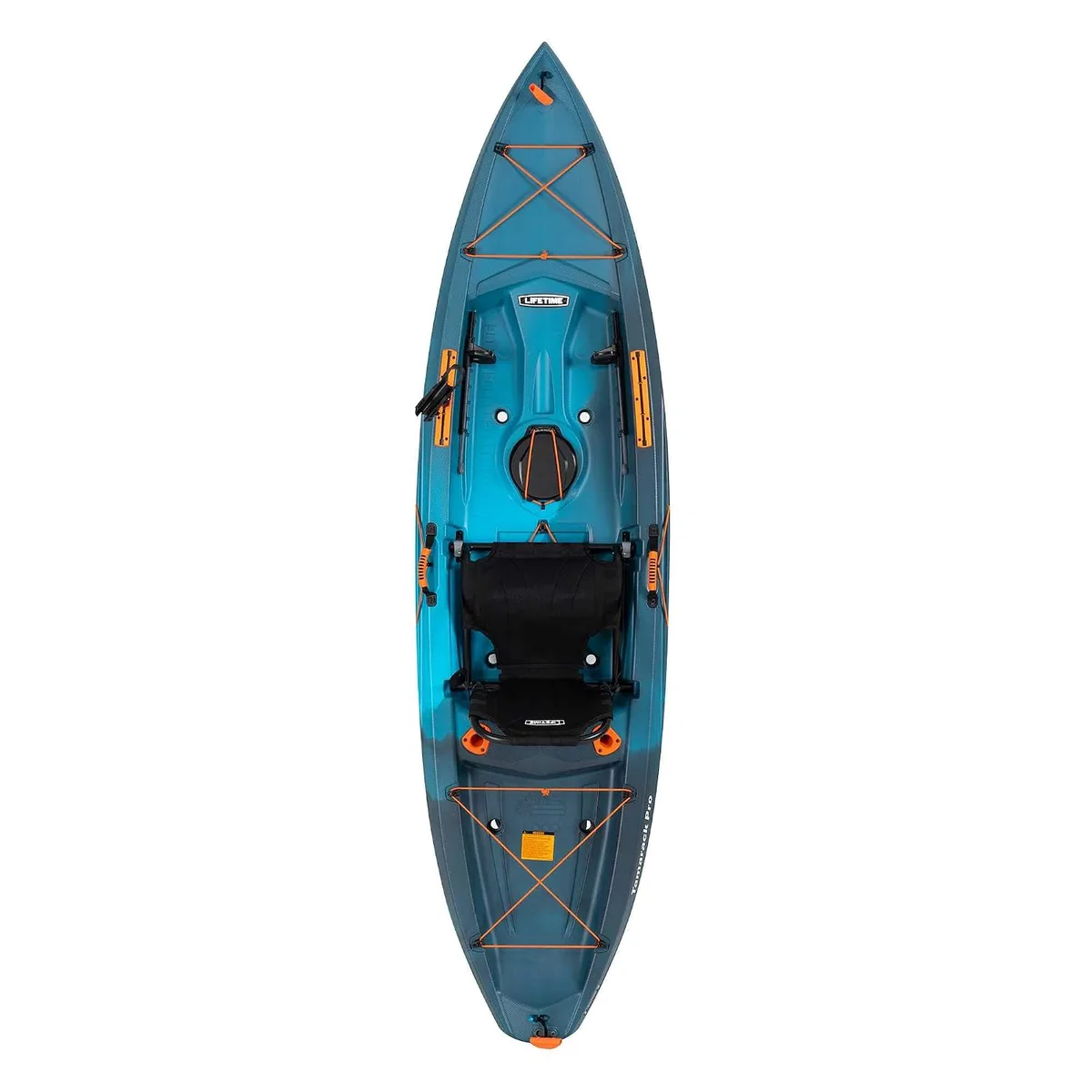
- Lifetime Tamarack Angler 100 — beginner fishing pick: an open sit-on-top for paddlers who want room for fishing gear.
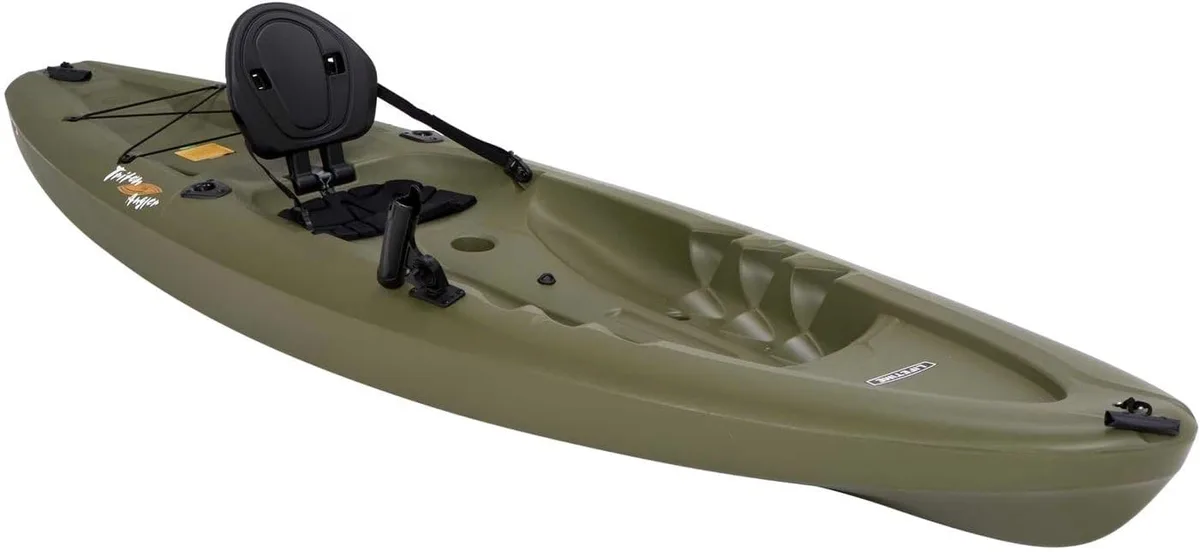
- Lifetime Triton Angler 100 — alternative open-deck fishing pick: compare the seat, outfitting, and exact package against the Tamarack before deciding.
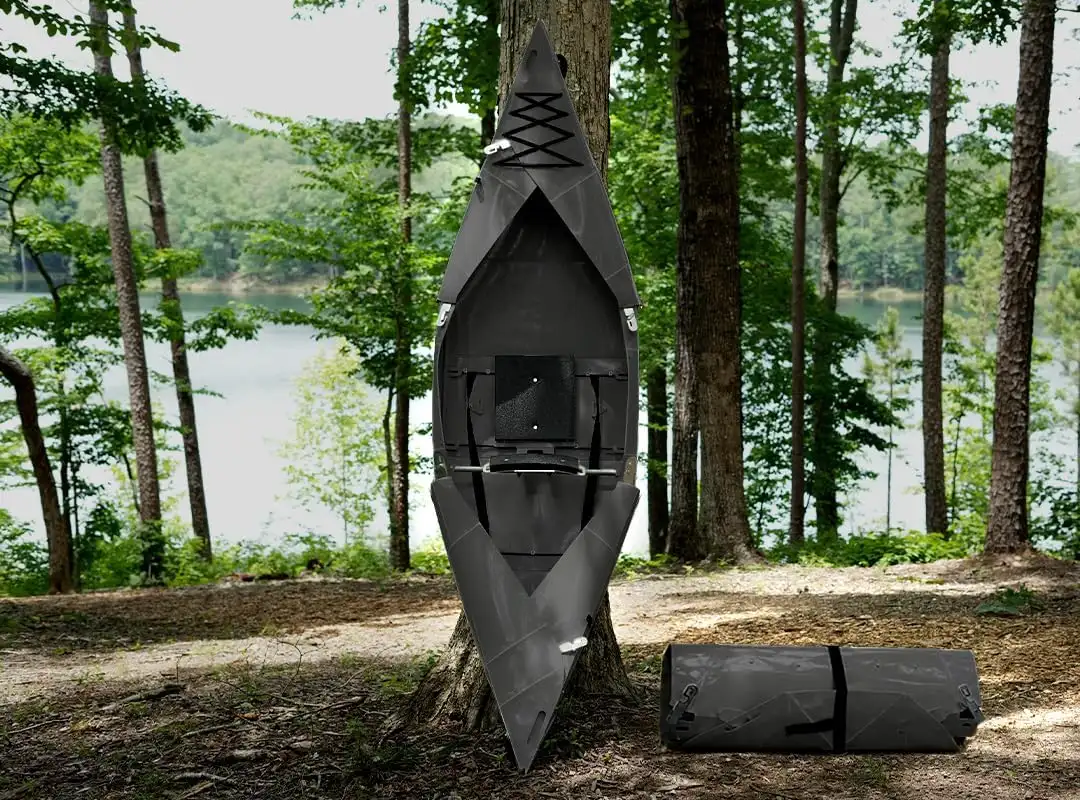
- Tucktec 10' Folding Kayak — small-space pick: a folding hard-shell for paddlers without rigid-boat storage.
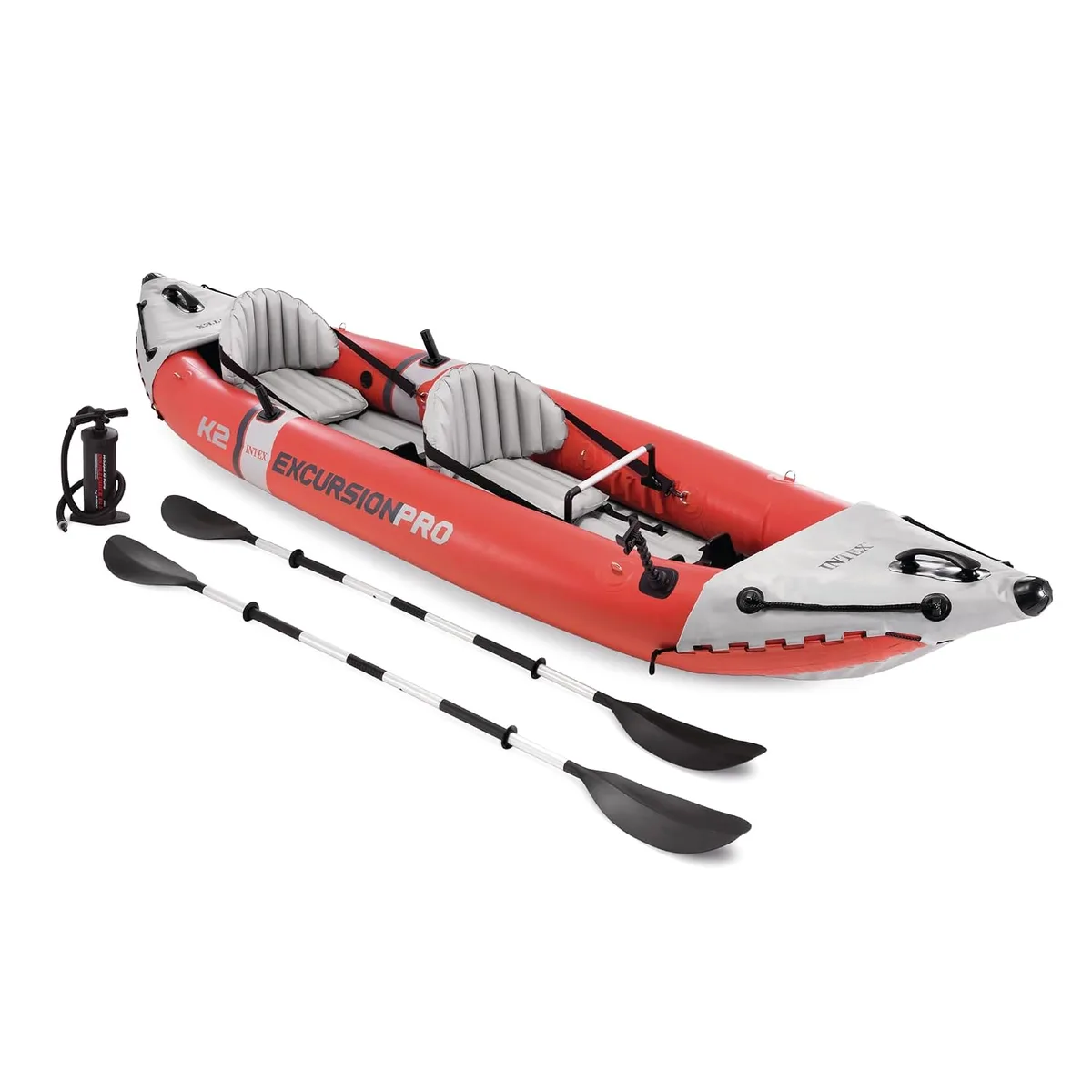
- Sea Eagle SE370 — portable tandem pick: an inflatable option for partners who need a packable boat.
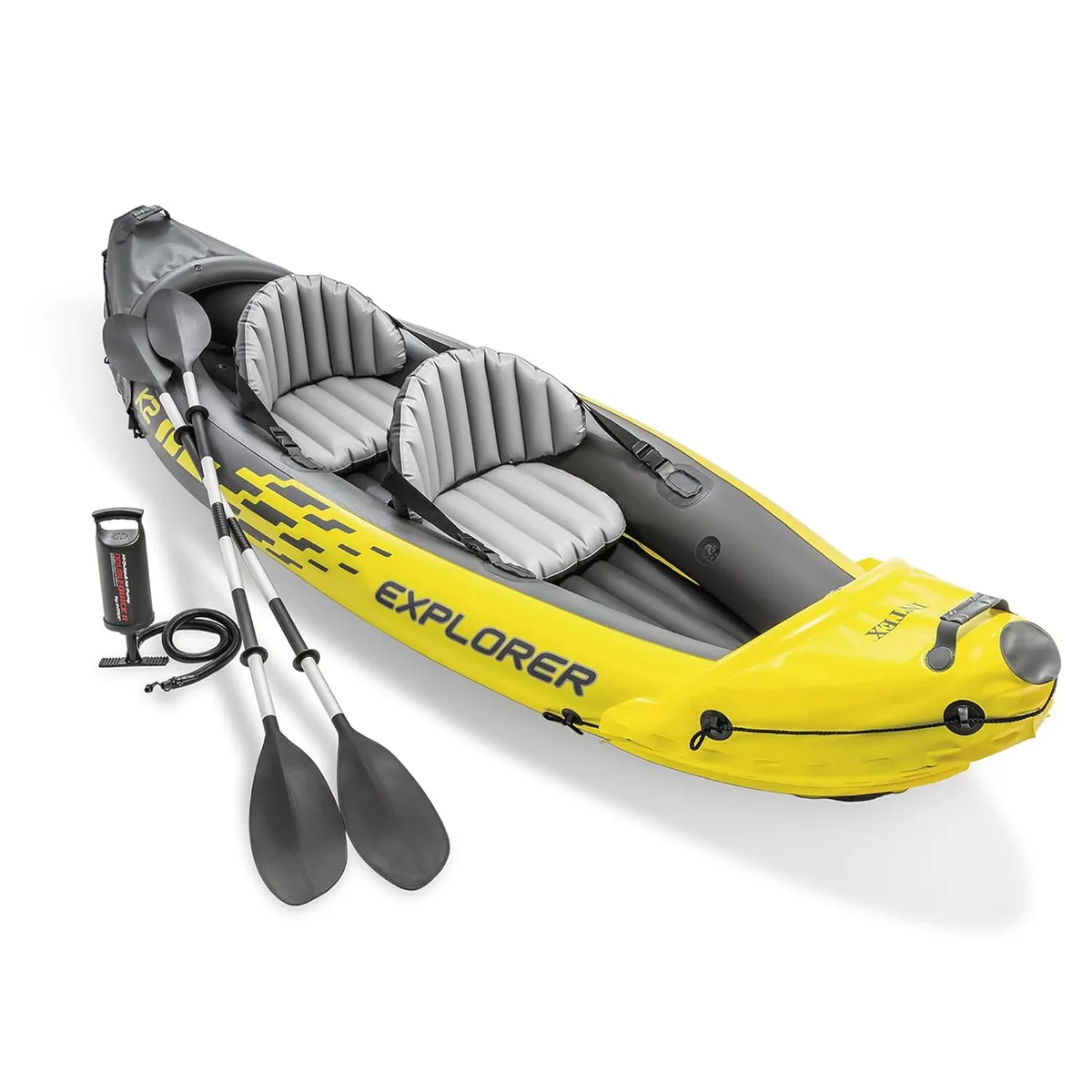
- Intex Explorer K2 — occasional tandem recreation pick: consider it for short, sheltered outings rather than exposed water.
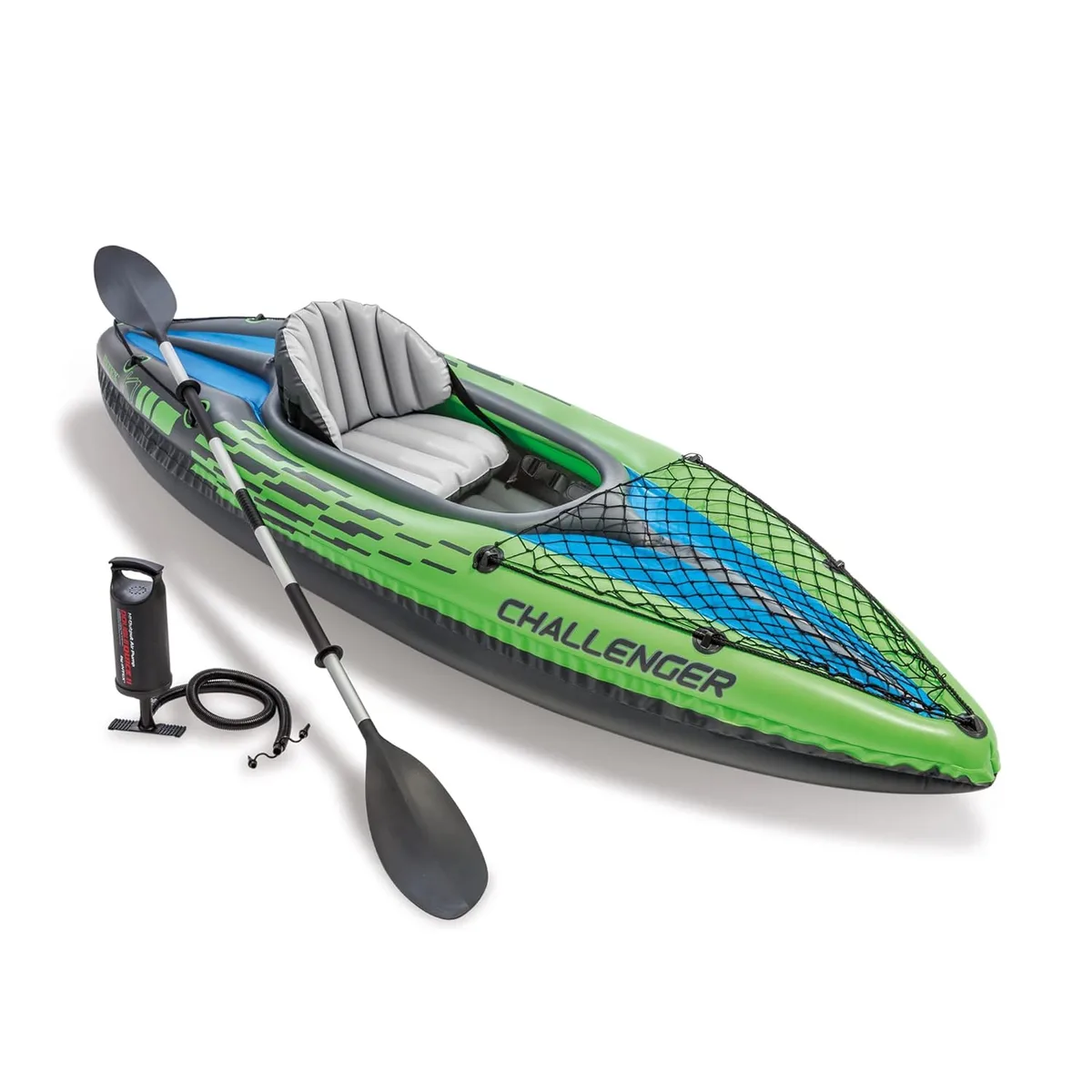
- Intex Challenger K1 — compact inflatable solo pick: check its load limit carefully before adding equipment.
These are the same seven recommendations discussed below, in the same order. Several are retained catalog models rather than current top-ten selections; that does not make them interchangeable with newer versions. Check the exact model, package contents, availability, and current retailer price rather than assuming every pick meets a fixed budget ceiling.
Full comparison: catalog specifications
The table reproduces our catalog fields for these exact models. Beam means hull width, listed capacity includes the total load, and a portable boat's hull weight is not necessarily the weight of its complete carry bag with pump, paddles, and accessories. Unknown specifications should be omitted, not estimated; check the manufacturer's current documentation when a retailer offers a different model year or package.
| Kayak | length | beam | weight | capacity | material | type |
|---|---|---|---|---|---|---|
| Argo 100X | 9' 6" | 28.5" | 36 lb | 275 lb | RAM-X Polyethylene | Sit-in |
| Tamarack Angler 100 | 10' 0" | 31" | 52 lb | 275 lb | HDPE | Sit-on-top |
| Triton Angler 100 | 10' 0" | 31" | 52 lb | 275 lb | HDPE | Sit-on-top |
| Tucktec 10' Folding Kayak | 10' 0" | 30" | 24 lb | 300 lb | UV-stable HDPE sheet | Folding hard-shell |
| SE370 Pro | 12' 6" | 34" | 26 lb | 650 lb | 38-mil PolyKrylar | Inflatable Tandem |
| Explorer K2 | 10' 3" | 36" | 31 lb | 400 lb | Vinyl | Inflatable Tandem |
| Challenger K1 | 9' 0" | 30" | 27 lb | 220 lb | Vinyl | Inflatable Solo |
Read this as a shortlist, not a scorecard. A wider boat is not automatically safer, the lightest hull may require more setup, and the largest capacity does not tell you whether the seating arrangement fits your body. The choice should begin with your water, transport, and paddling partner, then narrow to the boats that satisfy all three.
1. Pelican Argo 100X — best overall beginner kayak
The Argo is the starting point for a solo paddler who wants a straightforward recreational sit-in. Its catalog weight makes it lighter than the rigid fishing sit-on-tops in this selection, an important distinction if you must move the boat from storage to a vehicle before every outing. Whether you can load it alone still depends on your strength, lifting height, rack arrangement, and access to the launch.
Choose it for: relaxed paddling on sheltered lakes, ponds, and gentle waterways where a recreational cockpit suits your preference. Compare how your knees, feet, and hips fit, and whether you can enter and leave without getting stuck or feeling cramped.
Understand the trade-off: a sit-in can collect water after a capsize. An accessible cockpit does not make deep-water recovery automatic; ask an instructor about flotation, emptying the boat, and re-entry. Do not buy it as a substitute for a sea kayak on exposed coastlines.
The Argo's advantage here is a practical combination of rigid construction, solo seating, and manageable listed weight, not a promise that every beginner will find it comfortable. Check the exact variant and included outfitting.
Check the Pelican Argo 100X price on Amazon
2. Lifetime Tamarack Angler 100 — best beginner fishing kayak
The Tamarack suits a beginner whose main goal is fishing from an open deck. A sit-on-top avoids an enclosed cockpit and can make getting back aboard more straightforward with instruction and practice. That is useful in warm-water recreation, but the boat can still overturn and re-entry still requires strength and a practiced technique.
Choose it for: sheltered fishing trips where you can transport a heavier rigid hull and want to keep tackle accessible. Before buying, consider where you will put the paddle while handling a fish, how you will secure loose gear, and whether your seating position remains comfortable while you cast.
Understand the trade-off: the catalog weight is higher than the Argo and Tucktec. Carrying handles, a cart, a low loading surface, or another person may be more important than an additional fishing accessory. Check what is included in the particular retailer package rather than assuming a paddle or upgraded seat comes with every offer.
Start with modest equipment and learn boat control before adding complicated rigging. A stable-feeling deck is not permission to stand, lean far over the side, or anchor in moving water.
Check the Lifetime Tamarack Angler 100 price on Amazon
3. Lifetime Triton Angler 100 — alternative open-deck fishing pick
The Triton gives beginners another rigid sit-on-top to compare with the Tamarack. Their stored dimensions and load ratings match, so specifications alone do not establish a comfort winner. The seat, foot support, handles, and supplied fishing fittings need checking on the actual listing; do not assume the Triton has a raised frame seat or a particular accessory bundle.
Choose it for: an open-deck fishing layout when the available model and seating arrangement suit you better than the Tamarack. If possible, sit in an equivalent boat at an outfitter and pay attention to back support, leg position, and the ease of reaching equipment.
Understand the trade-off: this is not a lighter alternative to the Tamarack in our catalog. Plan the same transport assessment, including whether you can move the hull over grass or down an uneven bank without straining yourself.
The Triton remains in this beginner article even though it is not in the active top ten. Treat it as a specific comparison option, not a recommendation to buy an unfamiliar replacement carrying a similar name.
Check the Lifetime Triton Angler 100 price on Amazon
4. Tucktec 10' Folding Kayak — best for small spaces
The Tucktec is a folding hard-shell, not an inflatable. Its HDPE sheet forms the hull, so there is no inflation step, but correct assembly is part of every trip. Its catalog hull weight is the lowest in this shortlist, which makes it worth considering when a rigid boat would be difficult to store or transport.
Choose it for: apartment storage, small vehicles, and sheltered recreation where packing space is the deciding constraint. Work through the current assembly instructions on land before taking it to a launch, and check every closure and fitting rather than rushing because someone is waiting behind you.
Understand the trade-off: folded convenience does not guarantee the same fit, storage arrangement, or handling as a conventional recreational kayak. Check the current model's seating, flotation provisions, load instructions, and intended conditions. Keep essential equipment secured without obstructing your exit.
Choose this construction because it solves a genuine storage problem, not because portability makes it appropriate for every river or weather forecast. Budget time for assembly, inspection, cleaning, and drying.
Check the Tucktec Folding Kayak price on Amazon
5. Sea Eagle SE370 — best portable tandem option
The SE370 is the portable tandem to consider when you and a partner want one boat that packs away. Its stored capacity is higher than the other boats here, but capacity alone does not establish how comfortable two paddlers will be or how much cargo the seating layout can accommodate.
Choose it for: partners who can share setup, paddling, and post-trip drying, and travelers whose storage prevents rigid-tandem ownership. Count both paddlers and every carried item when checking the load, then consider how that load is distributed.
Understand the trade-off: an inflatable needs inspection, correct inflation, and drying before storage. Exposed inflatable sides can be affected by wind, so choose a protected launch and avoid an offshore breeze. A high load rating does not turn a recreational outing into an open-water expedition.
The catalog names this model SE370 Pro. Confirm that the Amazon offer matches the intended hull and check the supplied seats, pump, and paddles; package names and contents can differ. Agree with your partner who steers and how you will respond if either wants to return early.
Check the Sea Eagle SE370 price on Amazon
6. Intex Explorer K2 — best for occasional tandem recreation
The Explorer K2 is an inflatable tandem to evaluate for occasional, short outings on sheltered water. Its broad catalog beam may appeal to nervous beginners, but width is only one influence on stability. Seating position, load distribution, hull shape, and conditions matter too.
Choose it for: partners who prioritize compact storage and simple recreational use over long-distance efficiency. Make sure both paddlers fit comfortably with their required equipment, and check whether the complete package contains the items you expect.
Understand the trade-off: a vinyl inflatable requires attention to abrasive launches, sharp equipment, air pressure, and drying. Do not assume a low purchase price removes the need for instruction, flotation equipment, or a recovery plan. Avoid exposed water and moving-water hazards beyond the manufacturer's intended use and your skills.
If you are uncertain about tandem paddling, renting can help answer whether you enjoy sharing a boat before buying one. The cheapest offer is not a bargain if you find the seating, carrying routine, or setup unsuitable.
Check the Intex Explorer K2 price on Amazon
7. Intex Challenger K1 — compact inflatable solo pick
The Challenger K1 is a solo inflatable, not simply the Explorer with an empty second seat. It has the lowest stored capacity in this selection, making load planning especially important. Compare your fully equipped paddling weight with the limit before deciding it is the right compact option.
Choose it for: a paddler whose load fits comfortably within the rating and whose planned outings stay sheltered and conservative. Compact storage may be attractive, but check cockpit access, legroom, and how the boat feels with the equipment you intend to bring.
Understand the trade-off: low capacity leaves less flexibility for extra cargo. A solo paddler also needs a recovery and communication plan without relying on a partner already aboard. Carry the necessary safety equipment rather than leaving it behind to make the numbers fit.
Do not select a child's boat or an adult boat solely by price: fit, supervision, skills, and the correct life jacket come first. For this model, confirm the current instructions and complete package weight rather than treating the hull figure as your entire carrying load.
Check the Intex Challenger K1 price on Amazon
How to choose your first kayak: buying criteria
Sit-on-top vs sit-in
A sit-on-top offers an open deck and usually drains through scuppers. It is often the simpler choice for warm-water fishing and paddlers who dislike an enclosed cockpit, but you are more exposed to spray, wind, and cold. A sit-in provides a sheltered seating area; after flooding, however, recovery may involve emptying water as well as getting back inside.
Neither style is universally safer. Choose the design whose exit and recovery you can learn, in conditions appropriate to that boat. A spray skirt requires specific instruction and a practiced release; it should not be added casually to make a beginner boat seem suitable for rough water. Our kayak types guide explains seating and construction choices in more detail.
Length and the water you will paddle
Longer hulls often favor cruising efficiency and directional control, while shorter recreational hulls can be easier to maneuver and store. These are tendencies, not guarantees: hull shape, load, and paddling technique also affect tracking. Start with protected water and realistic distances rather than buying for an expedition you have not planned.
A short recreational kayak is not a whitewater boat simply because it turns easily, and a longer inflatable is not automatically a touring kayak. Compare intended use alongside the catalog length.
Width, stability, and fit
A broad hull can feel steady initially, but there is no universal minimum width that guarantees beginner safety. Stability changes as a boat leans and as weight moves around. Check whether the seat supports a balanced posture, whether you can reach the water without awkward stretching, and whether your feet are supported.
Avoid treating stability as resistance to every mistake. Stay seated, keep movements controlled, and learn turns and recovery skills. A boat that seems reassuring at the dock can behave differently when waves arrive or cargo shifts.
Carrying weight and storage
Use listed weight to narrow the choice, then consider the actual lift. Moving a hull at waist height is different from raising it onto a tall vehicle in a crosswind. There is no reliable weight threshold that every adult can lift safely.
Include the complete portable package, wet equipment, and the distance from parking to water in your assessment. A cart or shared carry can help, but only if the route permits it. Read our transport and storage guide before committing to a boat you cannot keep or move safely.
Capacity: count the whole load
Add the paddler, clothing, life jacket, water, food, tackle, and all other equipment; for a tandem, include both people. Treat the stated maximum capacity as a limit, not a target, and leave headroom for handling and the manufacturer's recommendations. There is no single percentage rule that reliably applies to every design.
Also check seating space and load distribution. A boat can remain under its limit yet fit poorly or sit unevenly. If normal trip equipment puts you close to the maximum, choose a more suitable boat rather than removing essential safety gear.
Portable construction and the complete budget
Folding and inflatable boats solve different storage problems. Compare assembly, inflation, inspection, and drying routines, not just packed size. Our inflatable vs hard-shell guide covers the ownership trade-offs.
Budget for a fitted life jacket, suitable paddle, transport equipment, and instruction before optional fishing upgrades. Keep current retailer prices separate from the specification comparison. For a broader decision process, use the kayak buyer's guide; for the active rankings, see our top ten kayaks.
Safety and PFD essentials before your first launch
Wear a properly fitted, approved life jacket throughout the trip, not just when conditions look difficult. The US Coast Guard's life jacket guidance explains why wearing one matters. Fasten and adjust it so it stays snug without preventing breathing or paddling, and check the label for the intended user and activity.
Start on sheltered water with an easy return to shore, avoid offshore wind, check the forecast, and dress for the water temperature rather than the pleasant air. Tell someone your route and expected return, carry a suitable communication method and sound signal, and keep equipment secured. Do not paddle impaired or assume a calm launch means conditions will remain calm.
Learn how to exit and recover from your chosen design before depending on it. Practice under suitable supervision in appropriate conditions; a sit-on-top re-entry and a flooded sit-in recovery are different skills. The American Canoe Association resource library offers paddling education and safety materials to support formal instruction.
Our kayak safety essentials covers float plans, cold water, weather, and rescue preparation in depth. The life jacket guide can help narrow fit and features, but a product recommendation never replaces checking the actual label and fit.
Frequently asked questions
What is the best kayak for a complete beginner?
The Pelican Argo 100X is a useful solo recreational starting point if you prefer a sit-in; the Lifetime Tamarack Angler 100 suits warm-water fishing from an open deck. Choose based on fit, carrying ability, and sheltered-water use rather than assuming either is best for everyone. Instruction and a worn life jacket matter with both.
Is a sit-on-top or sit-in better for beginners?
A sit-on-top avoids an enclosed cockpit and can simplify climbing back aboard, while a sit-in offers more shelter but may need emptying after flooding. Neither removes the need to learn recovery. Match the seating style to your comfort, water conditions, and ability to practice the relevant skills.
How wide should a beginner kayak be?
There is no width that guarantees stability for every paddler. Use beam as one comparison factor alongside hull shape, seating, body fit, and load distribution. If possible, try an appropriate rental or consult an outfitter before deciding that a wider model is automatically better.
How heavy is too heavy to carry alone?
That depends on your lifting ability, vehicle height, grip, and launch route. Assess the complete load you will move, not just the catalog hull weight. If you cannot comfortably manage storage, loading, and carrying, arrange assistance or choose a more suitable transport and boat combination.
Is an inflatable kayak good for beginners?
It can be appropriate for sheltered recreation when storage is limited and you can follow inflation, inspection, and drying instructions. Compare load capacity and seating carefully, and be conservative about wind and distance from shore. Portability does not make an inflatable suitable for every environment.
How much spare weight capacity should I allow?
Count every paddler and all carried equipment, stay below the manufacturer's maximum, and follow any operating-load guidance for that model. Do not assume a universal percentage applies to all kayaks. Choose more capacity or a better-fitting design if your ordinary trip load leaves little margin.
Related Kayaks
Kayaks that pair with this guide
Argo 100X
Tamarack Angler 100
Triton Angler 100
Tucktec 10' Folding Kayak
SE370 Pro
Explorer K2
Challenger K1
Keep Reading
Related articles
Best Budget Kayaks of 2026: High-Value Picks Under $500
How to Choose a Kayak: The Complete Buyer's Guide
The Best Fishing Kayaks (2026 Guide)
Next up: Best Budget Kayaks of 2026: High-Value Picks Under $500, The Complete Buyer's Guide, and Best Fishing Kayaks.