Best Pedal Kayak Guide (2026): Top Hands-Free Models
Upgrade your water time with the best pedal kayaks of 2026. Compare fin versus propeller drives, hull stability, weight, and key hands-free fishing features.

Pedal-drive kayaks allow you to maintain position in wind, cover miles without arm fatigue, and keep your hands on a fishing rod or camera at all times. Choosing the best pedal kayak comes down to matching the drive mechanics—push-fin versus rotational propeller—to your water depth, transport setup, and physical demands. This guide details top hands-free hulls, drive efficiency, shallow-water performance, and heavy-rig transport strategies.
Fin Drives vs. Propeller Drives: Core Differences
Before picking a specific hull, you need to choose between the two dominant propulsion mechanisms on the market: flexible push-fin drives and rotational propeller drives. Both eliminate the constant reliance on best kayak paddles, but they operate differently in vegetation, shallow water, and reverse maneuvers.
Push-Fin Drives (Flexible Blade Systems)
Fin systems use a scissor action: pushing your feet forward and backward sweeps two flexible underwater blades back and forth like a penguin's flippers.
- Shallow Water Draft: Fin drives can flutter flush against the underside of the hull when you spread your feet wide. This allows you to slide over shallow sandbars or rock shelves in 3 to 4 inches of water without pulling the drive out.
- Obstacle Deflection: High-end modern fin drives feature kick-up blades that pivot upward automatically when striking underwater stumps or boulders, saving shear pins and sprockets from catastrophic shear stress.
- Pedal Motion: The back-and-forth stair-stepper motion engages different muscle groups than cycling, often feeling easier on the knees during long days on open water.
Rotational Propeller Drives (Bicycle Style)
Propeller drives function like a stationary bicycle. Your feet pedal in full 360-degree circles to spin a two-blade shaft-driven propeller under the hull.
- Instant Reverse: The biggest advantage of rotational propeller drives is instant reverse. You simply pedal backward to back away from shoreline docks or stop momentum when hooked into a heavy fish while fishing from a kayak.
- Vegetation Management: Propellers act like weed cutters, but thick hydrilla or eelgrass can wrap tightly around the prop shaft. You must raise the drive assembly up through the trunk to clear heavy vegetation by hand.
- Draft Requirements: Propellers require a minimum constant depth of 12 to 14 inches to operate. Striking a submerged rock with a propeller down can bend the drive shaft or crack the lower gear housing.
Key Factors When Buying a Pedal Kayak
Pedal kayaks are significantly heavier and wider than standard paddle craft. Evaluating structural specs before buying prevents transport head-flapping at the boat ramp.
Fitted Weight vs. Total Weight
Manufacturer spec sheets display two weight figures: hull weight (bare boat without seat, drive, or gear) and fitted weight (fully equipped boat ready to float). A hull weighing 75 lbs often expands to a 105 lb rig once you drop in the pedal console, high-back frame seat, and gear tracks. If you plan on loading your craft onto a best kayak roof rack, keeping hull weight under 80 lbs is vital unless you use a load-assist system or ramp loader.
Steering Systems and Rudder Control
Because your hands are not manipulating a blade in the water, pedal kayaks rely on hand-operated cable or rod steering controllers mounted on the side gunwales. Look for oversized drop-down rudders with spring-loaded deployment cords. Aluminum or hard composite rudders provide crisp tracking in crosswinds, whereas thin plastic rudders can flex and drift under load.
Seat Design and Leg Room
Pedaling requires proper biomechanical alignment to prevent lower back strain. Multi-position aluminum frame seats with breathable mesh and adjustable trim tracks are non-negotiable for long outings. Measure your inseam: tall paddlers over 6'2" need at least 38 to 42 inches of footwell clearance from the seat track to the pedal drive mounts.
Pedal Kayak Comparison Specifications
The following table outlines performance traits, weights, and drive types across popular pedal kayak design classes:
| Model Class / Style | Drive Mechanism | Hull Length | Fitted Weight | Beam Width | Target Water Type | Est. Price Range |
|---|---|---|---|---|---|---|
| Compact Fin Cruiser | Flexible Fin | 10' 6" - 11' 0" | 68 - 78 lbs | 33.5" | Small Lakes, Estuaries | $1,400 - $1,900 |
| Full-Size Prop Angler | Rotational Prop | 12' 0" - 12' 6" | 95 - 110 lbs | 34.5" - 36" | Inshore, Large Lakes | $2,100 - $2,800 |
| Heavy-Duty Offshore | Fin or Instant Prop | 13' 6" - 14' 0" | 115 - 140 lbs | 36" - 38" | Ocean Swells, Large Rivers | $3,200 - $4,500 |
| Lightweight Prop Hybrid | Transom / Modular Prop | 10' 0" - 10' 8" | 60 - 70 lbs | 32" | Calm Ponds, Shallow Creeks | $1,100 - $1,600 |
Top Pedal Kayak Performance Categories
Different designs target specific environments. Here is how modern pedal craft perform across real-world operational profiles.
1. High-Stability Fishing Platforms
If standing to sight-cast is your top priority, you need a wide tunnel hull or flat-bottom trimaran design measuring 34 to 36 inches across. High-stability pedal models allow full stand-up casting without heel-roll draft instability. When exploring dedicated angling setups, check our roundups on the best fishing kayaks and review core techniques in kayak fishing 101.
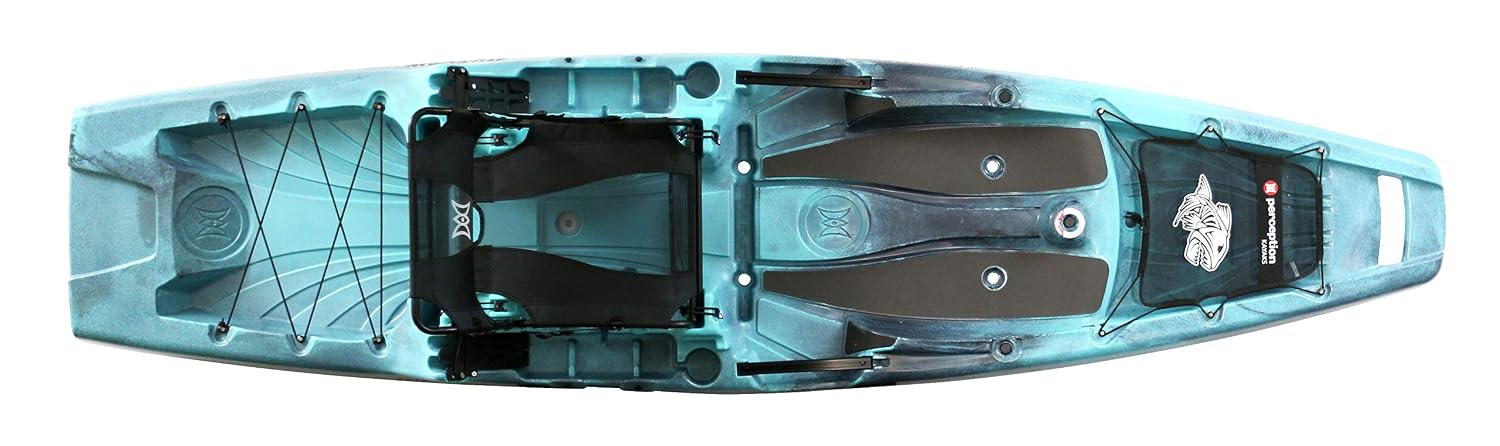
Standard paddle hulls like the Perception Pescador Pro 10 (buy on Amazon) or the Lifetime Tamarack Angler 100 (buy on Amazon) offer great entry-level paddle performance, but adding a dedicated pedal system provides the continuous hands-free micro-adjustments needed to stay locked on top of tight fish-holding structures in strong tidal currents.
2. Compact Inshore and River Pedal Kayaks
For tight rivers, small lakes, and backwater creeks, short pedal kayaks in the 10- to 11-foot range handle quick turns significantly better than 14-foot ocean hulls. Short hulls pivot inside their own length using tight rudder throws.
- Maneuverability: A short waterline allows crisp tracking through narrow channels without sweeping wide into overhanging branches.
- Car-topping: Lower overall mass makes loading onto smaller vehicles far easier than managing full-sized tournament boats.
- Shallow draft: Pair a 10-foot hull with a kick-up fin drive to slip over sunken logs and river shoals without bending propeller shafts.
Entry paddle boats such as the Pelican Sentinel 100X Angler (buy on Amazon) or Pelican Argo 100X (buy on Amazon) display lightweight hull simplicity, but moving up to a dedicated 10-foot pedal frame gives anglers continuous velocity control without picking up a paddle every time the breeze pushes the boat off target.
3. Open Ocean and Big Water Distance Cruisers
Longer hulls—13 to 14 feet—cut through choppy water with less hull slap and maintain momentum between pedal strokes. If you cross large reservoirs, ocean bays, or deep coastal passes, long waterlines deliver higher cruising speeds (3.5 to 4.5 knots continuous) while tracking straight during cross-winds.
Ensure long hulls feature sealed bow hatches with rubber gaskets, high deck scuppers, and dual transducer scupper mounts for wide-beam fish finders. For more background on choosing structural layouts, consult our guide to sit-in vs sit-on-top kayaks and kayak types explained.
Essential Accessories for Pedal Kayakers
Operating a pedal drive requires gear tweaks compared to traditional paddler setups:
- Short Emergency Paddle: Never launch without a back-up paddle. A lightweight two-piece paddle broken down into side storage clips ensures you can reach shore if a shear pin breaks or heavy weeds choke your drive hub. Read our guide on the best kayak paddles for compact emergency options.
- Heavy-Duty Scupper Cart: Because pedal boats frequently tip the scales past 90 lbs fully loaded, standard flimsy carts collapse. Invest in high-load pneumatic or airless carts; check our breakdown of the best kayak carts and dollies.
- High-Float PFD: Low-profile Coast Guard approved vests with mesh lower backs prevent sweat build-up against raised mesh kayak seats. Review our selection of best kayak life jackets to match your seat frame.
- Drive Tether: Secure your drive assembly to the interior eyelets with a coiled wire leash. If you drop the drive during an open-water clear-out, a tether prevents a 15-pound drive module from sinking to the bottom.
Transporting and Storing Heavy Pedal Kayaks
Moving a 100-pound pedal kayak requires proper technique to avoid back injuries or damaged vehicle roofs.
Truck Bed Transport
If you own a pickup, transporting a pedal boat is straightforward. Drop the tailgate, load the hull stern-first, apply a high-visibility red flag to the overhang, and secure the boat using cam straps across the bow and stern handles. For detailed steps, check how to transport a kayak in a truck bed.
Roof Rack Loading Techniques
For SUVs and sedans, loading a heavy kayak requires smart leverage:
- Strip the kayak completely down: remove the pedal drive, seat, tackle boxes, and rod holders to shed 20 to 30 lbs of dead weight.
- Lay a durable bath mat or loading roller across your rear vehicle spoiler.
- Rest the bow of the kayak against the rear mat, lift the stern, and slide the hull forward onto your crossbars.
- Tie down the frame using cam buckle straps over structural points. Read our comprehensive guide on how to transport and store a kayak and setup instructions for the best kayak roof rack.
Frequently asked questions
Are pedal kayaks suitable for beginners?
Yes, pedal kayaks are exceptionally user-friendly for beginners because pedaling relies on natural leg movements rather than torso-rotation paddle strokes. Steering is handled via a simple hand lever, which reduces the learning curve for boat control on the water. Beginners should keep in mind that pedal kayaks are heavier to transport and require deeper water than basic paddle kayaks. If you are brand new to paddling, read our guide on best kayaks for beginners before purchasing.
How shallow can you go in a pedal kayak?
Rotational propeller drives require a minimum water depth of 12 to 14 inches to prevent the blades from striking the bottom and snapping shear pins. Push-fin systems can operate in as little as 3 to 4 inches of water by pushing the pedals far apart to hold the fins flat against the hull bottom. When navigating skinny water or muddy flats, anglers should be prepared to pull the drive system up into the deck cockpit and switch to a traditional paddle.
Can you paddle a pedal kayak if the drive breaks?
All pedal kayaks can be paddled traditionally if the drive unit fails or when navigating extremely shallow waters filled with submerged debris. Almost all pedal kayak designs include deck-mounted paddle clips along the gunwales to hold your paddle secure while your hands are free. However, because pedal kayaks feature wider beams and higher seating positions, paddling them requires a slightly longer paddle than a standard sit-on-top boat.
Do pedal kayaks require regular maintenance?
Pedal drive systems require routine maintenance to ensure smooth operation and long gear life, especially after use in salt or brackish water. You should thoroughly rinse the drive unit, pedal cranks, and trunk well with fresh water after every outing. Periodically inspect drive chains, cables, and sprockets for proper tension, apply marine-grade grease to internal gears, and replace worn shear pins or bent propeller blades before heading out on long trips.
The bottom line
Investing in the best pedal kayak transforms your time on the water by offering hands-free control, extended range, and precise boat positioning. If you regularly fish shallow flats, stump-filled backwaters, or weed-choked river bays, a flexible push-fin drive with kick-up blades provides unmatched clearance and obstacle defense. If instant reverse maneuvers, tight docking, and continuous circular pedaling suit your style, choose a sealed rotational propeller unit. Match the boat's fitted weight to your transport setup, keep your safety essentials packed, and enjoy effortless, hands-free navigation.
Related Kayaks
Kayaks that pair with this guide
Pescador Pro 10.0

Pungo 120

Catch Mode 110
Keep Reading
Related articles
The Best Fishing Kayaks (2026 Guide)

Best Kayaks for Big and Tall Paddlers (2026 Picks)

Best Kayak Paddles for 2026: Sizing, Materials & Picks
Next up: The Best Fishing Kayaks (2026 Guide), Best Kayaks for Big and Tall Paddlers, and Sizing, Materials & Picks.