Best Kayaks for Texas Rivers and Lakes: Top Picks
Navigate Texas limestone shoals, shallow rivers, and windy reservoirs with our researched comparison of top river and lake kayaks for Lone Star waters.
This post contains Amazon affiliate links. We may earn a commission if you buy, at no extra cost to you. Read our disclosure.

Paddling in Texas demands a kayak that can handle two drastically different environments: shallow, limestone-choked rivers with unexpected gravel bars, and sprawling, wind-whipped reservoirs where afternoon gusts create steep chop. Choosing the wrong hull type will leave you either dragging a 70-pound plastic tank across a 3-inch shallow ledge on the Guadalupe or fighting a losing battle against a 20-knot headwind on Lake Buchanan. We researched and compared the top kayaks on the market to identify the best options for navigating Texas water systems, taking into account hull draft, material durability, air circulation for hot weather, and open-water tracking.
Crucial Buying Criteria for Texas Waterways
Texas geography poses specific challenges that general buyer guides often overlook. Before picking a model, evaluate where your launch points sit and how the local hydrologic conditions affect hull performance.
Shallow Draft and Abrasion Resistance
Spring-fed hill country streams (such as the San Marcos, Frio, and upper Guadalupe) and low-flow summer runs on the Brazos or Trinity rivers feature exposed limestone, sharp cypress knees, and granite gravel shoals.
- Draft Depth: For low-flow summer runs, you need a hull that floats cleanly in 2 to 4 inches of water. Flat-bottom and pontoon-style sit-on-top hulls displace water outward rather than downward, allowing you to slide over shallow rocks where deep V-shaped touring hulls stall out.
- Material Composition: High-density polyethylene (HDPE) or proprietary thermoformed plastics like RAM-X are essential. Fiberglass and basic composite hulls will chip and crack on Texas river ledges. Single-layer blow-molded or rotomolded polyethylene can flex over boulders without structural failure.
Open-Water Wind Tracking
Texas lakes—such as Sam Rayburn, Lake Texoma, and Lake Travis—are large, open reservoirs subject to intense, sudden wind shifts. High-profile fishing kayaks with tall lawn-chair seats act like sails when caught in an afternoon south wind.
If you plan to split your time between rivers and big lakes, target a kayak with a hybrid hull profile: a pronounced center keel line or drop-down skeg for tracking across open bays, paired with enough secondary stability to absorb boat wakes from motorized recreational traffic.
Heat Mitigation and UV Endurance
Summer paddling in Texas frequently means dealing with 100°F+ ambient temperatures and relentless UV radiation.
- Sit-on-Top vs. Sit-Inside: Sit-on-top kayaks dominate Texas river paddling for a reason: they offer superior airflow, easy exit/re-entry for swimming break spots, and self-bailing scupper holes when negotiating small river riffles. For more details on these hull styles, read our guide on kayak types explained.
- Seat Materials: Avoid solid, thick neoprene or non-breathable foam seat cushions that trap heat against your back. Look for suspended frame seats made from hydrophobic, UV-resistant mesh.
Portability for Unimproved Launches
Many river access points across Texas consist of steep highway right-of-way mud banks or unofficial bridge turn-offs without paved launch ramps. A kayak that is too heavy to haul by hand will severely limit your launch sites. Pay close attention to hull weight, or plan to carry a dedicated dolly. If you carry your craft in a pickup, review our walkthrough on how to transport a kayak in a truck bed.
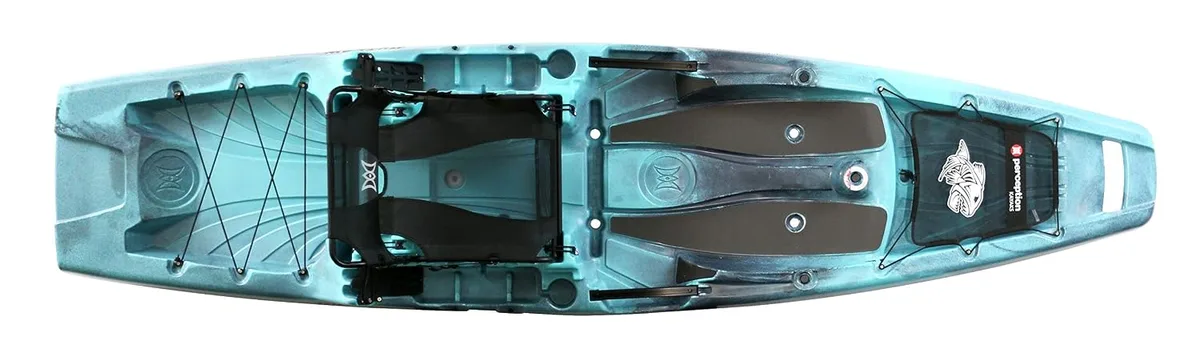
Best Overall for Texas Rivers: Perception Pescador Pro 10.0
The Perception Pescador Pro 10 (buy on Amazon) strikes the optimal balance between shallow-draft maneuverability and structural durability, making it our top recommendation for Texas river adventures.
Key Specifications
- Length: 10'6"
- Width: 32 inches
- Weight: 57 lbs
- Weight Capacity: 325 lbs
- Hull Material: Rotomolded High-Density Polyethylene
Why It Excels in Texas
The 10-foot-6-inch length makes the Pescador Pro 10 short enough to navigate tight turns around fallen timber on the Neches or San Bernard rivers while retaining enough waterline length to track straight across calm lake coves. Its stadium-style mesh chair features two height settings: lower it down for added stability in wind, or raise it up to keep your hip angle comfortable while casting into riverbanks.
The flat-center hull profile draws roughly 3 inches of water, allowing you to paddle through skinny channels without grounding out. A molded-in skid plate on the stern stern protects the hull when dragging over dry rock ledges during dry summer months.
Drawbacks
The wide bow design creates noticeable pushback when paddling into a stiff headwind on open lakes. It is built for river agility and short-to-medium lake trips rather than long-distance open-water touring.
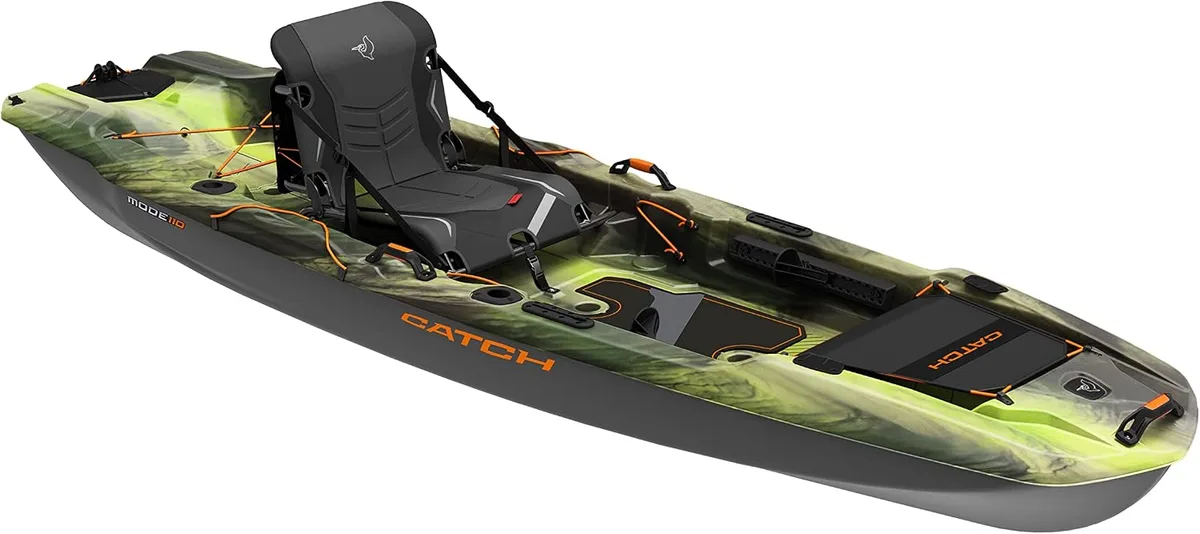
Best for Shallow Texas Rivers & Dragging: Pelican Catch Mode 110
If your routine involves bouncing over shallow limestone ledges and scraping through gravel bars on the San Marcos or Devils River, the Pelican Catch Mode 110 (buy on Amazon) provides unmatched impact protection and shallow buoyancy.
Key Specifications
- Length: 10'8"
- Width: 34.5 inches
- Weight: 63 lbs
- Weight Capacity: 375 lbs
- Hull Material: RAM-X Premium Multi-Layer Polyethylene
Why It Excels in Texas
Pelican’s multi-layer RAM-X plastic is legendary for its flexibility under impact. When dragging over limestone shoals, the hull flexes under point pressure rather than gouging deeply or cracking.
The tunnel-hull design pushes stability to maximum limits, enabling anglers to stand confidently while sighting largemouth or Guadalupe bass along reed lines. Because the tunnel hull distributes displacement toward the outer edges, the kayak drafts exceptionally shallow even under heavy gear loads.
Drawbacks
Tunnel hulls carry extra surface drag. If you attempt a 12-mile flatwater stretch on Lake Livingston, the effort required per stroke will be higher than with a traditional V-shaped hull.
Best Deep-Water Lake Kayak: Wilderness Systems Pungo 120
For Texas paddlers who spend most of their time on open reservoirs like Lake Whitney, Lake Travis, or Ray Roberts, the Wilderness Systems Pungo 120 (buy on Amazon) offers superior tracking, speed, and wind resistance.
Key Specifications
- Length: 12'0"
- Width: 29 inches
- Weight: 49 lbs
- Weight Capacity: 325 lbs
- Hull Material: Rigid Rotomolded Polyethylene
Why It Excels in Texas
With a sharp keel and a sit-inside cockpit design, the Pungo 120 cuts cleanly through the short, steep chop generated by high afternoon winds on big lakes. At just 49 pounds, it is lighter than most comparable sit-on-top fishing platforms, making it significantly easier to car-top.
The Phase 3 AirPro seating system allows micro-adjustments to leg support, helping prevent lower back fatigue on multi-hour lake crossings. Its sealed bulkhead storage keeps dry bags protected even if waves splash over the deck line.
Drawbacks
Sit-inside kayaks trap air around your lower body. On 100-degree August afternoons, this cockpit can feel warm unless you routinely splash river water over your legs. It is also not designed for rivers with Class II riffles where water can wash over the coaming.
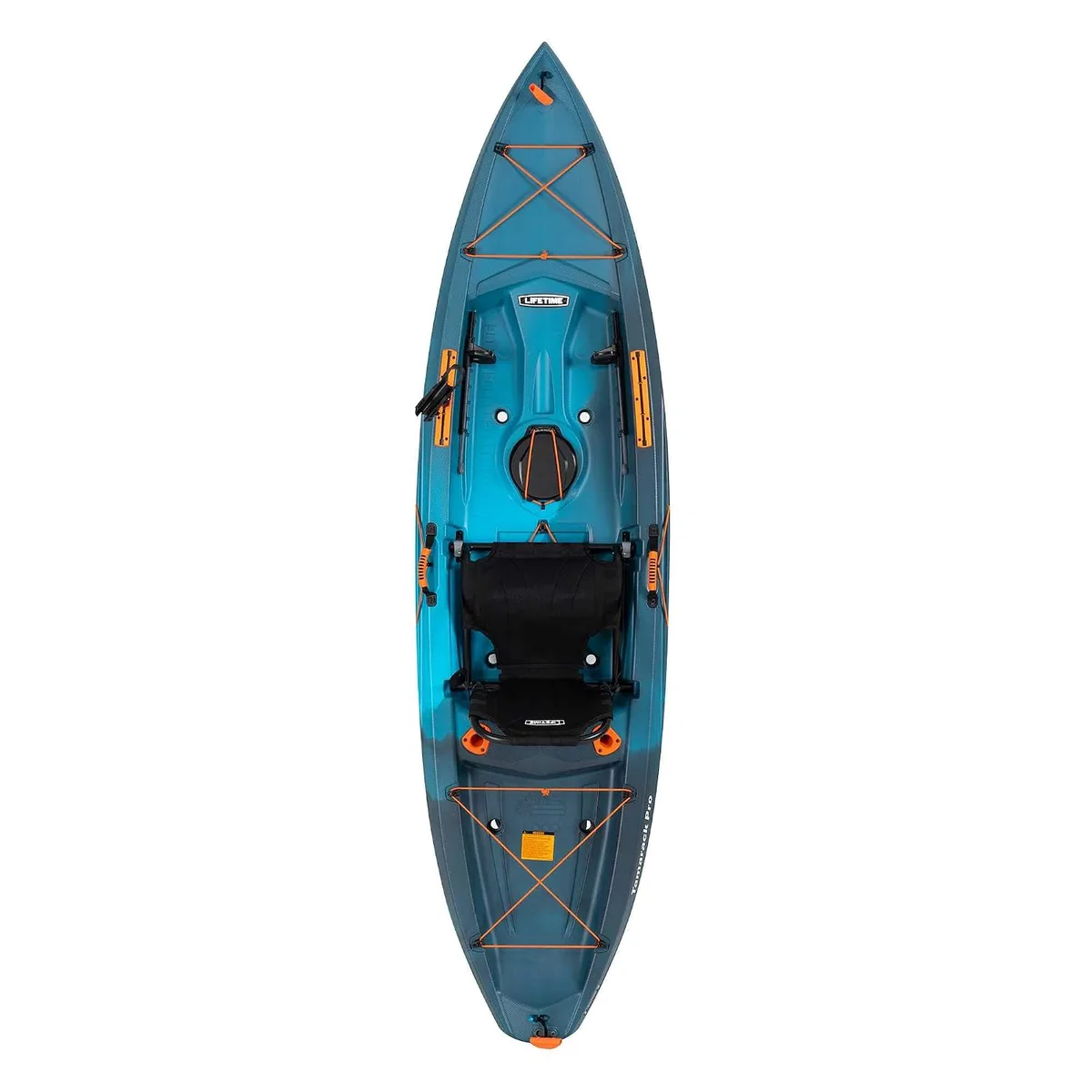
Best Budget River Runner: Lifetime Tamarack Angler 100
If you need a cost-effective, bare-bones kayak that you won't mind scratching on rough river bottoms, the Lifetime Tamarack Angler 100 (buy on Amazon) is a proven budget workhorse. For more low-cost options, check out our guide to the best budget kayaks.
Key Specifications
- Length: 10'0"
- Width: 31 inches
- Weight: 52 lbs
- Weight Capacity: 275 lbs
- Hull Material: Blow-Molded High-Density Polyethylene
Why It Excels in Texas
The Tamarack's UV-protected blow-molded polyethylene construction takes heavy abuse from granite boulders and gravel bars without suffering structural failure. Its flat-bottom hull features sharp tracking channels that help keep the bow straight on slow-moving river runs like the Lower Colorado.
Because of its price point, it serves as an ideal platform for DIY modifications—such as adding gear tracks, anchor trolleys, or custom rigging—without worrying about ruining an expensive hull.
Drawbacks
The stock padded seat cushion provides minimal support for long outings. You will likely want to upgrade the seat padding for all-day floats. Additionally, its lower 275-pound maximum weight limit restricts how much heavy gear you can carry.
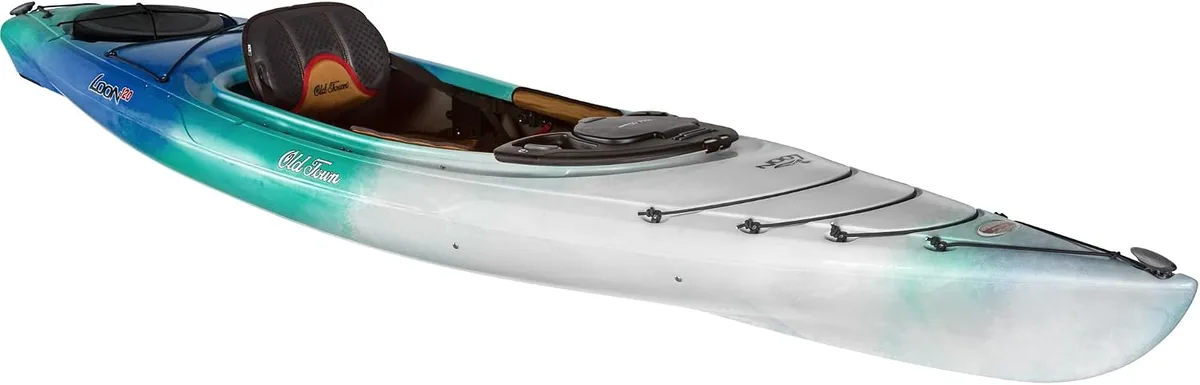
Best Premium Lake & River Crossover: Old Town Loon 120
The Old Town Loon 120 (buy on Amazon) is an elite sit-inside platform engineered for effortless glide across big open water and smooth deep-water river sections.
Key Specifications
- Length: 12'0"
- Width: 30 inches
- Weight: 56 lbs
- Weight Capacity: 375 lbs
- Hull Material: Three-Layer Polyethylene
Why It Excels in Texas
Old Town's three-layer construction creates a buoyant, rigid hull that glides efficiently with minimal effort per stroke. This extra glide is a major benefit when paddling against currents or fighting long lake headwinds.
The ACS2 seating system is highly adjustable and ventilated, making long days on the water much more comfortable. The included workdeck console provides a secure location to mount electronics, store water bottles, and protect quick-access gear from exposure to direct sunlight.
Drawbacks
At 56 pounds with a rigid three-layer hull, it feels heavier to carry than single-layer polyethylene kayaks of similar size. If you have to portage over long distances, using a wheeled cart—such as those reviewed in our guide to the best kayak carts and dollies—is strongly recommended.
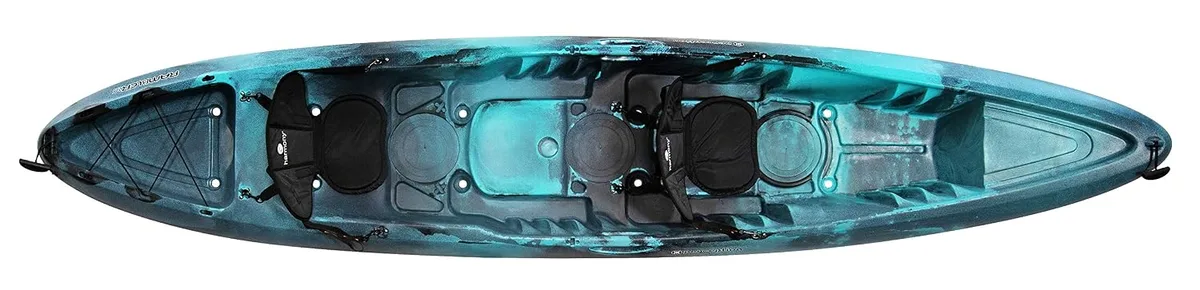
Best Tandem for Texas Waterways: Ocean Kayak Malibu Two XL
For paddling with a partner, child, or large dog along Texas river runs, the Ocean Kayak Malibu Two XL (buy on Amazon) is a stable, highly durable sit-on-top option.
Key Specifications
- Length: 13'4"
- Width: 34 inches
- Weight: 68 lbs
- Weight Capacity: 500 lbs
- Hull Material: Single-Layer Rotomolded Polyethylene
Why It Excels in Texas
Featuring an open, self-bailing deck, the Malibu Two XL handles water splash effortlessly without requiring a manual bilge pump. Its high 500-pound capacity lets two adult paddlers haul cooler chests, dry sacks, and fishing tackle without burying the bow.
The seating positions can be reconfigured for solo paddling from the center position, making it a versatile option if you switch between solo trips and family river outings.
Drawbacks
Its 34-inch beam requires extra clearance when maneuvering around narrow timber snags, and you will need long paddles (240cm to 250cm) to comfortably clear the high gunwales. See our guide to the best kayak paddles to pick the correct shaft length.
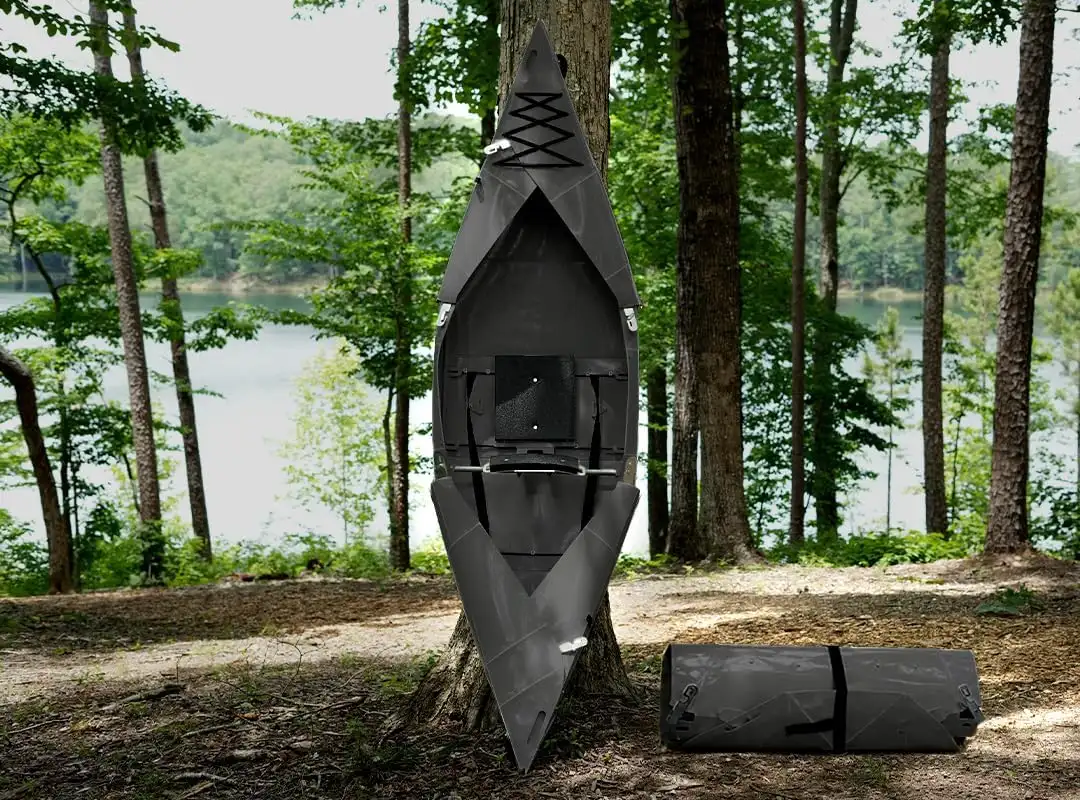
Best Lightweight & Portable Pick: Tucktec 10' Folding Kayak
When accessing remote Texas river spots with steep, brushy banks where carrying a heavy plastic boat is impractical, the Tucktec 10' Folding Kayak (buy on Amazon) offers exceptional portability.
Key Specifications
- Length: 9'8"
- Width: 31 inches
- Weight: 28 lbs
- Weight Capacity: 300 lbs
- Hull Material: 1/8" Solid Sheet High-Density Polyethylene
Why It Excels in Texas
Unlike inflatable kayaks, which risk punctures from sharp submerged honey-locust thorns, oyster shells, or jagged limestone, the Tucktec is built from a solid sheet of hard HDPE that folds up like origami. Weighing just 28 pounds, it rolls into a bundle that fits easily in the trunk of a compact car.
Its solid plastic floor resists abrasions from rocky river bottoms while giving you a durable, hardshell feel on the water. If you are weighing folding options against inflatable models, read our comparison on inflatable vs hard shell kayaks.
Drawbacks
Because the hull is formed from folded flat panels, it lacks the hydrodynamically sculpted tracking channels of traditional rotomolded kayaks. It tracks fine on calm river runs, but requires extra effort to keep straight across windy lakes.
Texas Kayak Comparison
| Model | Best Use Case | Length | Width | Weight | Capacity | Hull Material |
|---|---|---|---|---|---|---|
| Perception Pescador Pro 10 | Overall River/Lake | 10'6" | 32" | 57 lbs | 325 lbs | Rotomolded HDPE |
| Pelican Catch Mode 110 | Shallow Dragging / Fishing | 10'8" | 34.5" | 63 lbs | 375 lbs | RAM-X Polyethylene |
| Wilderness Systems Pungo 120 | Open Lakes / Speed | 12'0" | 29" | 49 lbs | 325 lbs | Rotomolded HDPE |
| Lifetime Tamarack Angler 100 | Budget River Floats | 10'0" | 31" | 52 lbs | 275 lbs | Blow-Molded HDPE |
| Old Town Loon 120 | Premium Lake Crossover | 12'0" | 30" | 56 lbs | 375 lbs | 3-Layer Polyethylene |
| Ocean Kayak Malibu Two XL | Tandem / Family Floats | 13'4" | 34" | 68 lbs | 500 lbs | Single-Layer Poly |
| Tucktec 10' Folding Kayak | Remote Access / Travel | 9'8" | 31" | 28 lbs | 300 lbs | Sheet HDPE |
Rigging and Gear Preparation for Texas Heat and Waters
Selecting the right kayak is only part of the equation. Equipping your setup for Texas conditions will keep you safe, comfortable, and efficient throughout the day.
Managing Heat and Sun Exposure
Sun safety on open Texas water requires more than just sunblock. UV rays reflect off the water surface, quickly elevating skin temperatures and increasing fatigue.
- Cooler Capacity: Ensure your kayak's rear tankwell can fit a high-efficiency cooler filled with ice and water. Review our guide to the best kayak coolers to find high-insulation options sized for standard kayak decks.
- Apparel: Wear lightweight, quick-drying UPF 50+ long-sleeve shirts, wide-brim hats, and polarized sunglasses. For footwear, chose grippy rubber-soled shoes that protect against sharp river rocks and slippery limestone. See our top recommendations in what to wear kayaking and best kayak shoes.
Anchoring in Current and Lake Winds
Positioning your craft in moving water or open lake bays requires an appropriate anchor system:
- River Anchoring: Use a light 3-pound folding grapnel anchor attached to an anchor trolley system, or a shallow-water anchor pole if fishing in less than 4 feet of water. Always use a quick-release cleat so you can drop the anchor line immediately if the current threatens to submerge the stern. Check out our guide to the best kayak anchors for gear setups.
- Lake Wind Positioning: A drift chute or sea anchor helps slow your velocity when tracking across open bays during high winds, allowing you to cast along structure without constantly paddling.
Safety Essentials for Isolated River Runs
Texas river stretches often pass through remote private land with no public exit points for 10 to 15 miles. You must carry key safety gear on board at all times.
Always wear a high-visibility, USCG-approved Type III PFD with open mesh sides for breathability—our roundup of the best kayak life jackets covers ventilated designs suited for hot weather. Pack a waterproof sound-signaling device (whistle), a headlamp for unexpected delays after dark, and a basic medical kit. For a complete safety checklist, refer to our overview of kayak safety essentials.
If your primary goal is navigating rocky, shallow Texas rivers like the Guadalupe or Brazos, choose the Perception Pescador Pro 10 (buy on Amazon) for its durable hull, low draft, and breathable seat. For paddlers who prioritize cruising long open lakes like Texoma or Lake Whitney, the Wilderness Systems Pungo 120 (buy on Amazon) provides the tracking speed and wind resistance needed to master open water.
Related Kayaks
Kayaks that pair with this guide
Pescador Pro 10.0
Catch Mode 110

Pungo 120
Tamarack Angler 100
Loon 120
Malibu Two XL
Tucktec 10' Folding Kayak
Keep Reading
Related articles
Best Kayaks for Big and Tall Paddlers (2026 Picks)
Best Duck Hunting Kayaks of 2026: Top Waterfowl Picks
Best Budget Kayaks of 2026: High-Value Picks Under $500
Next up: Best Kayaks for Big and Tall Paddlers (2026 Picks), Best Duck Hunting Kayaks of 2026, and High-Value Picks Under $500.