Best Kayak Anchor Options: Folding, Pin & Trolleys
Lock your kayak in position against wind and current. We compare folding grapnel anchors, shallow-water stakeout pins, and trolley systems for maximum holding power.

Locking your kayak into position against 15-knot winds and shifting tides requires matching your anchoring gear to your environment. Whether you need a quick shallow-water pin, a compact folding grapnel, or a full trolley system to adjust your heading, choosing the best kayak anchor setup keeps you focused on paddling and casting rather than drifting into structure. In this guide, we break down real-world testing numbers, holding power, and safety rigging methods across four core anchor styles.
Kayak Anchor Systems Explained
Not all anchor systems work the same way. The ideal setup depends directly on water depth, bottom composition (mud, sand, gravel, or rock), and current speed. Below are the three main system categories every paddler should know.
- Folding Grapnel Anchors: The standard choice for general paddling and deep water. Four hinged prongs lock open to catch on rocks, gravel, and heavy weeds, then fold flat for stowage inside a hatch or crate.
- Shallow-Water Stakeout Pins: Fiberglass or aluminum poles ranging from 6 to 8 feet long. Pushed straight into soft mud or sand, they provide whisper-quiet, instant stopping power in shallow flats.
- Anchor Trolley Systems: A perimeter pulley loop installed along the side of your kayak. It allows you to move your anchor line attachment point from the bow to the stern while seated, keeping your hull faced directly into wind or wave action.
When combining these systems, safety remains the highest priority. Always keep a quick-release mechanism or buoyant dive float attached to your anchor line so you can drop your rig instantly in an emergency, as emphasized in our guide to kayak safety essentials.
The Best Kayak Anchors and Setups Reviewed
1. Best Overall Deep-Water Anchor: 3.5 lb Folding Grapnel System
For general versatility in depths over 8 feet, a 3.5-lb iron grapnel anchor remains the gold standard. Paired with 50 feet of 3/16-inch braided nylon rope and a zinc-plated locking carabiner, this setup holds mid-sized sit-on-top hulls securely in mud, gravel, and submerged timber.
- Anchor Weight: 3.5 lbs (1.6 kg)
- Line Length: 50 feet braided marine rope
- Best Bottom Types: Rocks, coarse gravel, heavy weeds, mud
- Ideal Water Depth: 8 to 35 feet
- Price Range: $25 – $35
When fishing on open water using boats like the Perception Pescador Pro 10 (Amazon link), a 1.5-lb anchor often skitters across the bottom in winds above 10 knots. Upgrading to 3.5 lbs provides enough weight to bite quickly without forcing you to haul heavy iron. You can check prices for standard folding grapnel anchor kits directly on Amazon.
2. Best Shallow-Water Anchor: 8-Foot Fiberglass Stakeout Pole
If you target redfish, bass, or panfish in less than 6 feet of water, a folding iron anchor makes too much noise and disturbs the bottom. An 8-foot fiberglass stakeout pin allows silent anchoring in silt, sand, and soft mud.
- Pole Length: 8 feet (2.4 m)
- Pole Diameter: 3/4 inch solid fiberglass
- Best Bottom Types: Soft mud, clay, sand, thin grass beds
- Ideal Water Depth: 1 to 6 feet
- Price Range: $45 – $85
Stakeout poles push effortlessly through scupper holes on rigid fishing kayaks like the Lifetime Tamarack Angler 100 (Amazon link). Alternatively, tether the pin to an anchor trolley loop to maintain distance from the hull. Search for top-rated kayak stakeout poles to find lightweight fiberglass options.
3. Essential Positioning Gear: Universal Deluxe Anchor Trolley Kit
Dropping an anchor directly off the midship handle of your kayak is dangerous in high winds because it pulls your kayak sideways into the trough of incoming waves. An anchor trolley kit uses nylon pad eyes, stainless steel pulleys, and 30 feet of 4mm reflective paracord to run your anchor line seamlessly between bow and stern.
- Line Length: 30 feet (covers up to 14-foot kayaks)
- Hardware: Marine-grade stainless steel pulleys, nylon pad eyes, ring divider
- Key Feature: Positional locking cleat
- Price Range: $20 – $40
Whether you paddle a lightweight sit-on-top like the Pelican Sentinel 100X Angler (Amazon link) or a heavier pedal craft, a trolley allows precise hull positioning relative to wind direction. Review detailed anchor trolley kits to compare pulley bearing types.
4. Best Quick-Attach Option: Heavy-Duty Brush Gripper Clamp
When paddling forested lakes, river bends, or mangrove creeks, throwing a grapnel anchor often leads to snags. A spring-loaded marine brush clamp uses tensioned steel jaws to clamp onto overhanging limbs, standing timber, or dock pilings in seconds.
- Material: Powder-coated steel or reinforced composite
- Line Length: 8 to 12 feet paracord with tensioner
- Best Application: Rivers, flooded timber, dock fishing
- Holding Capacity: Tested up to 100 lbs of pull force
- Price Range: $15 – $25
This setup adds almost zero weight to your loadout, making it ideal for compact hulls or when paddling with kids on tandems like the Ocean Kayak Malibu Two (Amazon link). Browse options for a kayak brush anchor clamp to keep on your deck.
Kayak Anchor Comparison Table
| Anchor Type | Target Depth | Ideal Bottom Type | Holding Power | Packability | Avg. Weight | Est. Price |
|---|---|---|---|---|---|---|
| 3.5 lb Grapnel | 8 – 35 ft | Rocks, Gravel, Structure | High | Excellent (Folds) | 3.5 lbs | $25 – $35 |
| 1.5 lb Grapnel | 3 – 15 ft | Calm Ponds, Soft Mud | Low-Moderate | Excellent (Folds) | 1.5 lbs | $18 – $25 |
| Stakeout Pin | 1 – 6 ft | Soft Mud, Sand, Silt | Very High | Moderate (Long) | 1.8 lbs | $45 – $85 |
| Brush Clamp | Surface – 20 ft | Trees, Docks, Brush | High | Compact | 0.7 lbs | $15 – $25 |
| Mushroom Anchor | 5 – 20 ft | Thick Soft Mud, Silt | Moderate | Poor (Bulky) | 5.0 lbs | $20 – $30 |
Key Factors to Consider Before Buying
Selecting the right setup requires balancing hold security with deck organization. If you prefer long distance trips, explore our how to choose a kayak buyers guide to understand hull capacity limits before overloading your gear hatches.
Scope Ratio (Line Length vs Depth)
Deploying an anchor straight down will not keep your boat locked down. Waves and wind push against the hull, causing a vertical line to lift the anchor prongs off the bottom. You need proper scope—the ratio of deployed rope length to water depth.
- Standard Conditions: Use a 5:1 scope ratio. In 10 feet of water, release 50 feet of line.
- High Wind / Heavy Current: Expand to a 7:1 scope ratio. In 10 feet of water, release 70 feet of line.
- Calm Shallow Flats: A 3:1 scope ratio is usually sufficient when using stakeout pins or shallow grapnels.
Bottom Conditions and Terrain
Before launching, evaluate the bottom geology of your target fishery:
- Rocky Lakes & Riverbeds: Steel folding grapnel anchors work best because the flukes wedge into gaps. Avoid smooth mushroom anchors here; they slide straight over rock surfaces.
- Soft Silt & Muck: Mushroom anchors and heavy 3.5 lb grapnel anchors sink into the silt, creating a suction lock. Stakeout pins also penetrate deep mud easily.
- Sand & Shell Bars: Fluke (Danforth style) or heavy grapnel anchors bite fast into coarse sand. Light 1.5 lb anchors often fail to dig into packed sand.
Kayak Type and Hull Material
Matching anchor style to your craft prevents deck damage and storage issues. Dedicated anglers using high-capacity fishing setups from our best fishing kayaks guide can carry 3.5 lb anchors and full trolley tracks without issue.
However, if you paddle lightweight budget crafts like the Pelican Argo 100X (Amazon link) or Sun Dolphin Bali SS 12 (Amazon link), lighter 1.5 lb grapnels or brush clamps reduce overall deck clutter.
Inflatable owners should exercise caution with sharp iron flukes. If you paddle an inflatable like the Sea Eagle 370 (Amazon link), Intex Explorer K2 (Amazon link), or Intex Challenger K1 (Amazon link), use a rubber-coated mushroom anchor or keep grapnel prongs capped inside a padded bag. Review our detailed comparison on inflatable vs hard shell kayaks for more advice on material durability.
Essential Rigging Techniques: The Breakaway Rig and Quick Release
Never tie an anchor line directly to a fixed frame loop or pad eye on your kayak. If a powerboat wake hits your bow or current surges while your anchor is wedged under a rock, an unyielding line can overturn your kayak instantly.
Setting Up a Breakaway Rig
A breakaway system saves your anchor when it gets wedged under rock ledges or submerged logs:
- Attach the Main Line to the Base: Pass your marine rope through the bottom eyelet of the grapnel anchor (the side opposite the folding arms) and secure it with a bowline knot.
- Run Line Along the Shaft: Lay the rope up along the steel shaft toward the top loop.
- Zip-Tie the Top Eyelet: Secure the rope to the top eyelet using a low-tensile plastic zip tie (30 lb rated).
- How It Works: Under normal drag, the tension stays on the zip tie at the top of the shaft, pulling the anchor normally. If the head gets snagged, pulling hard on the rope snaps the zip tie. The pull point shifts to the bottom of the anchor, pulling the head backward out of the snag.
Adding a Dive Float and Quick-Release Cleat
Always incorporate a high-visibility foam float and a quick-release zigzag cleat on your trolley ring. If wind turns dangerously high or a large fish wraps your gear, pop the rope out of the cleat immediately. The float keeps your anchor line suspended on the surface so you can safely paddle clear and return later to retrieve it.
For more tactics on anchoring safely while fishing, read our foundational guide on kayak fishing 101 and our breakdown of fishing from a kayak.
Frequently asked questions
What size anchor line scope do I need for a kayak?
A standard scope ratio for securing a kayak in normal wind and moderate current is 5:1, meaning you release five feet of anchor line for every one foot of water depth. In rougher conditions, higher tides, or winds exceeding 12 knots, extend the scope ratio to 7:1 to prevent vertical pull from lifting your anchor off the bottom.
How do I break free if my kayak anchor gets snagged on rocks?
If your anchor gets stuck on underwater structure, do not pull directly from a fixed cleat on your kayak because strong current can pull your gunwale underwater. Instead, maneuver your kayak directly above or slightly behind the snagged anchor using your paddle or pedal drive, then pull vertically; if you rigged a zip-tie breakaway system, a sharp tug will snap the tie and pull the anchor upside down away from the obstruction.
Is an anchor trolley necessary for kayak fishing?
While not strictly mandatory on farm ponds, an anchor trolley is an essential safety and boat-control feature for fishing open lakes, tidal bays, and rivers. It allows you to shift the anchor attachment point smoothly between your bow and stern without standing up, keeping your kayak bow turned safely into incoming wind and waves to prevent capsizing.
Can I use a heavy anchor on an inflatable kayak?
You can use anchors on inflatable kayaks, but you should avoid raw metal folding grapnel anchors with sharp edges that could puncture or abrade the PVC chamber walls. Opt instead for a 3 to 5 lb rubber-coated mushroom anchor or a smooth neoprene-sheathed folding model, and store the unit in a padded deck bag when not in use.
The bottom line
Choosing the best kayak anchor setup comes down to your primary fishing depth and water conditions. For deep lakes and rocky riverbeds, a 3.5 lb folding grapnel anchor paired with a zip-tie breakaway rig offers reliable holding power and snag retrieval. For shallow grass flats and soft mud, an 8-foot fiberglass stakeout pole gives you completely silent positioning. Installing a perimeter anchor trolley ties any system together safely, keeping your bow trimmed into the wind so you stay stable and secure on the water.
Related Kayaks
Kayaks that pair with this guide
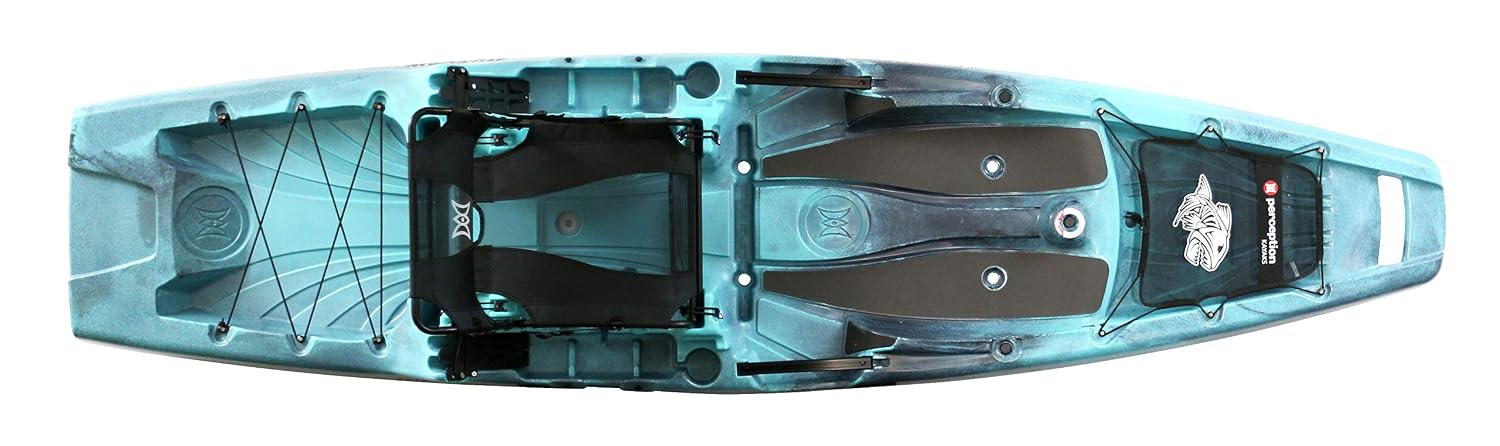
Pescador Pro 10.0

Pungo 120

Catch Mode 110
Keep Reading
Related articles
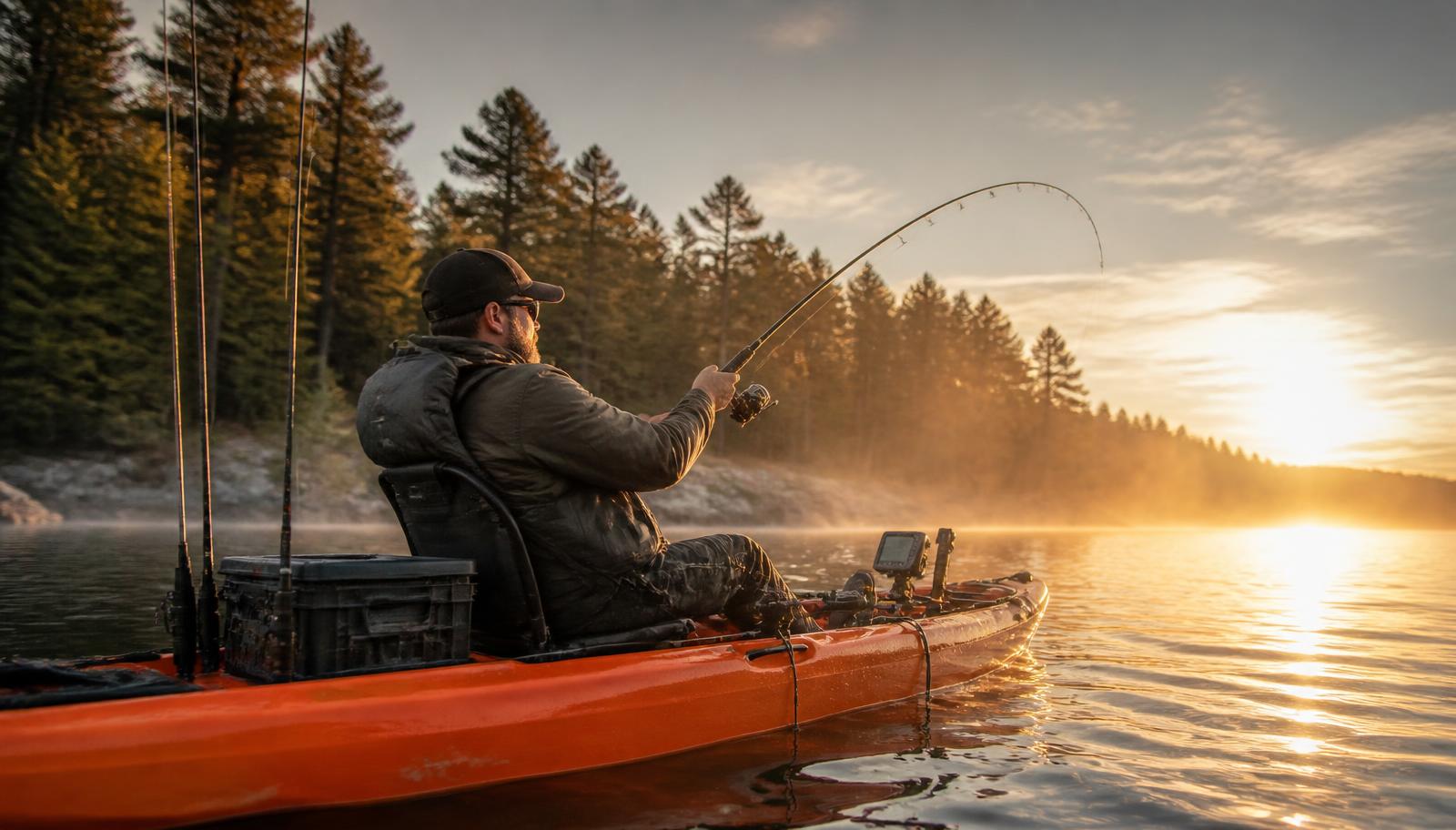
Fishing From a Kayak: Techniques That Actually Catch Fish
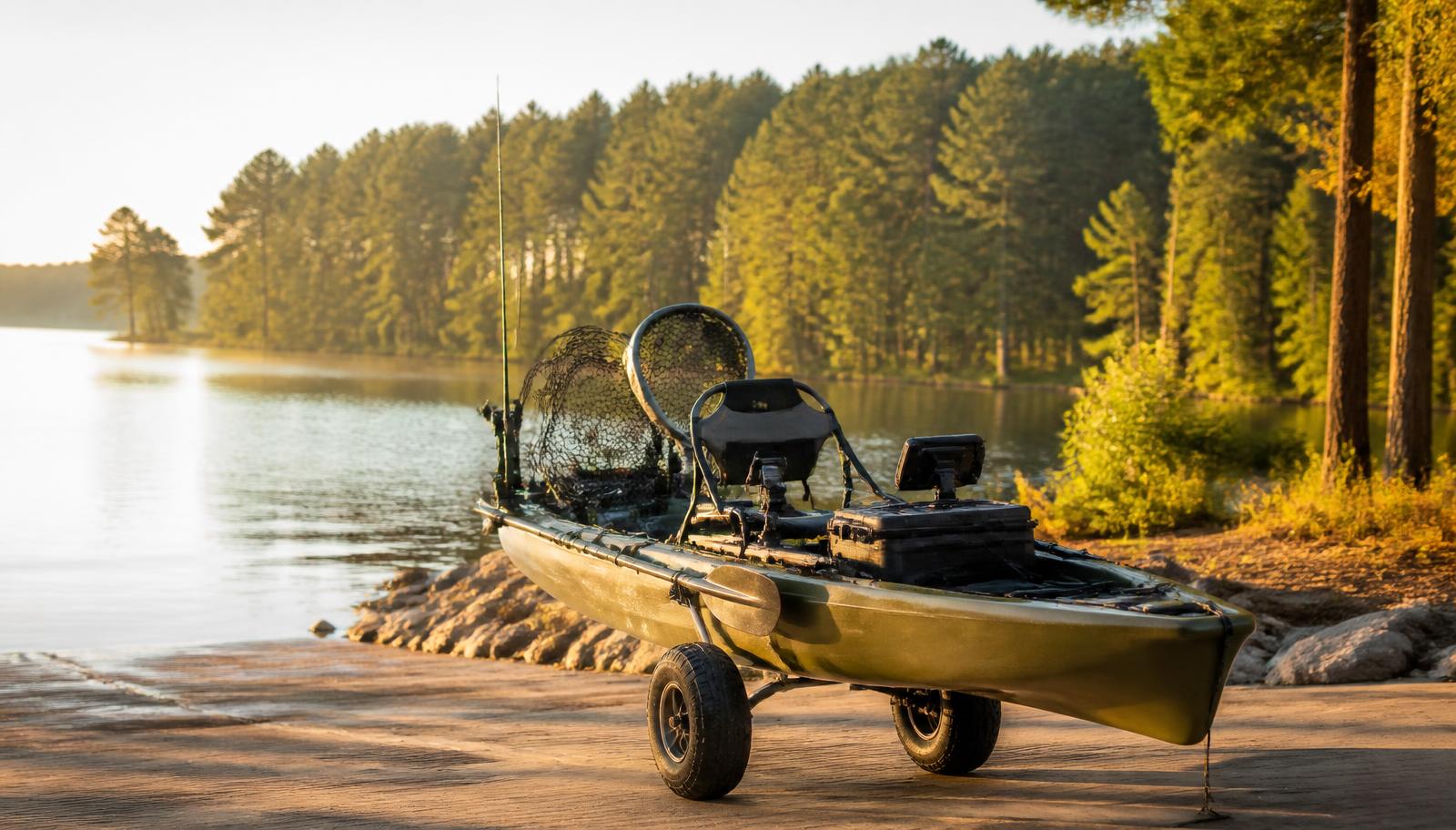
Best Kayak Carts & Dollies (2026): From Sand to Boat Ramp

Best Kayak Trolling Motor (2026): Top Drives & Mounts
Next up: Fishing From a Kayak: Techniques That Actually Catch Fish, Best Kayak Carts & Dollies : From Sand to Boat Ramp, and Best Kayak Trolling Motor.