Best Kayak Shoes of 2026: Top Water Shoes, Sandals & Booties
Upgrade your paddling setup with the best kayak shoes for sticky traction, fast drainage, and zero footwell cramp across all seasons.
This post contains Amazon affiliate links. We may earn a commission if you buy, at no extra cost to you. Read our disclosure.
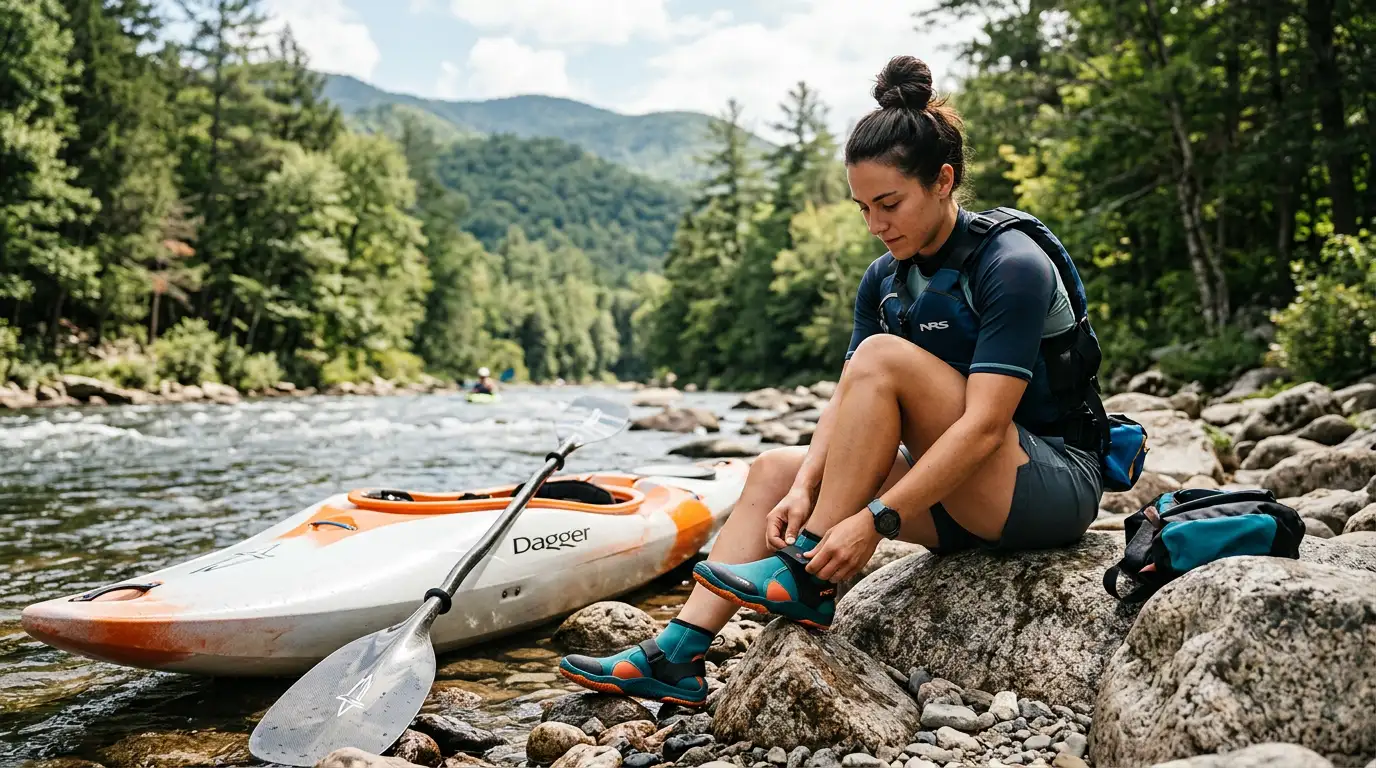
Selecting the best kayak shoes eliminates slippery launches, wet footwell discomfort, and bruised soles when portaging over jagged river rock. Standard sneakers turn into heavy waterlogged bricks, while barefoot paddling leaves your heels vulnerable to footrest pressure points and sharp oyster shells. A dedicated paddling shoe provides razor-siped rubber for grip, low-profile heels that fit tight cockpits, and rapid drainage to keep your feet functional all day.
Quick Comparison: Top Kayak Footwear
| Model | Type | Outsole Compound | Drainage | Insulation | Weight (Pair) | Best For |
|---|---|---|---|---|---|---|
| Astral Loyak | Low-Profile Shoe | G.15 High-Friction | Mesh upper + Sole ports | None (Fast drying) | 12.8 oz | Overall Paddling & Touring |
| NRS Paddle Wetshoe | Neoprene Bootie | TerraGrip Rubber | Low (Insulated) | High (3mm Neoprene) | 18.0 oz | Cold Water & River Running |
| Bedrock Cairn Pro II | Performance Sandal | Vibram Megagrip Print | Instant (Open design) | None | 16.0 oz | Warm Water Sit-On-Top |
| NRS Boundary Boot | High-Cut Bootie | High-Traction Rubber | None (Waterproof) | High (5mm Neoprene) | 38.0 oz | Cold Launches & Muddy Banks |
| Xero Shoes Aqua X Sport | Minimalist Water Shoe | FeelTrue Rubber | Mesh ports & footbed | None | 14.2 oz | Warm Weather & Lightweight Travel |
| Astral Rassler 2.0 | High-Top Water Boot | G.15 Sticky Rubber | Drain holes at midsole | Low (Padded canvas) | 22.0 oz | Whitewater & Heavy Portaging |
Top Recommended Kayak Shoes Reviewed
Astral Loyak
When cockpit space is tight and footpeg feedback matters, the Astral Loyak remains the benchmark low-profile water sneaker. Its 12.8-ounce total weight and ultra-flexible construction allow your feet to sit naturally against footbraces without forcing your ankles into unnatural angles.
- Outsole Performance: Uses Astral’s sticky G.15 rubber with razor-siping that flattens out on wet fiberglass or granite to create maximum friction.
- Drainage: Hydrophobic canvas upper paired with drainage holes located directly along the toe and heel midsole channels water out within steps.
- Fit and Bulk: Low-profile heel cup drops clean into slim touring kayaks like the Wilderness Systems Pungo 120.
- Limitations: Thin soles offer little cushion for long portages with 50-pound loads on rough trails.
NRS Paddle Wetshoe
For cold water launches, chilly mornings, or rocky riverbeds where you need foot protection paired with thermal insulation, this 3mm neoprene bootie delivers exceptional utility.
- Thermal Insulation: The 3mm Terraprene neoprene upper traps a thin layer of water that warms up against your skin, making it an essential piece of equipment alongside the gear highlighted in our what-to-wear-kayaking guide.
- Protection: A 3mm thick patterned rubber sole extends high around the heel and perimeter, protecting your feet when jamming into tight footwells.
- Closure System: Side-zipper opening with an entry gusset makes slipping them on over thick drysuit socks simple.
- Limitations: Retains water inside the bootie; not designed for warm midsummer paddling.
Bedrock Cairn Pro II 3D
If you paddle a open deck kayak and prefer open-air comfort, the Bedrock Cairn Pro II provides secure foot retention without the wet-sock feel of traditional water shoes.
- Grip System: Features Vibram Megagrip rubber in a specialized sticky print formulation that clings tightly to damp plastic hulls and slimy river rocks.
- Harness Setup: Three adjustment zones anchored with solid webbing keep your heel locked back, eliminating lateral slide when stepping into soft silt.
- Contoured Footbed: The 3D version includes subtle arch and toe support to prevent foot fatigue during full-day paddles.
- Limitations: Toes remain exposed to submerged roots, rocks, and fishing hooks.
NRS Boundary Boot
Launching into knee-deep icy water or launching through deep mud requires high-cut waterproof protection. The NRS Boundary Boot stands 15 inches tall to keep your feet dry and warm.
- Waterproof Height: Vulcanized rubber boots lined with 5mm neoprene extend up to the calf, sealed with a ladder-lock strap at the top.
- Foot Support: Rigid 7mm neoprene insole mounted on a heavy-duty lugged outsole absorbs impact when hauling heavy plastic craft like the Pelican Catch Mode 110.
- Comfort Fit: Roomy toe box accommodates thick wool socks or neoprene drysuit booties.
- Limitations: Bulky profile makes it difficult to fit into narrow sit-inside cockpits.
Xero Shoes Aqua X Sport
Designed for paddlers who prefer a wide toe box and minimal stack height, the Aqua X Sport feels weightless while offering sufficient tread for technical shores.
- Flexible Design: Non-elevated zero-drop heel puts your foot close to the hull, maximizing feel against your foot pegs.
- Fast Drying: Non-absorbent mesh upper paired with speed laces doesn't retain water weight when re-entering the boat.
- Tread Layout: Moderate dual-chevron lugs grip gravel ramps without packing full of mud.
- Limitations: Fine sand can pass through the open mesh upper and settle under the insoles.
Astral Rassler 2.0
Built for heavy river running, gear hauling, and steep portages, the Rassler 2.0 provides mid-top ankle support and aggressive sticky rubber soles.
- Ankle Support: Mid-top padded collar shields your ankles when wedged into tight whitewater thigh braces or stepping between river boulders.
- Durability: Reinforced TPU overlays along the toe box and side panels resist abrasion against sharp shale and granite.
- High-Friction Grip: Uses G.15 rubber that sticks to wet, sloping rocks even under heavy pack weights.
- Limitations: Takes longer to dry completely due to foam padding along the upper collar.
Key Factors to Consider When Buying Kayak Shoes
Selecting the right footwear requires balancing warmth, drain speed, and sole thickness against the dimensions of your kayak deck.
Outsole Friction and Razor Siping
Standard hiking treads use deep, rigid lugs to bite into soil. On wet kayak hulls, smooth algae-covered launching ramps, or slippery river rocks, rigid lugs fail because they provide small contact areas.
Look for outsoles made from soft, high-friction compounds (such as Astral G.15 or Vibram Megagrip) equipped with razor siping. Siping consists of micro-cuts etched into the rubber sole. When weight is applied, these cuts expand, driving away standing water and creating a vacuum-like suction on flat wet surfaces.
Cockpit Clearance and Heel Profile
Paddlers in sit-inside models like the Old Town Loon 120 or tight touring craft need to evaluate heel volume. Bulky shoes with extended trail-running heels catch on cockpit rims during wet exits, creating a dangerous entrapment hazard.
A narrow, low-profile heel allows your foot to rest comfortably on footpegs at a natural angle. For details on how cockpit dimensions alter leg and foot comfort, read our comparison on sit-in vs sit-on-top kayaks.
Drainage vs. Insulation
Your choice depends directly on water temperature and kayak design:
- Drainage Water Shoes: Built with mesh, canvas, and perforated midsoles. Water enters freely and drains instantly within two strides. Best for warm water, sit-on-top recreational paddling, and hot weather touring.
- Neoprene Booties: Traps water inside to warm it via body heat. Essential for cold water paddling, high-latitude sea kayaking, and early spring fishing. Match booties with drysuits to preserve core heat, as detailed in our guide to kayak safety essentials.
Sole Thickness and Portaging Support
If your route requires frequent portages across portage trails or jagged riverbanks, thin bare-foot style soles will leave your feet sore. Choose a shoe with an EVA midsole or a solid TPU shank (like the Astral Rassler 2.0). Conversely, if you sit for six hours straight in a flat-bottomed boat like the Ocean Kayak Malibu 9.5, a thin, flexible sole prevents pressure spots under your heels.
Matching Shoes to Your Kayaking Style
Different paddling disciplines demand specialized features from your footwear.
Sit-Inside Touring and Sea Kayaking
When paddling sea kayaks or performance touring hulls, tight footwells limit vertical toe clearance. Choose sleek low-top shoes like the Astral Loyak or thin 2mm neoprene booties. These low-profile designs let you operate rudder pedals or foot braces with exact control without scuffing the upper deck. Review our guide to the best touring kayaks to inspect typical cockpit sizes.
Kayak Fishing and Pedal Drive Craft
Anglers using pedal-drive kayaks, such as those reviewed in our best pedal kayaks guide, exert continuous rotational pressure on pedals. Thin booties can cause foot fatigue across the arch during long pedal sessions. Look for water shoes with stiff midsoles, moderate arch support, and rugged outsoles for launching off gravel beds or oyster reefs. If you are setting up a dedicated fishing setup, check out our best fishing kayaks round-up.
Inflatable and Folding Kayaks
Paddlers using inflatables like the Sea Eagle 370 or entry-level models like the Intex Explorer K2 should avoid shoes with exposed metal buckles, harsh sharp studs, or aggressive trail lugs that can trap sharp gravel against PVC floors. Smooth-soled water sneakers or soft-bottomed booties protect inflatable floors while providing grip on wet shores. For more advice on inflatable durability, see our breakdown of inflatable vs hard shell kayaks.
Care and Odor Management
Water shoes quickly gather bacteria, silt, and organic matter, leading to bad odors if stored wet.
- Rinse with Fresh Water: After every outing, submerge your shoes in fresh water to flush out mud, sand, and salt crystals.
- Use Enzymatic Wash: For neoprene booties that smell like swamp water, soak them periodically in a neoprene cleaner or mild gear wash to kill trapped bacteria.
- Air Dry Away from Direct Sun: Never dry neoprene or sticky rubber shoes in direct sunlight or inside a hot car trunk. High heat weakens vulcanized seams and hardens soft rubber outsoles, destroying their grip.
- Pull Insoles: Remove drop-in footbeds to allow air circulation through the lower drainage ports.
Frequently asked questions
Should kayak shoes fit tight or loose?
Kayak shoes should fit snug without pinching your toes or cutting off blood circulation. A loose water shoe allows sand and pebbles to settle under your sole, which rubs painfully against your skin when working pedal drives or footpegs. If you wear neoprene booties inside drysuit socks, size up one half-size to accommodate the extra layer without compressing your toes.
Can I just wear regular running shoes or flip-flops for kayaking?
Regular running shoes absorb water, become extremely heavy, and take days to dry out while holding moisture against your skin. Flip-flops easily float away in mud, offer zero heel protection, and slip off during wet exits or quick portages. Dedicated water shoes provide drains, quick-drying fabrics, and sticky rubber outsoles engineered for slick wet surfaces.
What shoes are best for cold water kayaking?
Cold water kayaking requires neoprene booties or high-cut dry boots like the NRS Boundary Boot paired with waterproof socks. Look for at least 3mm to 5mm neoprene thickness to keep your feet warm during wet launches. Stiff soles and sealed seams prevent cold water from circulating around your feet while paddling.
How do I stop my water shoes from smelling like swamp water?
Rinse your water shoes thoroughly in fresh water after every trip and remove the insoles to let air reach the drainage ports. Soak smelly shoes in an enzymatic cleaner designed for wetsuits to kill scent-causing bacteria trapped in the foam layers. Always air-dry your shoes in a shady, well-ventilated spot rather than leaving them damp inside a dry bag or hot vehicle.
The bottom line
Investing in proper kayak shoes improves safety, launch ease, and boat control. Choose low-profile, fast-draining sneakers like the Astral Loyak for warm-weather sit-inside touring, sticky neoprene booties for cold water trips, or rigid-soled water shoes for pedal-drive fishing craft. Keeping your feet comfortable, warm, and secure makes every hour on the water safer and more enjoyable.
Keep Reading
Related articles
What to Wear Kayaking: The Ultimate Season-by-Season Guide
Best Kayak Cooler Guide 2026: Top Soft & Hard Chests
Best Kayak Dry Bags of 2026: Top Waterproof Storage & Deck Bags
Next up: What to Wear Kayaking: The Ultimate Season-by-Season Guide, Best Kayak Cooler Guide 2026, and Top Waterproof Storage & Deck Bags.