Old Town Sportsman 120 vs Hobie Mirage Outback
Comparing the Old Town Sportsman 120 and Hobie Mirage Outback across drive performance, stability, shallow-water capability, and overall value.
This post contains Amazon affiliate links. We may earn a commission if you buy, at no extra cost to you. Read our disclosure.

Choosing between the Old Town Sportsman 120 and the Hobie Mirage Outback comes down to matching your primary fishing environment against two distinctly different drive technologies. While the Old Town Sportsman PDL 120 delivers instant rotational reverse and bulletproof stability at a lower price point, the Hobie Outback counters with superior open-water efficiency, Kick-Up fins for structure-heavy shallows, and unmatched accessory integration. In this side-by-side breakdown, we researched and compared the specifications, hull dynamics, and real-world performance of both premier pedal craft to help you decide which setup belongs on your trailer.
1. Evaluate Propulsion: Rotational Propeller vs. Flipper Drive
Old Town's PDL 10.0 drive operates on a 10:1 gear ratio bicycle-style pedal crank that turns a two-blade underwater propeller. Instant reverse is achieved simply by pedaling backward—no cords, levers, or mechanical switches required. This mechanical simplicity allows for immediate speed adjustments and pinpoint positioning when holding against wind or current near bridge pilings. The entire unit docks into a fixed center console and locks down tight, backed by Old Town's impressive 5-year drive warranty.
Hobie's MirageDrive 180 relies on flexible underwater fins that sweep back and forth in a natural scissor motion. Reversing requires pulling a shift cable to rotate the fins 180 degrees, which adds a brief micro-step compared to Old Town’s instant back-pedaling. However, the flipper design produces less underwater drag, yields higher top speeds with less mechanical effort over miles of open water, and requires minimal vertical clearance. If you spend long days touring large reservoirs or coastal bays, the natural cadence of the flipper drive reduces leg fatigue over long distances. Check out our detailed guide to the best pedal kayaks for more drive system comparisons.
2. Compare Hull Stability, Standing Comfort, and Capacity
The Old Town Sportsman 120 measures 12 feet long by 36 inches wide, built around a pronounced Double-U hull design. This creates an exceptionally stable platform with high initial and secondary stability. Heavyweight anglers can stand, cast, sight-fish, and lean over the gunwales without feeling the kayak tip or roll. With a maximum capacity of 500 pounds, the Sportsman 120 easily accommodates larger paddlers along with crates, heavy tackle boxes, and extra gear. It ranks among the top choices in our round-up of the best kayaks for big and tall anglers.
The Hobie Mirage Outback measures 12 feet 9 inches in length with a 34-inch beam. Though two inches narrower than the Sportsman, Hobie’s engineered hull flare provides rock-solid stability when standing on the padded deck mats. However, its total capacity maxes out at 425 pounds. Subtracting the fitted hull weight of 103 pounds leaves 322 pounds of net usable payload for the paddler and tackle. For mid-sized anglers, the Outback is impeccably steady, but heavier anglers carrying extensive gear will approach the upper threshold of its buoyancy profile sooner than on the Old Town.
3. Analyze Shallow Water Navigation and Obstacle Clearance
Navigating shallow flats, stump fields, or submerged grass beds highlights a fundamental divergence between these two craft. The Old Town PDL drive extends nearly 14 inches below the keel line. When approaching shallow flats or thick vegetation, you must release a latch and tilt the entire drive unit up into the cockpit cavity. While the tilt mechanism is fast and intuitive, prop blades can chop or wrap heavy hydrilla, forcing you to pull the drive to clear weed buildup manually.
Hobie solves shallow-water hazards with its patented Kick-Up Fin technology. If your fins strike an unseen log, rock, or sandbar, the fin masts automatically pivot upward to clear the obstacle without damaging the drive, instantly re-engaging once clear. Furthermore, by pushing one pedal fully forward, the fins pin flat against the bottom of the hull, allowing the Outback to drift through water just inches deep without pulling the drive unit. For anglers navigating timber-choked lakes or tidal grass, Hobie holds a decisive tactical advantage. If you frequently fish tight, shallow rivers, review our guide on the best kayaks for texas rivers.
4. Assess Cockpit Ergonomics, Rigging Space, and Transducer Mounts
Cockpit organization directly affects your efficiency during long tournament days. The Sportsman 120 features plush Element Seating with dual-height adjustments, breathable mesh fabric, and excellent lumbar support. The deck offers non-slip EVA foam pads, two forward accessory tracks, two rear flush-mount rod holders, and a large stern tankwell with bungee tie-downs. Old Town also equips the hull with a universal transducer mounting plate that fits most standard transducers without drilling, making it simple to install equipment from our list of the best kayak fish finder options.
Hobie takes cockpit design to an elite level on the Outback. The Vantage CT seat offers four-way adjustability, including back incline, height, and lumbar tension, letting you customize your posture throughout the day. Dual steering handles on both port and starboard sides allow ambidextrous control of the retractable Guardian Kick-Up Rudder. Gear management is exceptional: H-Track rails run along both gunwales, dual mesh pockets keep gear organized, and the built-in Guardian Transducer Shield retracts flush into the hull to protect expensive side-scan transducers when beaching or launching.
5. Measure Transportability, Weight, and Loading Ergonomics
Neither of these heavy-duty fishing platforms qualifies as an ultralight craft, so planning your transportation strategy is critical. The Old Town Sportsman 120 weighs 85 pounds unrigged and approximately 106 pounds fully assembled with the seat and PDL drive installed. Sturdy molded-in bow and stern handles, along with midship side carry handles, make car-topping possible with two people, but solo loading usually demands a heavy-duty cart or specialized bed ramp. Read our practical tips on how to transport a kayak in a truck bed to simplify your trips.
The Hobie Outback has an unrigged weight of 85 pounds and a fitted weight of 103 pounds. Hobie includes wide molded midship carrying handles integrated into the gunwales, which provide excellent balance points when lifting the boat onto a roof rack. However, due to the 34-inch beam and rigid hull contours, single-handed roof loading remains demanding. Investing in high-quality gear from our guide to the best kayak carts and dollies or a dedicated setup from our best kayak trailer review will save your back and prevent landing gear mishaps at the boat ramp.
6. Factor in Price, Total Value, and Long-Term Durability
Price represents one of the starkest divides between these flagship kayaks. The Old Town Sportsman 120 retails around $2,500 to $2,700, making it one of the absolute best values in the premium pedal-craft market. Old Town backs the high-density polyethylene hull with a lifetime warranty, while the PDL drive carries a 5-year warranty. The robust gear-driven mechanism has fewer moving parts to snap or stretch, offering peace of mind for anglers who want long-term reliability without spending close to four grand. Anglers seeking a simpler paddle platform at a lower price point might also look at options like the Perception Pescador Pro 10 or Perception Pescador Pro 10.0.
The Hobie Mirage Outback carries a retail price tag between $3,600 and $3,900. You are paying a premium for Hobie's proprietary engineering, including the Kick-Up Fin drive system, retractable transducer shield, dual steering, and refined H-Track ecosystem. Hobie offers a 3-year limited warranty on hull and drive components. While the initial investment is considerably higher, the Outback maintains exceptional resale value on the used market. For anglers who demand elite open-water performance and advanced rigging, the Outback justifies its cost, while budget-conscious tournament anglers will find incredible overall utility in the Sportsman 120. Check out our wider overview of the best fishing kayaks for additional perspective.
Frequently asked questions
Is the Hobie Outback worth the extra money over the Old Town Sportsman 120?
The Hobie Outback justifies its higher price tag if you frequently fish shallow, stump-filled waters where Kick-Up fins shine, or if you require advanced features like the retractable Guardian transducer shield and dual steering controls. However, if your focus is maximum standing stability, instant back-pedaling reverse, a 500-pound payload capacity, and a lifetime hull warranty, the Old Town Sportsman 120 offers superior performance per dollar.
Can you stand and fish comfortably in both kayaks?
Yes, both kayaks are engineered specifically for standing stability, but they feel slightly different underfoot. The Old Town Sportsman 120 features a wider 36-inch beam and a Double-U hull that feels extremely rigid and planted, even for larger anglers weighing over 250 pounds. The Hobie Outback's 34-inch flared hull is also exceptionally stable for standing and casting, though its lower 425-pound maximum capacity leaves less margin for heavy paddlers loaded with full gear.
How do these kayaks handle shallow water and weed beds?
The Hobie Outback handles shallow water and vegetation better because its MirageDrive fins can be pinned flat against the hull, allowing you to glide through inches of water. Furthermore, its Kick-Up fins pivot backward upon hitting rocks or logs without damaging the drive. The Old Town Sportsman 120 requires you to unlatch and manually pivot the propeller drive up into the hull in shallow water, and prop blades tend to tangle more easily in heavy weeds.
Which kayak is easier to reverse quickly in tight spots?
The Old Town Sportsman 120 is significantly easier to reverse in tight spots because its propeller drive features instant rotational reverse. You simply pedal backward to change direction immediately, without taking your hands off the rod. In contrast, the Hobie MirageDrive 180 requires you to pull a shift cable to flip the fin orientation before pedaling backwards, which introduces a slight delay when maneuvering near docks or pilings.
Final Decision Checklist
-
Choose the Old Town Sportsman 120 if you:
- Prefer instant rotational reverse by simply pedaling backward.
- Require a 500 lb capacity for heavy gear or larger body size.
- Want maximum initial stability for standing and casting.
- Value a lifetime hull warranty and a 5-year drive warranty.
- Want premium performance while keeping your budget under $2,800.
-
Choose the Hobie Mirage Outback if you:
- Fish shallow water, stump fields, or grass beds with Kick-Up fins.
- Want open-water glide efficiency and less pedaling fatigue.
- Need an retractable transducer shield for side-imaging sonar.
- Prefer dual-sided steering and integrated H-Track mounting systems.
- Are willing to pay top tier pricing for cutting-edge kayak engineering.
Related Kayaks
Kayaks that pair with this guide
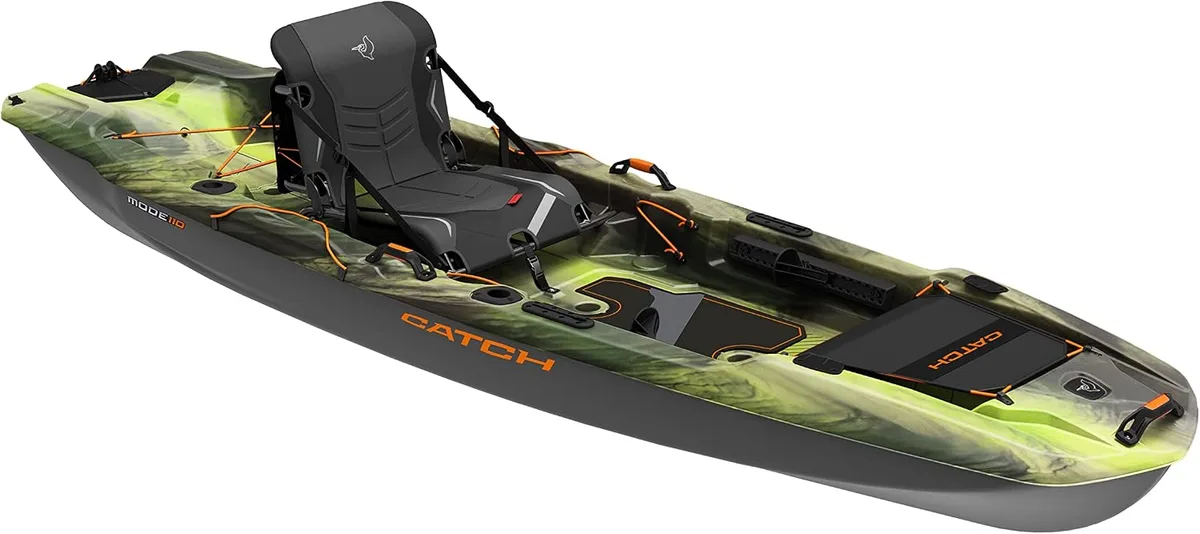
Catch Mode 110
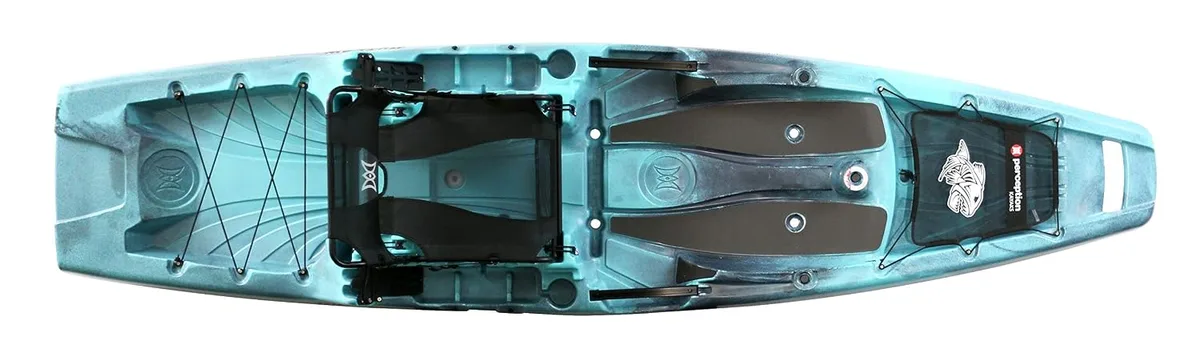
Pescador Pro 10.0
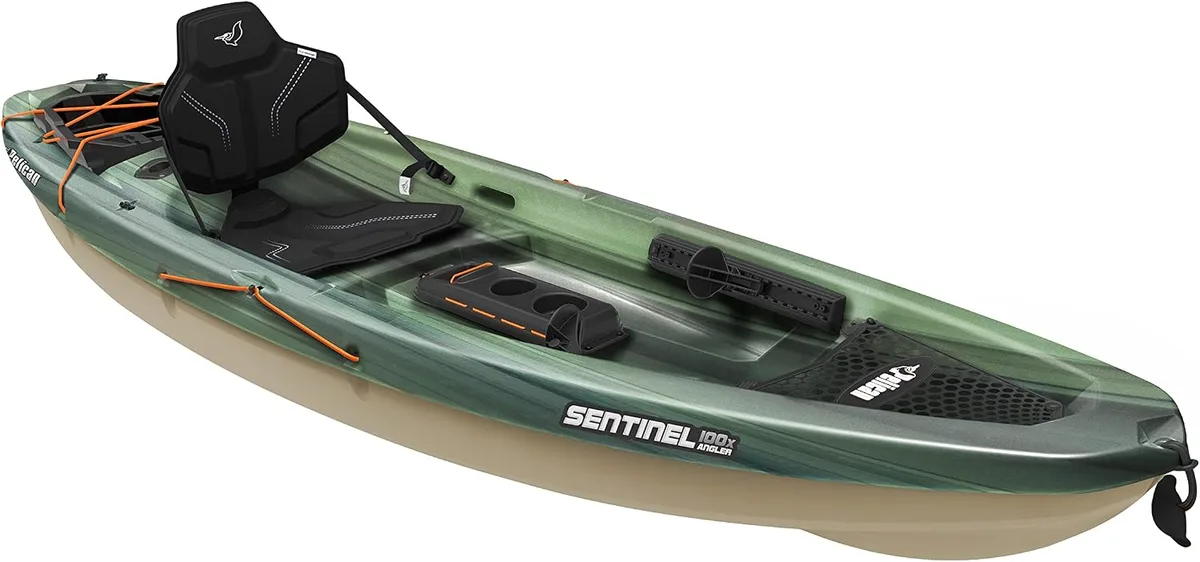
Sentinel 100X Angler
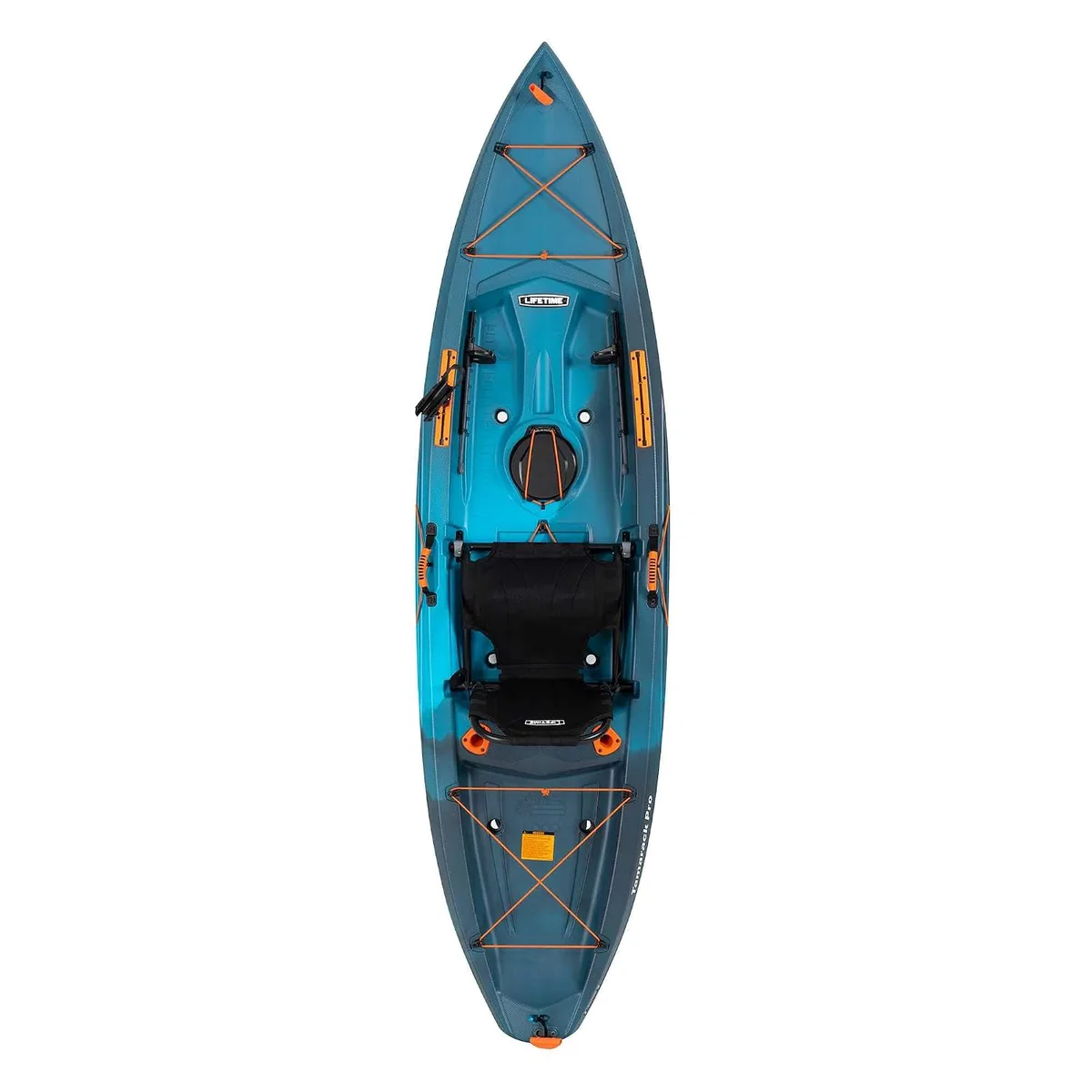
Tamarack Angler 100
Keep Reading
Related articles
Best Pedal Kayak Guide (2026): Top Hands-Free Models

Best Kayaks for Texas Rivers and Lakes: Top Picks
Kayak Fishing vs Shore Fishing: Which Catches More?
Next up: Best Pedal Kayak Guide (2026): Top Hands-Free Models, Best Kayaks for Texas Rivers and Lakes, and Fishing vs Shore Fishing.