Best Sit-On-Top Kayaks for Ocean Paddling (2026)
Looking for the best sit-on-top kayaks for ocean paddling? Compare top ocean-ready sit-on-top models for hull stability, wave handling, and durability.
This post contains Amazon affiliate links. We may earn a commission if you buy, at no extra cost to you. Read our disclosure.
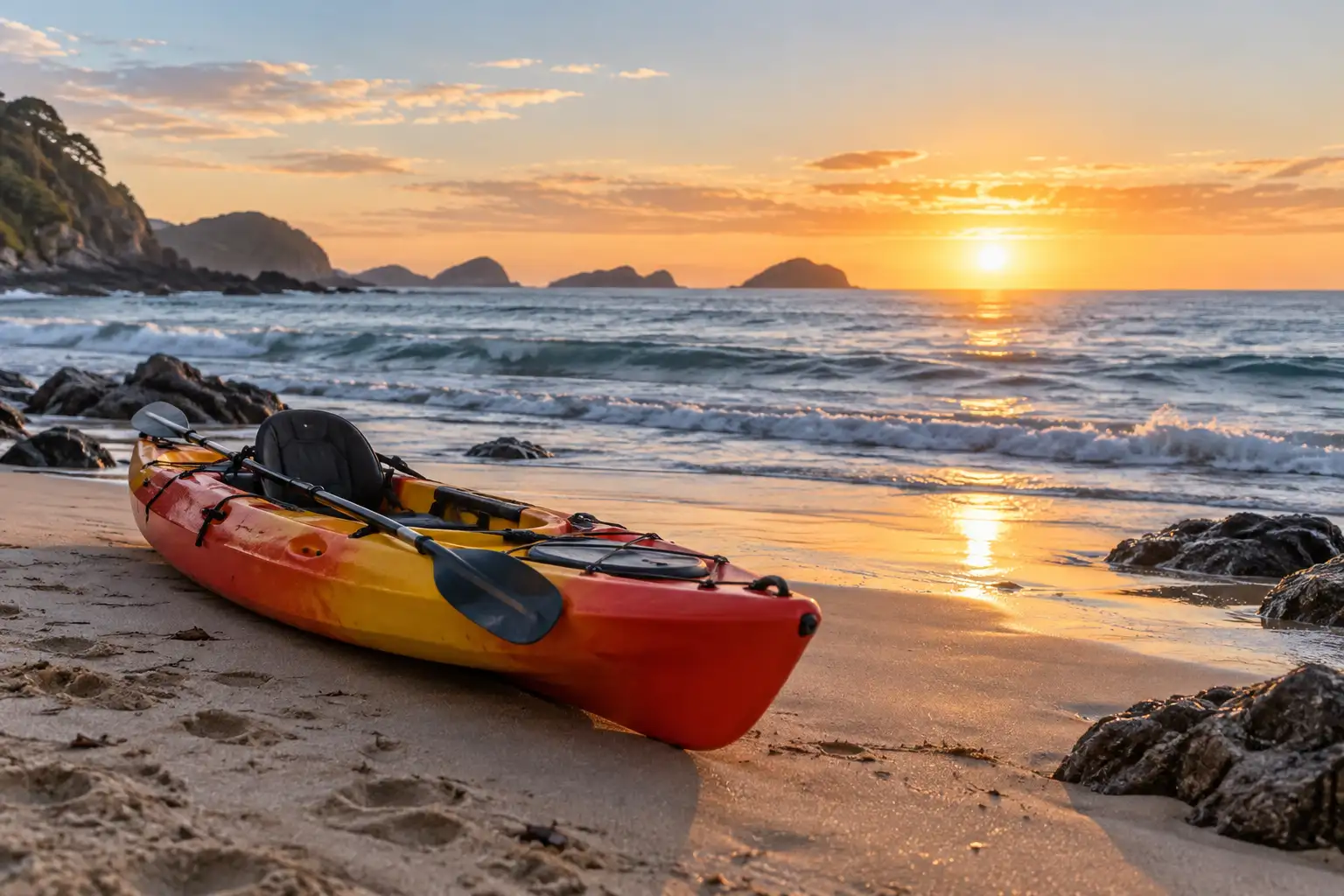
The best sit-on-top kayaks for ocean paddling combine stable secondary stability, high bow flare to punch through surf, open self-bailing decks with scupper drains, and durable polyethylene construction. For most solo paddlers exploring coastal bays and open ocean surf, the Ocean Kayak Malibu 9.5 offers the ideal blend of stability, maneuverability, and self-draining performance. Tandem paddlers and coastal gear haulers will benefit from the high-capacity deck of the Ocean Kayak Malibu Two XL.
The Reality of Ocean and Coastal Kayaking
Paddling on open salt water, ocean inlets, and coastal bays presents fundamentally different challenges than quiet lakes or slow-moving rivers. Ocean environments introduce relentless forces: dynamic swells, wind-driven chop, shifting tides, tidal currents, and surf zones where waves crest and break near shore. Navigating these conditions requires a kayak hull specifically structured to maintain balance when tipped sideways by a wave, shed incoming water instantly, and resist structural fatigue caused by salt water and UV exposure.
Sit-on-top kayaks have become the gold standard for recreational coastal paddlers, coastal anglers, and beach vacationers. Unlike traditional sit-inside kayaks, sit-on-top craft feature an open deck design with molded-in scupper holes. When ocean waves splash over the gunwales or break across the deck, water immediately drains out through the hull rather than pooling in a cockpit. Furthermore, if a paddler capsizes in open water, re-entering a sit-on-top boat is dramatically easier and safer than performing a wet exit and bilge-pumping a swamped sit-inside hull. Choosing the correct model depends on your body size, target coastal environment, local surf conditions, and whether you plan to fish, tour, or paddle recreationally. Understanding how deck layout, hull rocker, and secondary stability interact will help you select a craft that keeps you confident when ocean conditions turn rough.
Comparison
| Kayak | length | beam | weight | capacity | material | type |
|---|---|---|---|---|---|---|
| Malibu 9.5 | 9' 6" | 33" | 50 lb | 325 lb | Rotomolded polyethylene | Sit-on-top |
| Malibu Two XL | 12' 0" | 34" | 68 lb | 425 lb | Rotomolded Polyethylene | Sit-on-top Tandem |
| Pescador Pro 10.0 | 10' 0" | 32" | 57 lb | 325 lb | Rotomolded Polyethylene | Sit-on-top |
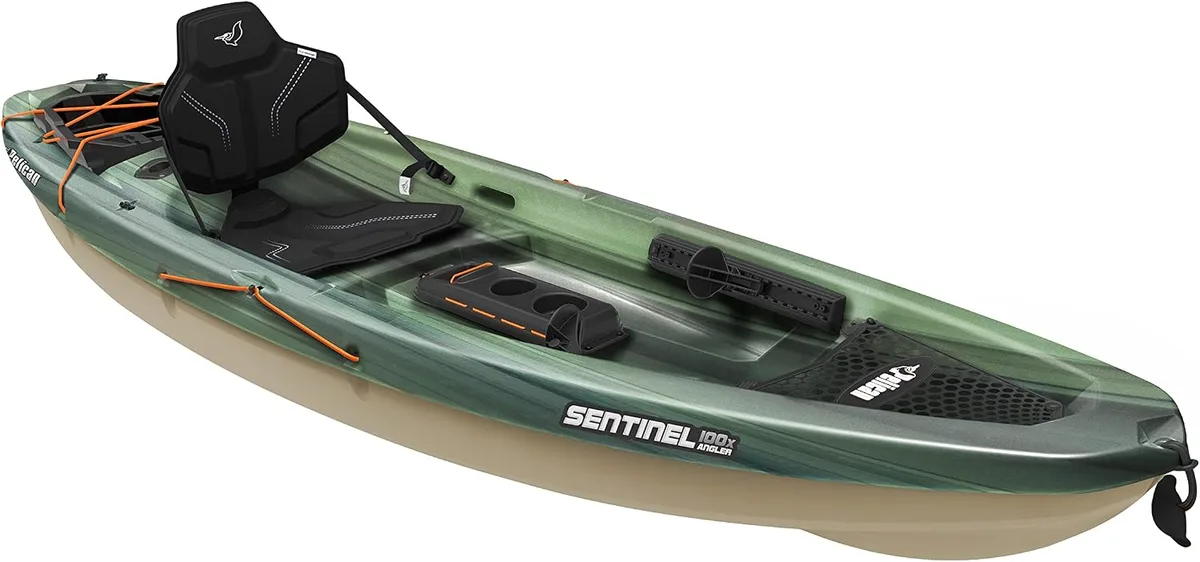
| Sentinel 100X Angler | 9' 6" | 30" | 44 lb | 275 lb | RAM-X multi-layer polyethylene | Sit-on-top |
When evaluating sit-on-top kayaks for ocean conditions, matching the hull geometry to your intended paddling area is critical. Short, wide hulls excel in surf landing and tight maneuvers around rocky coves, while longer hulls deliver better tracking and glide across open bays against tides and wind. Downward deck drainage, seat position height, and bow displacement shape dictate how dry your ride will be when confronting ocean swells.
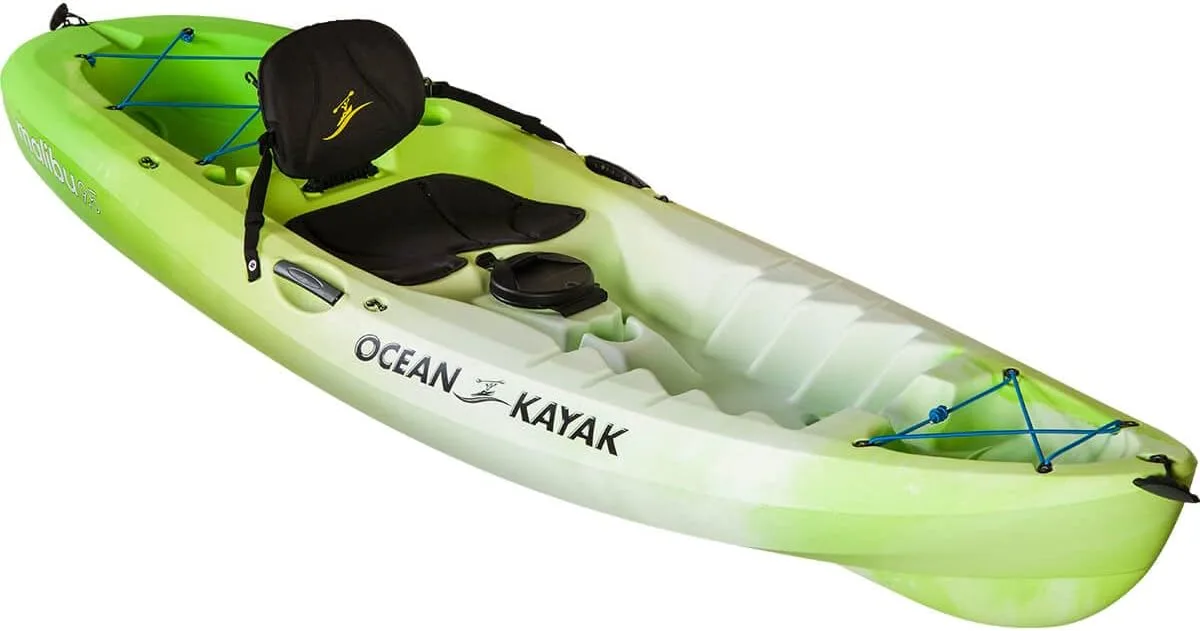
Ocean Kayak Malibu 9.5
The Ocean Kayak Malibu 9.5 is purpose-built for coastal water conditions. Built by a brand pioneer in sit-on-top salt-water design, this compact craft features an upswept bow design engineered to lift over incoming waves rather than plowing straight into them. Its tri-form hull provides high initial stability on calm water, while generous secondary stability allows the hull to lean predictably when side-swiped by ocean chop or riding incoming rollers toward shore.
The open cockpit layout features molded-in foot wells that allow paddlers of varying heights to find firm brace points when punching through surf. Drainage scuppers strategically positioned across the floor grid ensure that any water breaking over the bow exits the cockpit rapidly. Its stern tank well provides generous cargo space secured with bungee cords, ideal for dry bags or ocean safety kits. While its shorter length keeps top cruising speed moderate compared to long sea kayaks, its maneuverability makes it exceptionally fun in surf zones and easy to control near rocky coastlines.
For paddlers seeking a durable, low-maintenance solo craft for ocean beaches, tidal rivers, and coastal coves, this boat provides outstanding structural integrity and sea-keeping traits. You can check the current pricing for the Ocean Kayak Malibu 9.5 on Amazon.
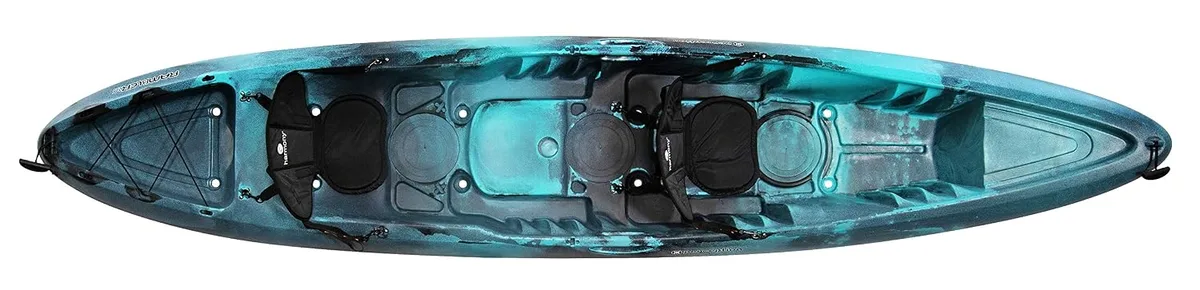
Ocean Kayak Malibu Two XL
For duo paddlers, families, or solo paddlers needing massive cargo capability for coastal beach camping, the Ocean Kayak Malibu Two XL stands out as a highly adaptable ocean-ready platform. As a spacious tandem sit-on-top kayak, it features overlapping seating positions that allow it to be paddled as a two-person craft, a tandem with a small child or pet in the center seat, or reconfigured as a centered solo kayak for single-paddler excursions.
In ocean environments, tandem kayaks require exceptional stability and buoyancy to account for moving weight distribution between two paddlers. The Malibu Two XL uses a broad tri-hull profile that stabilizes the boat in rolling swells and prevents tipping when synchronized paddling breaks down in ocean chop. The open deck layout is self-bailing throughout, meaning splashing waves clear out automatically without swamping the craft.
The rugged polyethylene construction resists heavy abrasion against sand, pebbles, and concrete boat ramps. While paddling a broad tandem against strong head winds demands extra effort, the sheer stability, safety reserve, and multi-paddler flexibility make it a prime choice for coastal rentals, resort beaches, and multi-person ocean adventures. Check available options for the Ocean Kayak Malibu Two XL on Amazon.
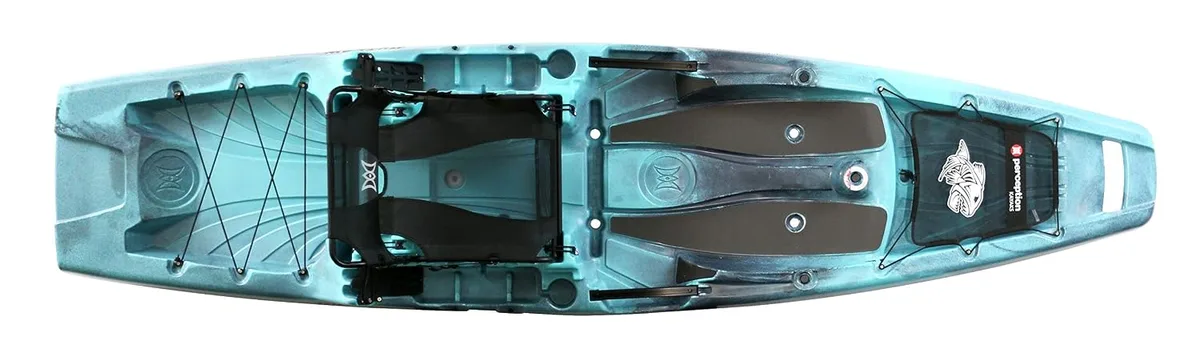
Perception Pescador Pro 10.0
The Perception Pescador Pro 10.0 brings modern framed seating and gear customization to coastal and salt-water bay environments. Featuring a multi-position stadium seat elevated above the deck, this kayak keeps paddlers drier in light chop while offering improved visibility for spotting fish or reading water patterns in shallow estuaries.
Its hull design balances a defined keel line for tracking across coastal bays with a wide, stable midsection that resists rolling in light swell. Integrated gear tracks along the gunwales allow easy mounting of fish finders, rod holders, or camera mounts without drilling holes into the hull shell. Molded-in stern storage holds crates or coolers securely, while forward storage handles dry storage sacks.
When paddling in open ocean surf, the elevated seating position raises the paddler's center of gravity slightly compared to traditional floor-level seats, making it best suited for protected ocean bays, coastal inlets, salt marshes, and calm beach days rather than heavy breaking surf zones. For coastal anglers looking for a feature-rich, comfortable platform for bay and harbor fishing, the Pescador Pro delivers excellent utility. You can view the Perception Pescador Pro 10.0 on Amazon.
Pelican Sentinel 100X Angler
The Pelican Sentinel 100X Angler offers an accessible entry point for paddlers seeking a lightweight sit-on-top kayak for calm coastal coves, sheltered harbors, and salt-water tidal rivers. Constructed from Pelican's proprietary RAM-X multi-layer polyethylene, this hull is remarkably easy to carry down soft beach sand or hoist onto vehicle roof racks single-handedly.
Its twin-arched multi-chine hull design prioritizes primary stability, allowing paddlers to feel instantly secure on flat water and smooth ocean glides. The open cockpit features adjustable footrests, a contoured seat cushion with backrest support, and a removable rear storage compartment for gear. Integrated rod holders and accessory eyelets cater to casual coastal fishing.
Because of its lightweight construction and flatter bottom profile, the Sentinel 100X is designed primarily for protected coastal waters, quiet coves, and calm weather days. It lacks the deep bow rocker and heavy secondary stability required for launching through substantial ocean surf or navigating rough open-water crossings. However, for casual paddlers seeking an easy-to-transport craft for summer bay exploration, it provides impressive convenience. Check the Pelican Sentinel 100X Angler on Amazon.
Buying criteria
Selecting the right sit-on-top kayak for ocean and coastal environments requires understanding how design choices affect safety, tracking, wave responsiveness, and paddler fatigue. Before making a purchasing decision, review these essential ocean buying factors.
Ocean Hull Design: Rocker, Bow Flare, and Water Displacement
Hull shape dictates how a kayak interacts with wave energy. Rocker refers to the upward curvature of the hull from bow to stern, similar to the runners of a rocking chair. A kayak with pronounced bow rocker climbs over incoming waves and rides surf smoothly rather than spear-plowing into the face of a wave. Furthermore, a flared bow pushes water away from the deck, reducing splash over the bow. When choosing an ocean sit-on-top kayak, look for upswept bows if you plan to launch through ocean surf zones, or flatter, longer keel lines if you intend to paddle primarily in sheltered ocean bays where straight-line tracking and speed are prioritized.
Primary vs. Secondary Stability in Coastal Waters
Understanding the distinction between primary and secondary stability is critical for ocean safety. Primary stability measures how solid and unmoving a kayak feels when resting flat on calm water. Wide, flat-bottomed kayaks have immense primary stability, making them feel extremely comfortable initially. Secondary stability measures a kayak's resistance to capsizing when tilted onto its side by a sideways wave or swell. In open coastal conditions, hulls with strong secondary stability—such as tri-form or multi-chine designs—can lean naturally with passing rollers without flipping. For open sea paddling, prioritizing dependable secondary stability is essential for staying upright in unpredictable coastal chop.
Self-Bailing Scupper Systems and Drainage Efficiency
In ocean kayaking, water on the deck is an absolute certainty rather than a possibility. Sit-on-top kayaks feature molded openings called scupper holes extending vertically from the cockpit floor through the bottom of the hull. Gravity forces deck water out through these channels as the kayak rides up and down on waves. When evaluating models, inspect the placement and quantity of scupper holes. Cockpits with lower floor channels and well-distributed scupper drain points clear heavy splash quickly. Paddlers operating in cooler coastal waters can use scupper plugs to prevent cold water from bubbling up from below during calm stretches, but plugs must always be removed when entering active surf zones to allow instant self-bailing.
Windage and Cross-Wind Tracking Dynamics
Coastal areas are subject to sea breezes and sudden thermal wind changes. Windage refers to how much surface area of the kayak sits above the waterline, acting like a sail in cross-winds. Kayaks with high-backed lawn-chair style seats or high sidewalls catch significantly more wind, making them susceptible to weather-cocking (turning into the wind) or drifting off course. Low-profile sit-on-top hulls with sleek deck lines present less resistance to winds, requiring less correcting stroke effort from the paddler. If you frequently paddle in windy coastal corridors, select a hull with a clean, low-profile silhouette and strong tracking characteristics.
Material Construction and Corrosion Resistance
Saltwater and coastal sun are demanding on kayak materials. Rotomolded high-density polyethylene (HDPE) hulls offer exceptional impact resistance against hidden rocks, coral, sandbars, and oyster beds. Multi-layer thermoformed polyethylene offers lightweight handling while maintaining structural rigidity. Beyond the hull material itself, examine the hardware: ocean-ready kayaks should feature stainless steel screws, anti-corrosive brass snaps, UV-stabilized deck bungees, and salt-tolerant seat webbing. Rinsing hardware and seat fittings with fresh water after every ocean trip prevents salt crystallization and hardware degradation.
Safety Gear Integration and Re-entry Capabilities
Ocean kayaking demands accessible storage for safety gear. Look for kayaks with bow or stern deck rigging capable of securing a dry bag containing emergency flares, VHF radio, signaling mirror, tow line, and hydration. Additionally, sit-on-top deck designs should feature perimeter grab lines or molded deck handles. If you tumble into deep coastal water, perimeter grab lines give you firm handholds to stabilize the hull while performing a self-rescue deep-water re-entry climb back onto the seat platform. According to US Coast Guard life jacket guidance, wearing a properly fitted PFD at all times on open water is the single most effective safety measure for recreational boaters.
For broader advice on selecting hull types for various water conditions, consult our comprehensive how to choose a kayak guide and explore kayak types explained.
Frequently asked questions
Are sit-on-top kayaks safe for ocean paddling?
Yes, sit-on-top kayaks are widely considered among the safest kayak designs for recreational ocean and coastal paddling. Their sealed double-hull design provides inherent flotation, preventing the boat from filling with water and sinking if capsized. Because they feature self-bailing scupper holes, water from waves drains automatically off the deck. Most importantly, if you fall off a sit-on-top kayak in open water, you can perform a self-rescue by climbing back onto the deck without having to pump out a flooded cockpit.
How do sit-on-top kayaks handle coastal waves and surf?
Sit-on-top kayaks handle waves and surf remarkably well when designed with appropriate bow rocker and secondary stability. Their open decks shed water instantly as waves break across the bow, maintaining buoyancy and responsiveness. Hulls with upswept bows climb over incoming surf rather than diving under waves. While landing through surf requires basic paddle technique and timing, sit-on-top kayaks eliminate the risk of swamping that traditional recreational sit-inside kayaks face in wave zones.
Should I use a sit-on-top or sit-inside kayak for coastal waters?
For general recreational paddling, beach launching, and warm-water coastal exploration, sit-on-top kayaks are generally superior due to easy re-entry, self-bailing decks, and freedom of movement. However, for long-distance sea touring in cold northern waters or high-sea conditions, traditional sit-inside sea kayaks with spray skirts and dual bulkheads offer better thermal insulation, wind protection, and paddling efficiency over long miles. Understanding these differences helps match your kayak choice to local sea water temperatures and trip length.
What safety equipment is essential for ocean kayaking?
Essential ocean kayaking safety equipment includes a Coast Guard-approved Life Jacket (PFD) worn at all times, a waterproof marine VHF radio or personal locator beacon (PLB), a whistle or sound signaling device, a high-visibility paddle leash, a hand bilge pump or sponge for hatches, and a dry bag containing water, thermal layer clothing, and navigation aids. Additionally, checking weather forecasts, wind directions, and tide charts before launching is mandatory for coastal safety.
Practical Next Steps for Coastal Kayakers
Before heading out onto open salt water, equip yourself with the proper gear and knowledge:
- Select the Right Gear: Pair your sit-on-top kayak with a sea-rated paddle from our guide to the best kayak paddles and a high-visibility PFD from our best kayak life jackets roundup.
- Review Coastal Safety Procedures: Study our guide on kayak safety essentials to master deep-water re-entry techniques and weather reading.
- Plan Your Route Around Tides and Wind: Always check local tide tables, marine wind forecasts, and water temperatures before launching into coastal waters. Start your trip paddling into the wind or current so you have assistance on your return leg.
- Rinse and Store Properly: After every saltwater excursion, thoroughly rinse your kayak hull, seat webbing, aluminum tracks, and scupper channels with fresh water to prevent salt buildup and extend the life of your equipment.
Related Kayaks
Kayaks that pair with this guide
Malibu 9.5
Malibu Two XL
Pescador Pro 10.0
Sentinel 100X Angler
Keep Reading
Related articles
Best Kayaks for Big and Tall Paddlers (2026 Picks)
Best Tandem Kayaks of 2026: Top 2-Person Models
Best Budget Kayaks of 2026: High-Value Picks Under $500
Next up: Best Kayaks for Big and Tall Paddlers (2026 Picks), Best Tandem Kayaks of 2026, and High-Value Picks Under $500.