Pelican Sentinel 100X Angler vs Lifetime Tamarack Angler 100
Quick verdict
Choose the Sentinel when lower hull weight is the deciding factor for solo loading; investigate the Tamarack when its straightforward fishing package and complete cost fit your needs better. Both need a comfortable fit, a realistic full-trip load, and practiced sit-on-top recovery before fishing equipment enters the decision.
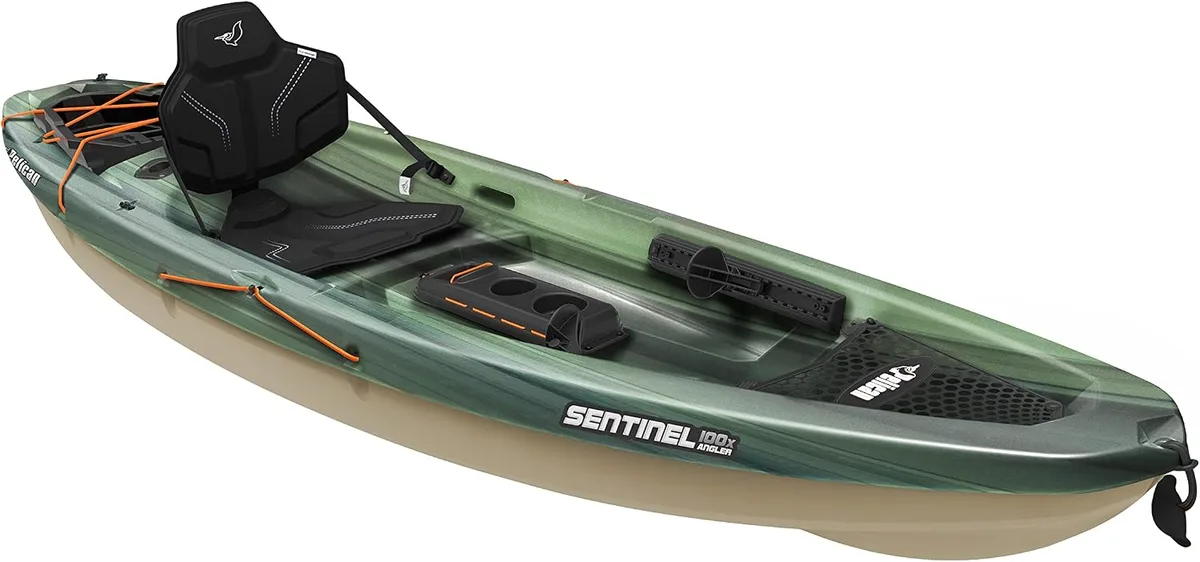
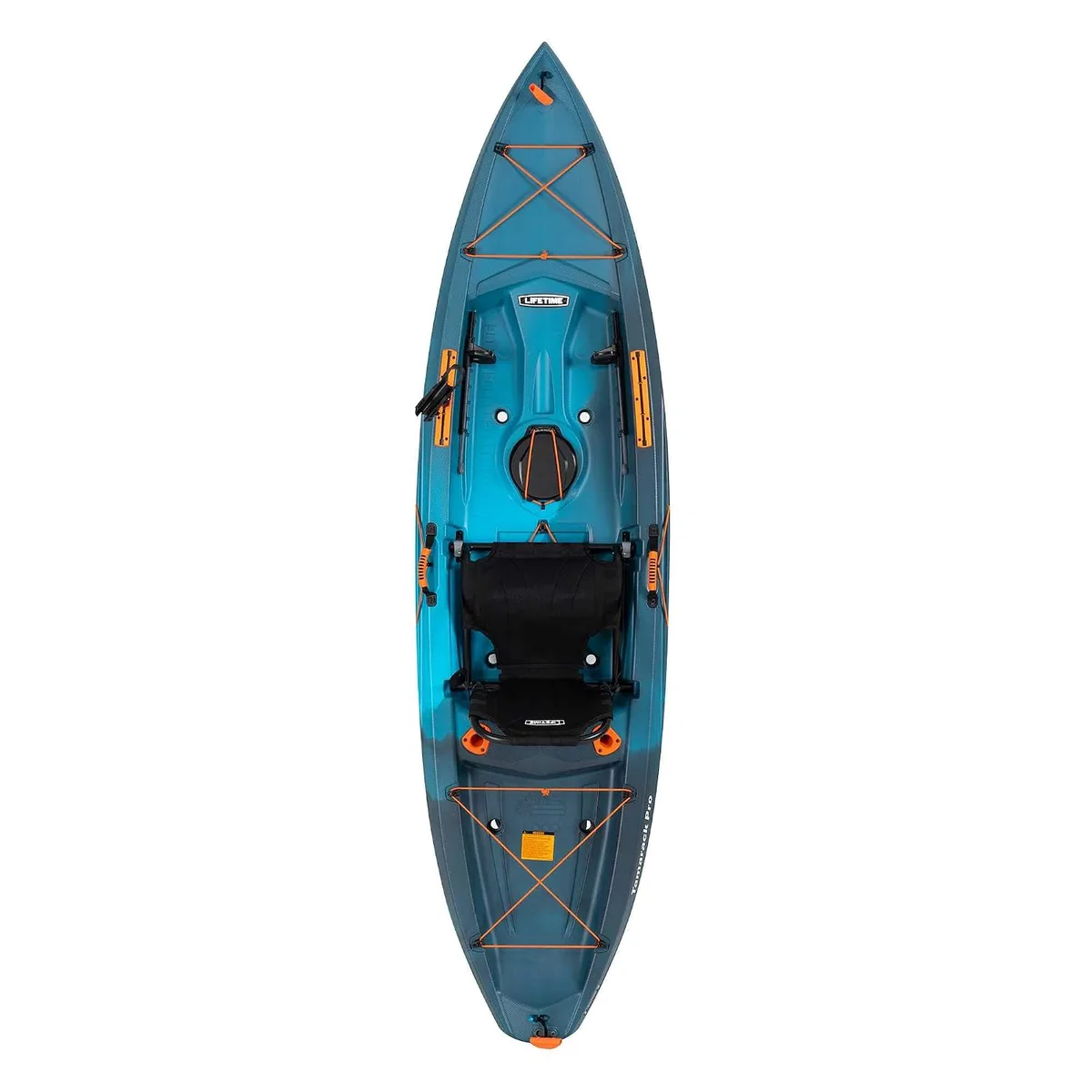
Spec comparison
Specifications below come from our catalog. Unavailable values are left blank; listed capacity includes paddler and gear.
| Specification | Sentinel 100X Angler | Tamarack Angler 100 |
|---|---|---|
| Type | Sit-on-top | Sit-on-top |
| Length | 9' 6" | 10' 0" |
| Width | 30" | 31" |
| Weight | 44 lb | 52 lb |
| Capacity | 275 lb | 275 lb |
| Material | RAM-X multi-layer polyethylene | HDPE |
Who each boat is for
Pelican Sentinel 100X Angler
The Sentinel makes sense for a solo angler whose biggest obstacle is getting the kayak from home to a sheltered launch. Its lower catalog weight can matter when carrying alone, negotiating a storage doorway, or loading a vehicle. That advantage is useful only if the seating, foot support, and total load work for you; a lighter hull does not compensate for an uncomfortable fishing position.
Choose it as a compact paddle-fishing option rather than as a substitute for a boat designed around exposed crossings or extensive equipment. Think about the tackle you actually carry, where it can be secured, and whether you can reach it without leaning awkwardly. Compare the exact trim and accessories offered by the seller because similarly named packages may include different equipment.
Lifetime Tamarack Angler 100
The Tamarack is worth investigating when a straightforward fishing platform and a restrained equipment budget are your priorities. The catalog puts it above the Sentinel in weight and slightly wider, but gives both the same listed capacity. That means the heavier boat does not automatically buy you additional load allowance.
Its appeal is a familiar paddle-powered layout without a drive system to carry or maintain. Confirm seat support, rod storage, and the actual package before deciding. If you expect long outings, the comfort of the complete seating arrangement matters more than how many fishing accessories are named on the box.
Key differences
Stability and tracking
The Sentinel and Tamarack are both sit-on-tops in our catalog. The Tamarack's wider listed beam is a dimensional difference, not proof that it is safer or suitable for standing. Stability also depends on hull shape, seat height, your body position, and how gear is loaded. Do not turn a width comparison into a standing recommendation.
Their slightly different lengths may affect storage and maneuvering, but length alone does not establish which tracks better. Wind, trim, technique, and the hull's underwater shape all influence the effort needed to stay on course. A supervised demonstration on sheltered water can help you judge ordinary handling without pretending specifications predict every paddler's experience.
Comfort and fishing access
Check both seats with your PFD on and your feet properly supported. Look for pressure behind your knees, unsupported ankles, and awkward reaching to the tackle you will use. A seat that feels acceptable briefly on land may still be a poor fit for the position you intend to hold while fishing.
Arrange rods and tackle so they stay clear of paddling and recovery. More holders are not automatically better if they put equipment where you need to move. Ask whether a seat or accessory upgrade is supported by the manufacturer rather than assuming you can raise your position without changing balance.
Storage and useful load
The shared catalog capacity should be assessed against the entire outing load: paddler, clothing, water, safety equipment, and tackle. It is a maximum stated allowance, not a promise that either boat will handle identically when fully loaded. Secure equipment low and balanced and check whether available storage actually accommodates its shape.
A hatch or deck well is not automatically waterproof storage. Protect your phone and other essentials appropriately, and confirm how openings and fittings are sealed. Keep heavy bags and attachments from obstructing re-entry, and avoid putting valuables somewhere you cannot reach safely when needed.
Transport and weight
The Sentinel's lower listed hull weight is the clearest practical reason to investigate it first if you load alone. But compare carrying handles, the distance to your launch, and the complete gear load rather than the bare hull alone. A lighter kayak can still be awkward overhead or on uneven ground.
The Tamarack may work well when you have a manageable shoreline carry, a suitable cart, or dependable assistance. Before buying, rehearse the loading sequence and check vehicle and rack limits. Transport inconvenience is not a minor issue if it makes you skip the outings you bought the boat for.
Price tier and complete cost
Both belong in a value-oriented paddle-fishing comparison rather than a pedal-system comparison. The live prices above are more useful than a fixed price promise: availability and packages can change. Compare what is included, delivery arrangements, returns, and any necessary seating or transport purchases before declaring either the bargain.
Keep money available for a fitted PFD, paddle, appropriate clothing, and safety equipment. A boat offered with a paddle is not automatically a complete setup, and the included paddle may not suit your fit or paddling style. Choose the lower complete ownership cost only after identifying the essentials.
Buying criteria
Start by naming your normal fishing water and launch. Sheltered ponds and gentle river reaches create different demands from windy open lakes. Neither model's fishing label removes the need to assess conditions or learn recovery. Our fishing kayak guide gives wider context if these two do not fit your intended trips.
Next, check seat comfort, foot support, full trip load, and the ability to carry the boat. Use the how-to-choose buyer's guide to turn those requirements into a shortlist. If you are new to paddling, the beginner guide helps separate approachable equipment from unnecessary complexity.
Finally, plan for capsize before adding fishing equipment. Wear a PFD, secure loose gear, dress for water temperature, and practice getting back aboard with guidance. Read kayak safety essentials for float plans, weather, and cold-water preparation. A simple setup you can recover is more useful than a crowded deck you cannot manage.
Manufacturer reference
The Lifetime Tamarack Angler product page describes the manufacturer's fishing-oriented layout and supplied equipment for that package. Check the exact package and owner's instructions before purchase; the comparison table above deliberately remains tied to our catalog rather than mixing specifications from different trims.
Frequently asked questions
Which is easier to transport alone?
The Sentinel has the lower catalog hull weight, making it the natural first option to investigate for solo carrying. Still check the handles, vehicle loading height, route to the water, and the weight of your full equipment setup. The bare-hull figure does not guarantee comfortable lifting.
Is the Tamarack more stable because it is wider?
A wider beam is not enough to establish a stability ranking. Hull shape, seating height, loading, and your position affect how the boat feels level and when leaned. Neither comparison here should be interpreted as approval for standing or for conditions outside the model's intended use.
Which should a beginner angler choose?
Choose the one that fits comfortably, carries your planned load, and can be transported and recovered confidently. Favor the Sentinel when handling the boat on land is the decisive problem; investigate the Tamarack when its package and complete cost fit better. Keep the first trips sheltered and the fishing setup simple.
Contains Amazon affiliate links. Read our disclosure.