Fishing From a Kayak: Techniques That Actually Catch Fish
Boat control, anchoring, stealth, seated casting and landing fish — the on-water skills that turn a fishing kayak into a fishing advantage.
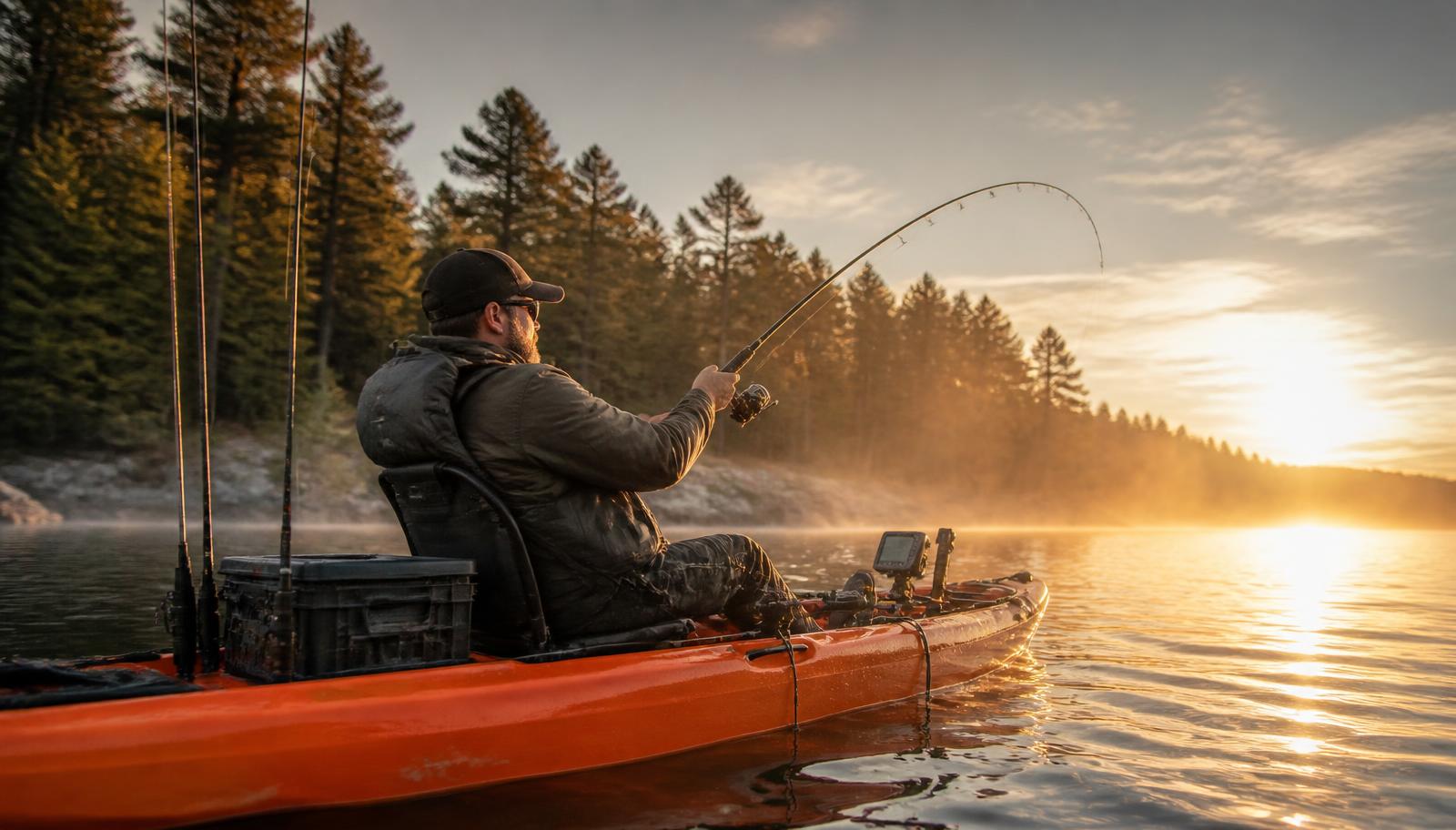
Rigging a fishing kayak is the easy part. The hard part is what happens once you are floating: the wind pushes you off the spot you paddled twenty minutes to reach, your rod tip catches the bungee on the backcast, and the one good fish of the day comes unbuttoned because you tried to lift it into your lap.
This guide is about that part — actually fishing from a kayak. Boat control, stealth, casting from a seated position, hooking and landing fish, and the safety habits that let you concentrate on fishing instead of on staying upright. If you still need the boat and the rigging basics, start with the best fishing kayaks and Kayak Fishing 101, then come back here.
1. Boat control is your most important fishing skill
A kayak weighs 60–80 pounds and sits high in the water. A 6 mph breeze moves it. Your own casting motion moves it. Before you think about lures, get deliberate about position.
Fish the wind, do not fight it. Start upwind and let the breeze walk you down a shoreline, weed edge, or drop-off at a slow drift. You cover water quietly and you never have to paddle into the chop with a rod in your hand. When the drift outruns you, a small drift chute (an 18–24" drogue on 6 feet of line) cuts your speed roughly in half.
Use the paddle as a brake and a rudder, not a motor. A single low sculling stroke on one side rotates the boat 20–30 degrees so you can present a cast without moving position. Learn to sweep and stern-rudder with the paddle across your lap — most of your repositioning during a good bite is one stroke, not five.
Set your feet. Bracing your feet firmly against the footwells is what makes a wide sit-on-top like the Sentinel 100X Angler feel locked in when you lean to net a fish. Loose legs are the single most common reason beginners feel tippy.
2. Anchoring and the anchor trolley
The reason experienced anglers rig an anchor trolley — a length of cord running along the gunwale on two pulleys with a sliding ring — is that where the anchor line attaches determines how the boat sits.
- Line at the bow or stern: the kayak points into the wind or current. Stable, predictable, quiet.
- Line amidships: the kayak sits broadside. Never do this in current — a beam-on kayak with a taut anchor line is how kayaks capsize.
Practical anchoring rules:
- Use a 1.5–3 lb folding grapnel on 25–50 feet of line with a float. Anything heavier than 10 lb is a hazard, not an advantage.
- Pay out at least 2× the water depth in scope. A vertical anchor line simply drags.
- Keep the line on a quick-release — a jam cleat or a looped tab through the trolley ring you can rip free with one hand. If a big fish runs or the current builds, you dump the whole rig, let the float mark it, and retrieve it later.
- Lower the anchor. Never throw it. The splash is the loudest thing you will do all day.
- Always carry a knife on your PFD where your dominant hand can reach it.
In shallow, soft-bottom water a stakeout pole (a 6–8 foot fiberglass rod pushed through a scupper) is faster, quieter, and safer than an anchor. In moving water, or anywhere near a low-head dam, do not anchor at all — drift and paddle back up.
3. Stealth is the kayak's real advantage
A kayak puts you in 8 inches of water with no engine noise and no hull slap. That access is worth more than any lure in your crate — but only if you protect it.
- Foam or rubber-line the inside of your tackle crate. A hard plastic box rattling against a plastic hull broadcasts through the water.
- Set the paddle down on a paddle park or under a bungee instead of laying it across the coaming where it will clunk.
- Approach shallow flats and bedding fish from downwind and off to the side, not straight in. Coast the last 30 feet.
- Cast past the target and bring the lure back through it. In a kayak your rod tip is 18 inches off the water, so a low, sidearm cast lands softly and skips under overhanging cover that boat anglers cannot reach.
Because you sit low, you also spook less. Fish rarely see a kayak silhouette against the sky the way they see a standing angler on a bass boat.
4. Casting and fighting fish from a seated position
Seated casting is a wrist-and-forearm motion, not a shoulder motion. Two adjustments matter:
- Go sidearm. An overhead cast from a seat sends the lure high and loud, and the backcast finds your rod holders. A sidearm or roll cast keeps everything in front of you.
- Cast to the sides, retrieve to the front. Casting straight over the bow guarantees your line will end up under the hull on the first turn.
When you hook a fish:
- Let the boat pivot. Do not try to hold the kayak straight. Turn your torso, keep the rod tip low, and let the fish tow the bow around — that swing absorbs surges better than any drag setting.
- Loosen your drag one click from what you would use on a boat. You have no leverage and no ability to backpedal.
- Keep the fight on one side. Passing the rod around the bow with a fish on is how lines get cut on scuppers and rudders.
- Land the fish low. Slide it in over the gunwale with a short-handled rubber net or grip it at the water line. Never lift a heavy fish straight up and across your body — that is the classic kayak swim.
- Unhook over your lap or the deck, never over open water, and keep pliers leashed.
5. Species tactics that work best from a kayak
Bass. Work the shallow, wooden, weedy stuff other boats cannot enter. Texas-rigged worms, weightless flukes, and a squarebill for laydowns. The quiet approach in flooded timber is where kayaks genuinely out-fish bass boats.
Panfish and crappie. Anchor or stake out on a single brush pile and vertical-jig it. A kayak holds position over a 4-foot piece of structure better than a big boat ever will.
Inshore redfish and trout. Pole or paddle the flats, sight-fish on a rising tide, and remember that a loaded kayak still needs less than a foot of water. Plan your exit around the tide, not around the bite.
Trout in rivers. Drift down, anchor above a seam, and cast a spinner or nymph rig into the current line. Scout every stretch for strainers and low-head dams before you launch.
6. Safety habits that make all of this possible
Nothing in this article matters if you are swimming. The short version: wear a fishing-cut PFD with the pockets full, file a plan with someone, and dress for water temperature — not air temperature. Add a whistle, a light if you fish dawn or dusk, and a phone in a dry bag. Full checklist in Kayak Safety: The 10 Non-Negotiable Items.
Two kayak-fishing-specific rules worth repeating: leash your rods and your paddle, and practice a re-entry in waist-deep water at least once with the boat fully loaded. Almost nobody does the second one, and it is the difference between an inconvenience and an emergency.
Which kayak makes this easier
Everything above is easier in a stable, well-outfitted sit-on-top:
- Perception Pescador Pro 10.0 — our overall pick. A raised frame seat you can sit in all day, molded rod holders, and enough beam to lean out and net a fish.
- Lifetime Tamarack Angler 100 — the value benchmark. Flat-bottom stability and two flush mounts plus a swivel holder out of the box.
- Pelican Sentinel 100X Angler — the lightest of the group, which matters most if you fish alone and load solo.
- Pelican Catch Mode 110 — the most stable platform here, with an elevated seat and a deck flat enough to stand and cast from.
Full specs, weight capacities, and current pricing are in the best fishing kayaks guide.
Frequently asked questions
Can you stand up and cast from a fishing kayak?
On a wide, flat-bottomed sit-on-top — roughly 33 inches or more of beam — most anglers can stand once the boat is stopped and the water is calm. Keep your knees soft, your paddle within reach as a brace, and practice near shore before you try it in current.
How many rods should I bring?
Two. One rigged for the presentation you plan to use and one backup rigged differently. More rods means more tangles, more clutter on a small deck, and more things to snag on the cast.
What is the best time of day to fish from a kayak?
Dawn and the last two hours of light. Wind is usually lightest, fish sit shallowest, and boat traffic is minimal — all three favor a kayak, which is quiet and easy to position in shallow water.
Related Kayaks
Kayaks that pair with this guide

Catch Mode 110
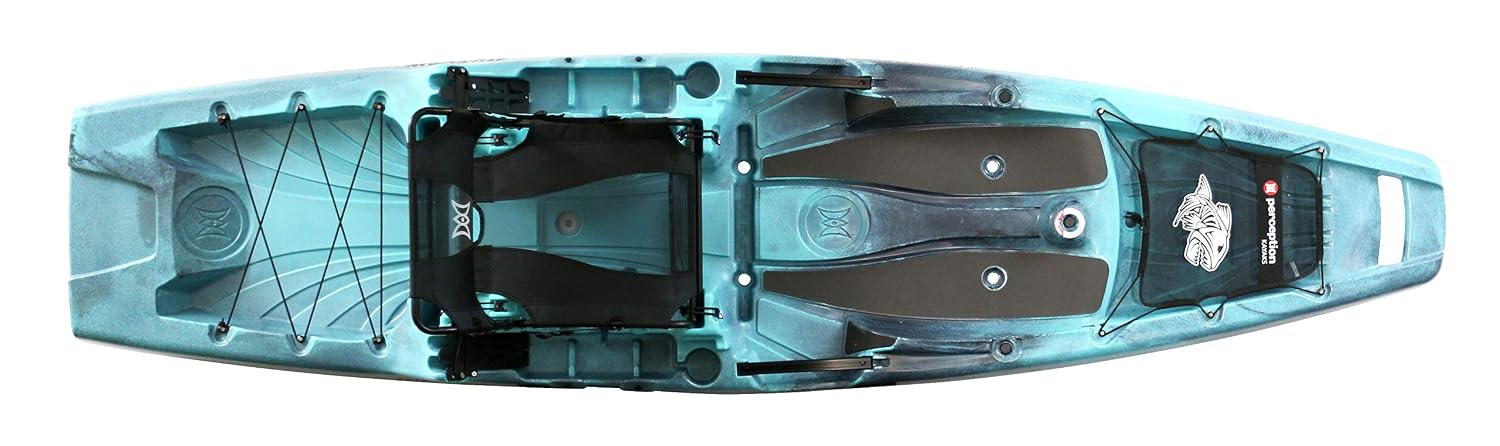
Pescador Pro 10.0
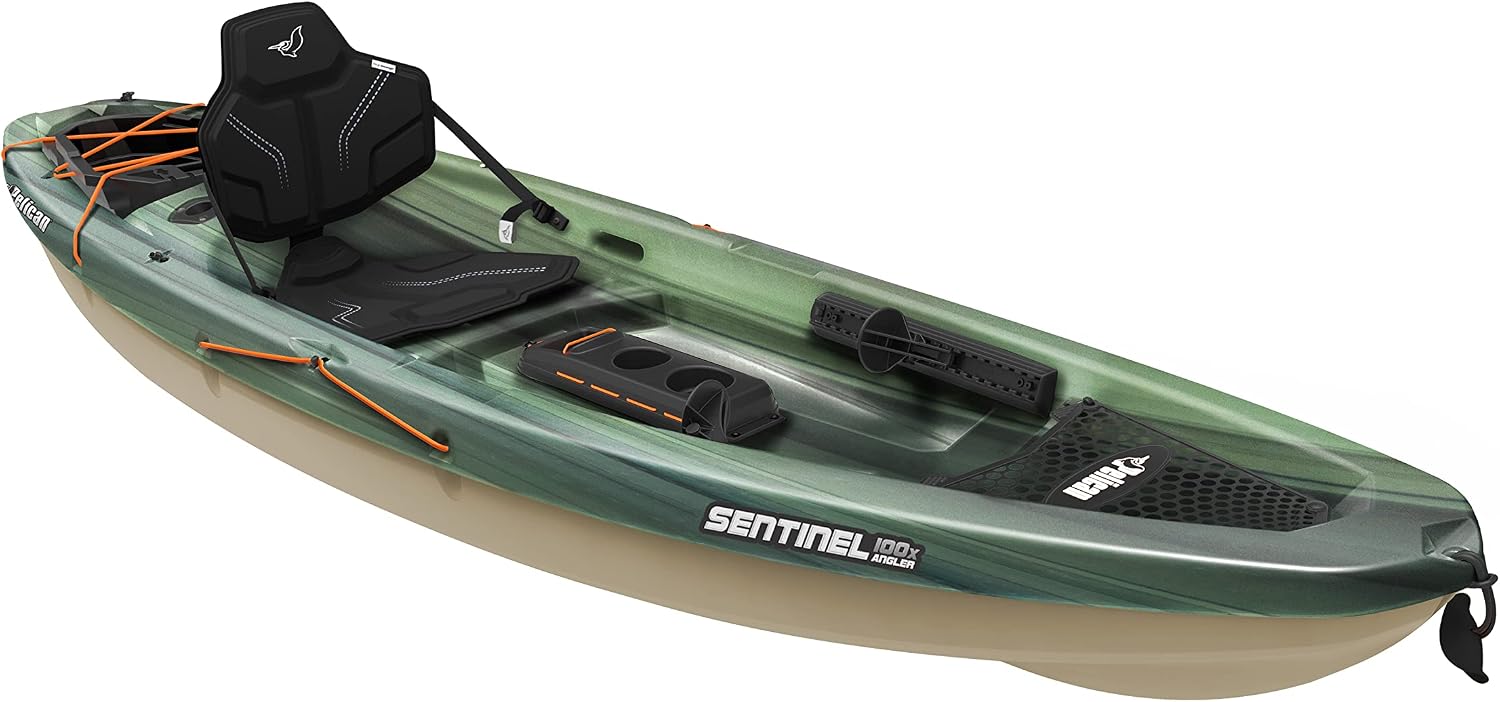
Sentinel 100X Angler
Keep Reading
Related articles
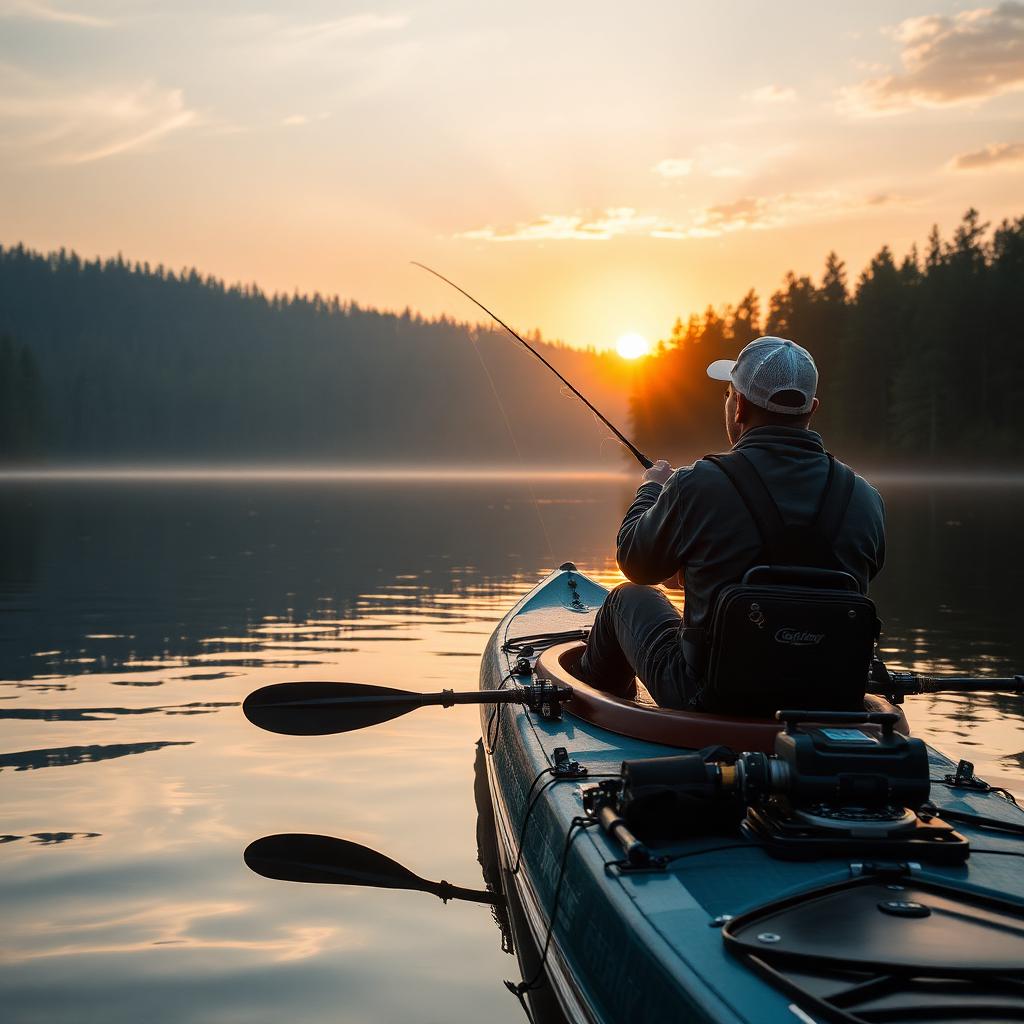
Kayak Fishing 101: Rigging, Gear, and Your First Trip
The Best Fishing Kayaks (2026 Guide)
Kayak Fishing vs Shore Fishing: Which Catches More?
Next up: Kayak Fishing 101: Rigging, Gear, and Your First Trip, The Best Fishing Kayaks, and Fishing vs Shore Fishing.